Korea Federation of SMEs Announces Survey on Food Service Franchise Stores
Most Common Reason for Starting a Business is "Simple Startup Procedures"
55% of Respondents Say "We Continue to Pay Franchise Fees Even After Opening"
It was found that it takes an average of about three years for food service franchise store operators to recover their initial investment.
According to the 'Food Service Franchise Store Status Survey' conducted by the Korea Federation of SMEs on 514 food service franchise stores last month, 49.6% of respondents reported having recovered their investment, with an average recovery period of 31.4 months. For companies that answered they are in the process of recovering their investment (35.4%), the expected average time was 38.6 months, indicating that it takes about three years after starting a business to recover the investment.
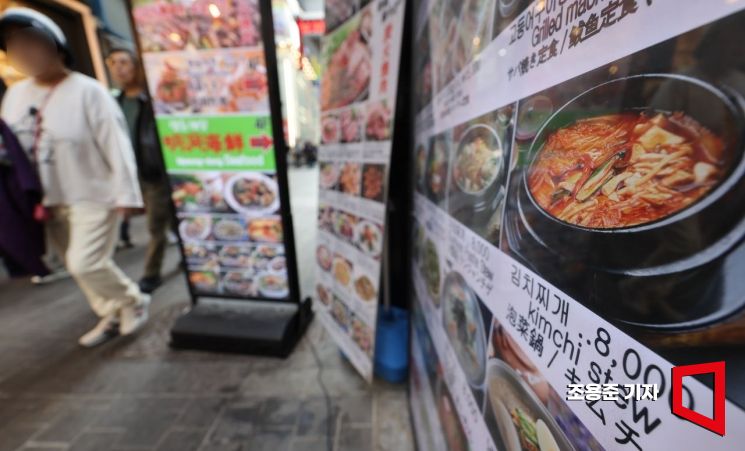
The most common reason for starting a franchise was 'simple startup procedures' (41.4%), followed by 'expectations of management know-how and support from the franchisor' (18.7%). The reasons for choosing a brand were 'product competitiveness' (38.3%) and 'brand awareness and image' (15.2%) in that order.
Regarding current franchise store operations, 62.1% responded that they are satisfied. Reasons for satisfaction included 'achieving stable sales and profits' (28.8%), 'accuracy of information during franchise consultations' (27.8%), and 'reasonable contract terms' (27.6%).
Among the respondents, 55.3% reported that they continue to pay franchise fees in the form of fixed royalties (43.0%), differential franchise fees (39.4%), and sales-linked royalties (34.5%) even after starting the business.
It was found that some franchise stores are unaware that differential franchise fees are included in the costs of mandatory purchase items. There was a 31.1 percentage point difference between the responses of 'no mandatory purchase items' (13.6%) and 'do not pay continuing franchise fees' (44.7%).
Regarding the level of mandatory purchase items, 55.6% responded that it is appropriate, while 17.3% said it is inappropriate. Among those who responded that it is inappropriate, the reasons cited were 'high differential franchise fees paid to the franchisor' (63.6%) and 'non-disclosure of supply price calculation methods' (11.7%).
The items considered to be excessively charged by the franchisor included ▲royalties (45.3%), ▲differential franchise fees (37.7%), and ▲advertising and promotion cost sharing fees (5.7%). In particular, 30.2% responded that 'fixed royalties charged regardless of sales worsen profitability,' which was the most common answer.
Seventeen point seven percent of companies experienced unfair trade practices in the past three years, with types of damage including 'restrictions on sales prices' (37.4%), 'forced purchase of raw materials' (33.0%), and 'implied disadvantages for refusal to accept contract changes' (25.3%).
Areas where franchisors need to make efforts for mutual growth included 'development of competitive products aligned with consumer trends' (30.2%), 'response to online platform commission burdens' (18.1%), and 'setting appropriate differential franchise fees' (14.2%).
Regarding the franchise business system, 'introduction of a public disclosure system for information disclosure documents' (34.2%) was identified as the most urgent improvement task, followed by ▲regular inspections of franchise contracts (21.2%) and ▲strengthening penalties for unfair trade practices (16.0%).
Joo Moon-gap, head of the Economic Policy Headquarters at the Korea Federation of SMEs, said, "The franchise business model involves a mentor-mentee relationship between market-verified operators and new entrepreneurs, making a voluntary culture of mutual growth important. The government should prepare support measures to create an environment for mutual growth, such as strengthening incentives for excellent mutual growth companies and conducting regular inspections of franchise contracts."
He added, "Franchisors should actively disclose reasons for setting mandatory purchase items and information such as margins transparently and engage in transaction negotiations with franchise store operators, and franchise store operators should faithfully implement the negotiated contents."
© The Asia Business Daily(www.asiae.co.kr). All rights reserved.
![Clutching a Stolen Dior Bag, Saying "I Hate Being Poor but Real"... The Grotesque Con of a "Human Knockoff" [Slate]](https://cwcontent.asiae.co.kr/asiaresize/183/2026021902243444107_1771435474.jpg)















