"Hurry Before Tariffs Hit"
Panic Buying Sweeps Across the U.S. Amid Uncertainty
Credit Card Spending Surged 33% Last Weekend Compared to Previous Averages
In response to U.S. President Donald Trump's 'tariff threats' against the world, American consumers, worried about soaring prices, are engaging in panic buying. From groceries to home appliances, there is a frenzy to stock up on various daily necessities before prices rise. Across major supermarkets in the United States, shortages of certain products reminiscent of the COVID-19 pandemic period are occurring, further intensifying the chaos.
On the 9th (local time), the Wall Street Journal (WSJ) cited data from Earnest Analytics, which tracks card spending by millions of Americans, reporting that on the 5th, spending on Apple products and services increased by 33% compared to the average Saturday over the previous four weeks. At Home Depot, the largest building materials retailer in the U.S., spending rose by 10% during the same period, and at the American furniture brand RH, it surged by 26%. The 5th was the first weekend after the Trump administration announced reciprocal tariffs.
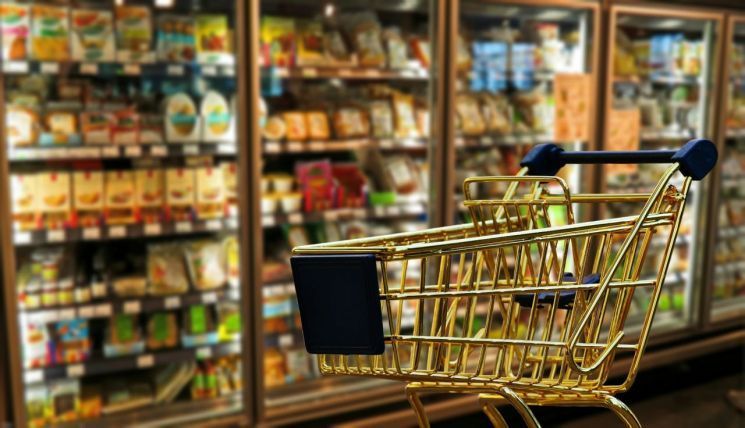
WSJ reported that American consumers, fearing a sharp rise in prices due to Trump's tariff bombshell, are flocking to supermarkets and grocery stores. Consumers purchased a variety of products, from home appliances expected to see significant price hikes to groceries and sneakers. Online, videos have surfaced showing consumers hurriedly filling their shopping carts at large retailers like Walmart, and lists of 'essential items to buy before tariffs are imposed' are being shared. In particular, demand for toilet paper and eggs has surged so much that major supermarkets have imposed purchase limits per person.
This panic buying movement stems from the tariff uncertainty caused by the Trump administration. By announcing reciprocal tariffs targeting the entire world, American consumers anticipate that tariffs will be passed on to consumer prices, leading to inflation, and are thus accelerating their spending. The 'learning effect' from supply chain disruptions and inflation experienced during the 2020 COVID-19 pandemic is also considered a factor spreading panic buying.
The uncertainty of tariff policies also signals price increases due to supply reductions from the 'supply' side. According to Bloomberg on the same day, Amazon, the world's largest e-commerce company, has reduced imports of some products manufactured in Asian countries such as China, Vietnam, and Thailand. Immediately after the reciprocal tariff announcement on the 2nd, Amazon canceled orders for various Asian-made products including beach chairs, scooters, and air conditioners. The reason behind Amazon's reduction in import volume is presumed to be cost savings on tariffs. Amazon directly purchases 40% of the products it sells. It buys products wholesale locally abroad and ships them directly to warehouses in the U.S. Because Amazon ships directly to the U.S., if tariffs increase, the cost burden rises.
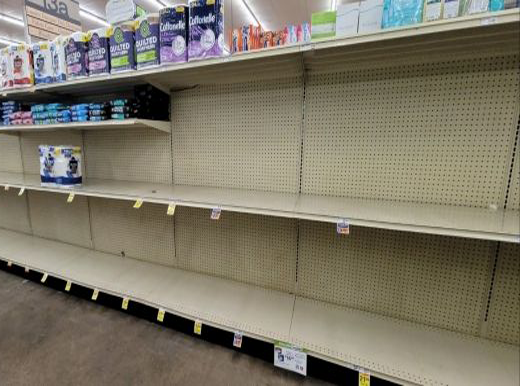 During the large-scale port union strike in 2024, the toilet paper shelves at a major American supermarket were completely empty. X (formerly Twitter)
WSJ reported that American consumers remain indifferent to the Trump administration's decision to impose a 125% tariff on China while granting a 90-day grace period to other countries. Considering that Chinese imports ranked second in the scale of U.S. imports last year, the situation is not expected to change significantly. Brandi Galloway, a small business owner from Colorado, told WSJ, "There is no reason to believe that President Donald Trump's temporary grace period will bring about significant change."
According to WSJ, a poll conducted over six days starting from the 27th of last month surveyed 1,500 American voters, revealing that 54% opposed President Trump's tariff policy. In January, 48% supported the tariff policy while 46% opposed it. WSJ analyzed that support dropped to 42% in the recent survey. Three-quarters of respondents expressed concern that prices at the checkout could rise sharply following President Trump's import tariff bombshell. The recent panic buying frenzy is interpreted as a reflection of these concerns.
© The Asia Business Daily(www.asiae.co.kr). All rights reserved.
![Clutching a Stolen Dior Bag, Saying "I Hate Being Poor but Real"... The Grotesque Con of a "Human Knockoff" [Slate]](https://cwcontent.asiae.co.kr/asiaresize/183/2026021902243444107_1771435474.jpg)
















