A proposal has been made to integrate databases (DB) at the national level to reduce casualties caused by traffic accidents. By gathering scattered information and utilizing artificial intelligence (AI) technology, the predictability increases, thereby reducing the damage accordingly.
Professor Lee Kang-hyun of the Department of Emergency Medicine at Yonsei University presented on this topic at the seminar titled "National Land and Transportation, Achieving Zero Accidents with AI" held on the 10th. According to Professor Lee, advanced traffic countries are using this approach to early detect risk factors for collision injury reduction or to establish preventive measures. The U.S. National Highway Traffic Safety Administration (NHTSA), Japan’s Institute for Traffic Accident Research and Data Analysis (ITARDA), and Germany’s GIDAS are representative examples.
On the other hand, in Korea, traffic accident and injury information is held separately by each institution without standardization. There are systems such as the Korea Road Traffic Authority’s Traffic Accident Analysis System, the National Emergency Medical Information Network, Trauma Registry System (both under the Central Emergency Medical Center), Discharge Injury In-depth Survey, and Community Severe Trauma Survey (both under the Korea Disease Control and Prevention Agency), but they collect data for different purposes and in fragmented forms, limiting integrated analysis and the development of prevention strategies, Professor Lee explained.
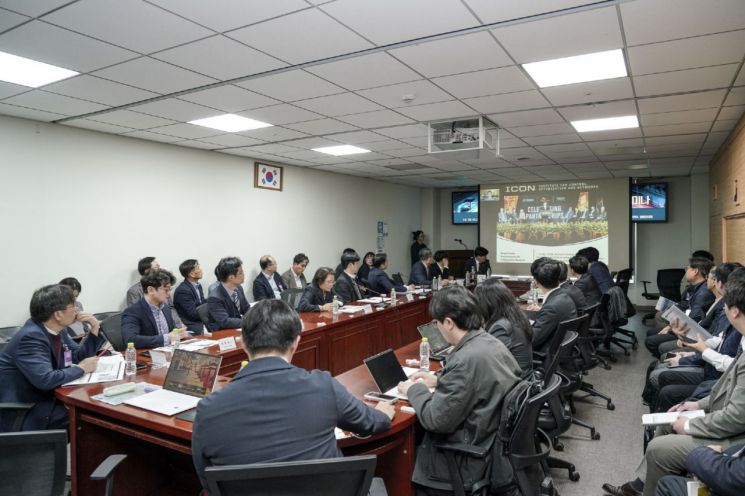 On the 10th, at the National Assembly Members' Office Building, Professor Wang Jiran from Purdue University delivered a greeting via video at the "AI for Realizing National Safety and Zero Accident National Assembly Seminar." Provided by the Korea Automobile Journalists Association
There was also a call to introduce a nationwide emergency rescue system to minimize accident damage. This system automatically notifies authorities or medical institutions when a vehicle accident occurs. Japan has introduced a system called "D-call," and research results show that the time from accident to treatment was reduced from 38 minutes to 21 minutes. In cases of accidents during early morning hours, in remote locations, or involving unconscious occupants, initial response may be insufficient, but this system is expected to reduce fatality rates and injury severity in such situations.
At the seminar, a plan was also proposed to develop a system that quantifies drivers’ driving tendencies using AI technology to provide customized assistance and accident prevention. Professor Shin Dong-hoon of the Department of Artificial Intelligence at the Korea Maritime and Ocean University said, "'Idea' system can be applied in various fields such as improving autonomous driving reliability, diagnosing malfunctions in Advanced Driver Assistance Systems (ADAS), and insurance and vehicle recommendation services," adding, "Ultimately, we aim for a future without traffic accidents through human-centered AI technology."
The seminar was organized by the Korean Society of Automotive Mobility Safety and the Korea Automotive Journalists Association. It was hosted by Kim Seong-hoe, a member of the Democratic Party of Korea (National Assembly Administrative Safety Committee), Han Jun-ho (Land, Infrastructure and Transport Committee), and Kim Ye-ji of the People Power Party (Health and Welfare Committee), and sponsored by the Ministry of Land, Infrastructure and Transport, the Ministry of the Interior and Safety, and the Korea Disease Control and Prevention Agency. Panel discussions after the presentations included Song Young-jo, Director of Emergency Medical Services at the Ministry of Health and Welfare; Jung Si-kyo, Deputy Director of the Korea Institute of Civil Engineering and Building Technology; Kang Jeong-hwa, Chairperson of the Korea Consumer Protection Federation; Lee Kang-jun, Team Leader of the Autonomous Driving Technology Development Innovation Project Group; Ryu Jong-eun, Chair of the Academic Committee of the Korea Automotive Journalists Association; Kang Kyung-hee, lawyer at the law firm MNL; and Park Kang-moon, professor at Korea National University of Transportation.
© The Asia Business Daily(www.asiae.co.kr). All rights reserved.
![Clutching a Stolen Dior Bag, Saying "I Hate Being Poor but Real"... The Grotesque Con of a "Human Knockoff" [Slate]](https://cwcontent.asiae.co.kr/asiaresize/183/2026021902243444107_1771435474.jpg)















