RDA Intensifies Control of Invasive Soil Pest 'Cyst Nematode'
Soil Disinfection Reduces Nematode Density by 80%
The Rural Development Administration (RDA) has decided to start soil disinfection this year to control invasive pests native to highland cabbage fields ahead of this summer's cabbage cultivation.
On the 9th, the RDA announced plans to mandate soil disinfection and green manure crop cultivation starting this year to gradually reduce the soil density of the invasive pest 'cyst nematode' native to highland cabbage fields in Gangwon Province. The cyst nematode is a pest that causes poor growth such as thinning of cabbage roots and smaller leaves.
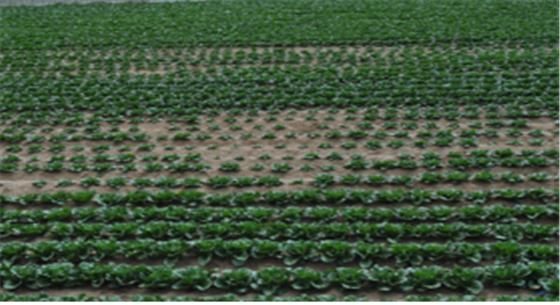
Cabbage is a vegetable that grows well in cool climates. Summer cabbage, harvested from July to October, is mainly cultivated in highland areas over 600 meters above sea level. Recently, due to climate change such as heatwaves, continuous cropping disorders, and increased soil pests and diseases, the cultivation area of summer cabbage decreased from 4,421 hectares in 2022 to 3,995 hectares in 2023, and production dropped from 192,130 tons to 172,201 tons during the same period.
Kwon Cheol-hee, Director of the Rural Support Bureau at the RDA, explained, "Since the 2010s, the spread of cyst nematode infections has caused growth decline and poor heading, where the inside of the cabbage does not fill properly, making it difficult to produce marketable summer cabbage. As a result, more farmers are giving up cultivation or leaving fields fallow." He added, "The area under public pest control in 2024 has increased about fourfold compared to ten years ago, reaching 219 hectares."
The RDA has identified two species of cyst nematodes introduced domestically: the 'beet cyst nematode,' first detected in Taebaek, Gangwon Province in 2011, and the 'clover cyst nematode,' additionally confirmed in Jeongseon in 2017.
Accordingly, the National Institute of Agricultural Sciences under the RDA conducted field trials targeting cabbage farms in Gangwon with high cyst nematode density. The density of cyst nematodes in fields disinfected with fumigant pesticides decreased by about 80%. Another method involving the cultivation and incorporation of green manure crops such as white mustard and oilseed radish into the soil reduced nematode density by 53%.
Therefore, the RDA plans to mandate soil disinfection and green manure crop cultivation, proven effective in reducing cyst nematode density, starting this year to enable continuous cabbage cultivation without fallowing. Additionally, to promote farmer-led pest control activities, the RDA will provide 2.4 billion KRW in pest control expenses, including costs for pesticides, seeds, and equipment usage fees.
Director Kwon stated, "We conducted density surveys on cabbage fields and surrounding farms in five cities and counties in Gangwon where cyst nematodes occurred last year, selecting 316 farms (551.3 hectares) requiring public pest control in 2025." He added, "If cyst nematode control is completed in the public pest control target fields this year, an additional 14,000 tons of summer cabbage production is expected."
Starting in May, when pest control activities intensify, the RDA plans to regularly visit provincial agricultural research centers and city/county agricultural technology centers to check each farm's pest control progress and support status. They will also conduct on-site guidance and technical support. After pest control ends in November, the RDA will jointly test cyst nematode densities in each field with precision diagnostic institutions to evaluate the effectiveness of improved control methods and reflect the results in next year's projects.
RDA Administrator Kwon Jae-han said, "The RDA is supporting stable summer cabbage supply by promoting new technologies to extend spring cabbage storage periods, resolving soil pest and disease issues in highlands, and expanding mechanization systems for cabbage transplanting and harvesting. We are also considering expanding summer cabbage cultivation in mid-highland areas with favorable production conditions." He added, "We will focus on disseminating new control methods considering highland terrain, soil environment, and nematode density to create an optimal environment for producing high-quality summer cabbage."
© The Asia Business Daily(www.asiae.co.kr). All rights reserved.
![Clutching a Stolen Dior Bag, Saying "I Hate Being Poor but Real"... The Grotesque Con of a "Human Knockoff" [Slate]](https://cwcontent.asiae.co.kr/asiaresize/183/2026021902243444107_1771435474.jpg)















