"U.S. Reciprocal Tariffs More Negative Than Expected"
Particularly Adverse Impact on Growth Rates in the Second and Third Quarters
The U.S. policy of imposing reciprocal tariffs is expected to have a more negative impact on the South Korean economy than anticipated. As a result, global banks have begun to revise their economic growth forecasts downward.
On the 4th, Jinwook Kim, an economist at Citi, stated in a report that the forecast for South Korea's Gross Domestic Product (GDP) has been lowered from the previous 1% to 0.8%, a reduction of 0.2 percentage points. Specifically, this reflects the larger-than-expected negative impact of the U.S. reciprocal tariff policy on the manufacturing and trade sectors during the second and third quarters of this year. The economic growth rates for South Korea in the second and third quarters have been revised from 0.5% and 0.6% to 0.3% and 0.5%, respectively.
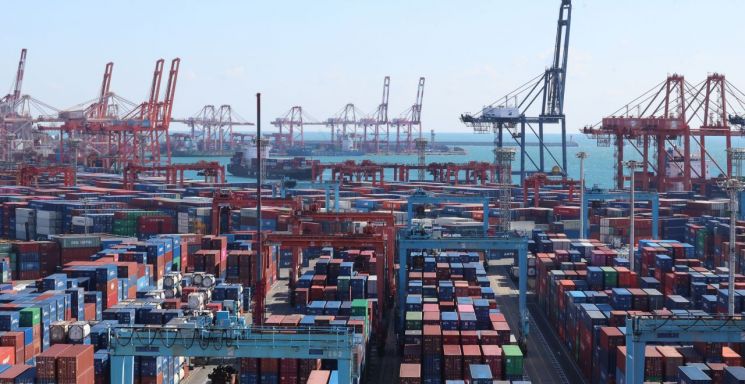
Citi also expects the Bank of Korea to lower its growth forecast. Economist Kim said, “The Bank of Korea is likely to revise its GDP growth forecast for this year downward from 1.5% to a range of 1.0% to 1.3%, reflecting the stronger-than-expected U.S. reciprocal tariffs.” Similar to Citi, it is anticipated that the quarterly growth forecasts for the second and third quarters could be lowered to below 0.5% quarter-on-quarter.
Economist Kim analyzed that not only reciprocal tariffs but also sector-specific tariffs on semiconductors and pharmaceuticals, which have not yet been implemented but are expected, will negatively affect the growth rate. He said, “Reciprocal tariffs and sector-specific tariffs on semiconductors and pharmaceuticals will cause at least a -0.5% annual impact.”
Considering the trade tendencies of the U.S. Trump administration, he noted that there is room for the 25% reciprocal tariff on South Korea to be reduced to around 10%, but “since the new administration will be formed after June 4, the timing of a trade agreement between South Korea and the U.S. could be delayed until the third quarter.”
© The Asia Business Daily(www.asiae.co.kr). All rights reserved.
![Clutching a Stolen Dior Bag, Saying "I Hate Being Poor but Real"... The Grotesque Con of a "Human Knockoff" [Slate]](https://cwcontent.asiae.co.kr/asiaresize/183/2026021902243444107_1771435474.jpg)
















