Since Mayor Cho Gyu-il Took Office in July 2018
Expansion of Diverse Public Facility Infrastructure
Jinju City, Gyeongnam Province, announced on the 2nd that, based on a thorough analysis of its 2023 financial statements, the total assets were found to be 7.6197 trillion won.
This represents an increase of 897.3 billion won compared to the total asset size of 6.7224 trillion won in 2018. In addition, liabilities, which amounted to 402 billion won in 2018, were significantly reduced to 151.2 billion won in 2023, a decrease of 250.8 billion won.
Accordingly, Jinju City's net asset size in 2023 increased by 1.1481 trillion won (897.3 billion won from asset growth + 250.8 billion won from liability reduction) compared to 2018.
A look at the details of Jinju City's asset increase shows how much effort the city government has put into enhancing citizen happiness. This is the result of developing various infrastructure such as parks, roads, libraries, exhibition halls, welfare facilities, sports facilities, and parking lots to improve citizens' living conditions and establish Jinju as a central city in western Gyeongnam.
Since the launch of the 7th popularly elected administration, major infrastructure projects have included economic facilities such as the Sangpyeong Industrial Complex Innovation Support Center and startup support facilities, the Jinju K-Entrepreneurship Center, and in the field of culture and tourism, Somang Jinsan Yudeung Park, Namgang Lantern Exhibition Hall, Railway Culture Park, Wolasan Forest Jinju, Jinyangho Woodland, Dream Growth Hill Dynamic Square, Hamo Play Forest, Icheon Book Cafe, Mulbit Gallery, and the Noeul Observatory Claude, all developed in Jinyangho Park.
In the field of children and youth, the city boasts a water park and ground fountain that attract more than 40,000 children every summer, as well as the Nambu Children's Library. In 2025, a children's welfare center will open in Seongbuk-dong and the Eastern City Library in Chojang-dong.
In agriculture, the city has established the Central, Southern, and Eastern Agricultural Machinery Rental Centers, Dumesil Agricultural Theme Park, Food Integration Support Center, and the Agricultural Products Comprehensive Processing Center.
Welfare facilities include Hongrakwon, the Disabled Culture and Sports Center, and a park golf course, with the Anrak Park modernization project scheduled for completion this year. In addition, to address parking shortages, various parking facilities have been expanded, and bicycle paths have been established throughout the city, including along the Namgang riverside, enhancing the welfare of Jinju citizens.
As a result, the Jinju K-Entrepreneurship Center, which opened in March 2022, has recorded a cumulative 180,000 visitors, and Wolasan Forest Jinju, equipped with glamping and other nature recreation and forest leisure facilities, attracted 350,000 visitors in 2024. These figures indicate that not only Jinju citizens but also tourists from across the country have visited Jinju.
The aforementioned infrastructure development was made possible by Jinju City's active participation in government public offerings, securing significant national and provincial funding. Over the past seven years since the 7th popularly elected administration, 314 projects (worth 376.5 billion won) have been selected, enabling Jinju City to secure substantial resources for expanding infrastructure to enhance citizen happiness.
In particular, the main factor in Jinju City's asset increase has been the purchase of land and the development of various facilities such as parks to resolve long-term unexecuted urban planning facilities.
Following a Constitutional Court ruling in 1999, facilities designated as urban planning sites but without execution plans for over 20 years began to expire from July 2020. In simple terms, landowners were able to exercise their property rights.
As land prices have continued to rise year after year, and with most of the sites being walkways and roads frequently used by citizens, local governments nationwide were on high alert. Although the decision was made in 1999, Jinju City only began to take full-scale action in July 2018, just two years before the expiration, after Mayor Cho Gyu-il took office.
The main issue was the budget, or money. Approximately 850 billion won was needed to purchase park and road land closely related to citizens' daily lives. A significant portion of the 460 billion won in net general surplus carried over from the 6th administration was invested in purchasing long-term unexecuted land, and with additional budget injections, a total of about 660 billion won has been spent so far to address the sunset clause for long-term unexecuted urban planning facilities.
Jinju City plans to secure an additional 180 billion won over the coming years to completely resolve the issue of long-term unexecuted urban planning facilities.
Jinju City first secured walkways in Gajwasan, Mangjinsan, Seonhaksan, Bibongsan, and Jinyangho Park. The city proactively prevented signs such as "Private Property, No Entry, Owner's Rights" from being posted on paths frequently used by citizens. Furthermore, in Somang Jinsan, a park themed around lanterns has been created; in Mangyeong Park, a park themed around Bigeo has been established; and in Jinyangho Park, a Renaissance project is underway to attract tourists once again.
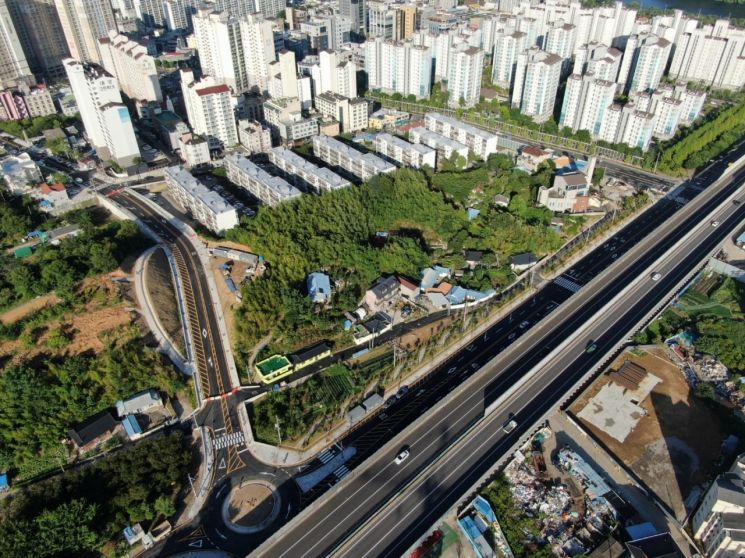
In addition, the old Jinju Station intersection square was returned to citizens in March 2022, 54 years after it was designated as a transportation plaza. The city has also significantly expanded the road network, resolving congestion in downtown areas such as Malti Hill to Jangjae, Myeongseok to Jiphyeon, Gyeongsang National University to Naedong, Chojon to Daegok, around Plaza 10 to Pyeongga Jugong A, and from the east side of Plaza 10 to Yeojoong Five-way Intersection.
A Jinju City official explained, "The various infrastructure projects mentioned earlier transformed Jinju City's funds, which were previously tied up in bank accounts, into public facilities that citizens need and enjoy, thanks to the tireless efforts of city officials and the support of citizens."
Furthermore, Jinju City emphasized that, rather than simply accumulating the net general surplus generated each year in bank accounts, it is the firm policy of Mayor Cho Gyu-il and Jinju City to carefully plan fiscal operations and actively utilize these funds at appropriate times to enhance citizen happiness and serve as a foundation for urban development.
© The Asia Business Daily(www.asiae.co.kr). All rights reserved.
![Clutching a Stolen Dior Bag, Saying "I Hate Being Poor but Real"... The Grotesque Con of a "Human Knockoff" [Slate]](https://cwcontent.asiae.co.kr/asiaresize/183/2026021902243444107_1771435474.jpg)
















