Arabica Prices Double Due to Climate and Supply Chain Issues
Global Coffee Companies Discuss Price Hikes
Due to climate change, tariffs, and supply chain disruptions, coffee bean prices have soared, leading to forecasts that coffee prices could increase by up to 25% soon.
On the 27th (local time), coffee bean futures prices closed at 378.8 cents per pound on the New York International Commodity Exchange (ICE).
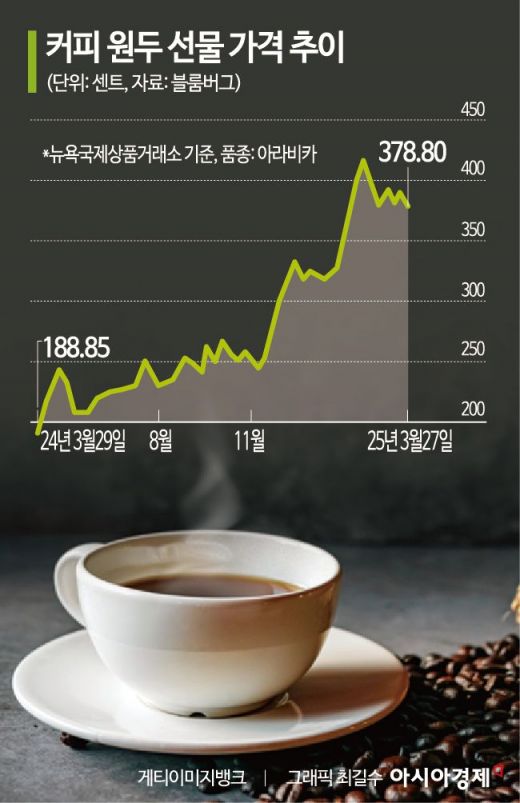
This is approximately a 100.6% increase compared to 188.85 cents recorded on March 29 last year. Although the upward trend has somewhat eased after peaking in February, roasters are signing contracts with retailers one after another, suggesting that consumer price hikes will continue.
Reuters cited eight industry sources reporting that coffee roasters such as Lavazza, Illy, Nestl?, and JDE Peet's have been negotiating with retailers over costs incurred as Arabica coffee prices nearly doubled over the past year.
As climate change makes coffee cultivation more difficult, Arabica bean prices continue to surge. When coffee roasters demanded price increases, grocery stores and supermarkets postponed signing new supply contracts. This led to popular coffees like Douwe Egberts and Senseo selling out at Albert Heijn, the largest supermarket chain in the Netherlands. Eventually, Albert Heijn began selling coffee at increased prices from the 20th after negotiations with JDE Peet's. An Albert Heijn spokesperson said, "JDE's purchase prices have risen significantly," adding, "We will absorb part of this price increase to keep products affordable."
JDE Peet's announced last month that due to abnormal weather patterns, supply chain disruptions, macroeconomic factors, and geopolitical issues, green bean prices more than doubled last year, signaling a rise in coffee prices. They stated that about 90% of global price negotiations have been completed.

Global prices for Arabica beans surged 70% last year and have risen more than 20% this year, as Brazil, which produces half of the world's Arabica coffee, experienced a record drought. On average, green bean prices account for about 40% of the wholesale price of a bag of coffee.
Leg Watson, Director of Equity Research at Dutch Bank ING, said that if last year's bean price increases are fully reflected this year, consumer coffee prices could rise by about 28%. He expects coffee prices to increase by approximately 15-25% this year, with some markets seeing consumers feel the price hikes all at once.
According to market research firm Nielsen, coffee sales in major consumption regions such as North America and Europe decreased by 3.8% last year, while prices rose by 4.6%. Brazil, the largest Arabica bean producer and the second-largest coffee consumer globally, saw coffee prices rise more steeply as its currency depreciated against the dollar. Brazilian roasting giant 3 Cora??es raised prices for roasted and ground coffee by 10% in December last year, 11% in January this year, and 14.3% from March 1. The Brazilian Coffee Industry Association (ABIC) explained that green bean prices in Brazil rose 170% last year, causing a steep price increase. Consequently, coffee prices in Brazilian stores surged by 40%.
Reuters forecasted that this year’s price increases will be much steeper, likely leading to a larger drop in sales volume.
As coffee prices rise, consumers with tighter budgets are switching to cheaper products or supermarket private brands (PB), deepening roasters' concerns. Absorbing the increased bean costs to keep prices low reduces profitability, while raising prices to maintain profitability causes consumers to tighten their wallets. According to market research company Sucana, the market share of PB coffee in the U.S. increased from 20.51% in 2021 to 23.12% in 2024 based on sales volume.
© The Asia Business Daily(www.asiae.co.kr). All rights reserved.
![Clutching a Stolen Dior Bag, Saying "I Hate Being Poor but Real"... The Grotesque Con of a "Human Knockoff" [Slate]](https://cwcontent.asiae.co.kr/asiaresize/183/2026021902243444107_1771435474.jpg)
















