Nomura Securities Predicts Tariff Burden
Mexico Tariffs Reach $28 Billion
GM Faces Highest Burden at $13.3 Billion
The Donald Trump administration's imposition of automobile tariffs is expected to increase the annual costs borne by major automakers with factories in the United States by $51 billion (approximately 76 trillion won). As the tariff burden per vehicle rises, a decline in profitability and an increase in new car prices have become inevitable. Foreign media pointed out that although U.S. President Donald Trump claims that the tariff imposition will lead to factory relocations to the U.S. and consequent job creation, the additional costs caused by the tariffs could instead have a negative impact on the economy.
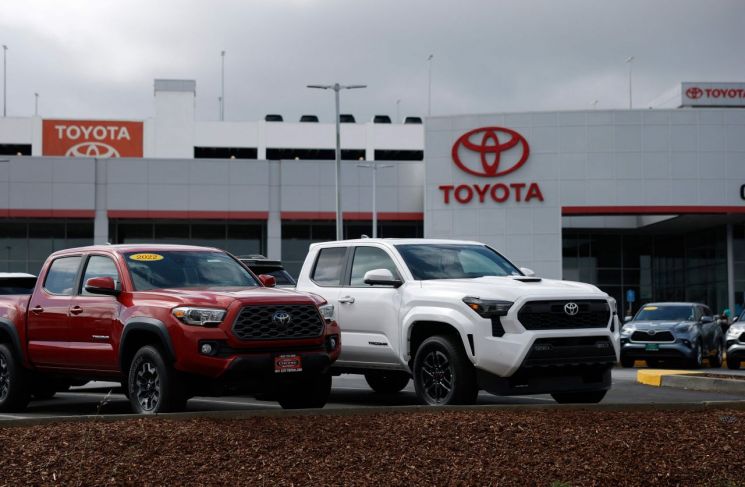
According to the Nihon Keizai Shimbun (Nikkei) on the 27th, the additional annual costs that 10 major automakers with production bases in the U.S. will have to bear are estimated to reach about $51 billion due to the 25% tariff imposed on finished vehicles produced outside the U.S. This estimate was calculated by Nomura Securities assuming that the U.S. imposes tariffs on major automakers from Japan?including Toyota and Honda?along with those from the U.S., Europe, and Korea.
The Nikkei reported that the tariff amount applied to cars exported from Mexico and Canada to the U.S. is the largest at $28 billion, and the burden increases further when parts are included. Among individual companies, General Motors (GM) faces the highest tariff burden of approximately $13.3 billion.
With the Trump-driven tariff bill arriving, some automakers are expected to see their annual operating profits turn negative. Nomura Securities predicted that Mazda and GM, which have a large production share in Mexico, would shift to operating losses if hit by the tariffs. Toyota's operating profit is expected to decrease by 30%.
The Nikkei also pointed out that even aggressive investment in the U.S. could not avoid the tariff blade. The Nikkei reported that Hyundai Motor Group announced a $21 billion investment in the U.S. on the 24th, the day before the tariff announcement, to avoid tariffs, but Korea also ended up receiving the tariff bill. The Nikkei stated, "There was no tariff reduction as compensation for the investment."
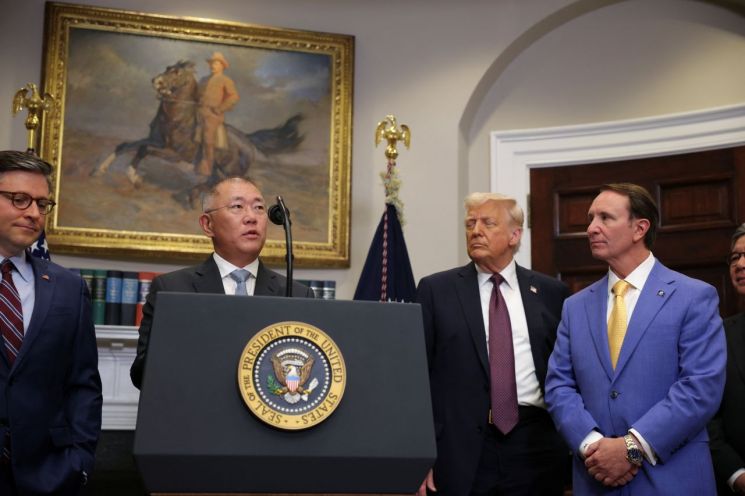
The Nikkei noted that automakers would have to locate all production bases in the U.S. to qualify for the "exemptions" mentioned by President Trump, but this is practically impossible. The New York Times (NYT) also said on the same day, "New plants generally take years to build and can cost billions of dollars." Despite automakers' steady efforts to expand local production, Japan currently produces only 60% of its vehicles in the U.S. Korea manufactures 40% of its finished vehicles in the U.S. Additionally, the local production ratios of major U.S. and European automakers are 80% and 70%, respectively.
This tariff increase is likely to lead to upward pressure on car prices. Typically, the burden of tariff increases is shared among U.S. importers, consumers, and foreign exporters. According to the Nikkei, the tariff burden per vehicle is expected to be between $2,000 and $5,000. If the price cannot be passed on to parts suppliers or sales companies in the supply chain, new car prices will inevitably rise.
According to U.S. automotive market research firm Cox Automotive, the butterfly effect of automobile tariffs is expected to raise the average price of new cars in the U.S. by about 20%. Due to tariff risk, the forecast for new car sales volume in the U.S. this year has been lowered by 4% from 16.3 million units at the beginning of the year.
Jonathan Smoke, chief economist at Cox Automotive, expressed concern, saying, "Changes in trade order due to tariffs could cause major disruptions to North American automobile production and lead to an economic recession," adding, "We are heading toward the worst-case scenario."
Foreign media in the U.S. also warned that automobile tariffs could trigger trade conflicts with Europe, Japan, and Korea, and that rising tariff costs could negatively affect the economy. The NYT pointed out, "The additional costs caused by tariffs could have a counterproductive economic effect," noting that "they could disrupt the supply chain of the U.S. automobile industry, squeeze profits, and reduce the capacity for new investments, causing damage." It also noted that such measures could further provoke trade conflicts with countries that have a large share of automobile exports to the U.S.
© The Asia Business Daily(www.asiae.co.kr). All rights reserved.
![Clutching a Stolen Dior Bag, Saying "I Hate Being Poor but Real"... The Grotesque Con of a "Human Knockoff" [Slate]](https://cwcontent.asiae.co.kr/asiaresize/183/2026021902243444107_1771435474.jpg)
















