Winter Training Falls Short Compared to Previous Years
"Series of Verbal Exchanges and Nuclear Demonstrations Aimed at Raising Leverage"
It has been confirmed that North Korea has deployed an additional 3,000 troops to the Russia-Ukraine war this year. Investigations also revealed that North Korea continues to provide missile, artillery equipment, and ammunition support to Russia, in addition to personnel.
According to the Joint Chiefs of Staff on the 27th, North Korea deployed more than 3,000 additional troops to the Russia-Ukraine war during January and February. This reinforcement is in response to approximately 4,000 casualties among the existing 11,000 North Korean troops already deployed.
North Korea is continuing to supply not only personnel but also missiles, artillery equipment, and ammunition. It is estimated that North Korea has provided Russia with a significant quantity of short-range ballistic missiles (SRBM), along with about 220 units of 170mm self-propelled guns and 240mm multiple rocket launchers. The Joint Chiefs of Staff stated, "The amount of support is expected to increase depending on the progress of the war."
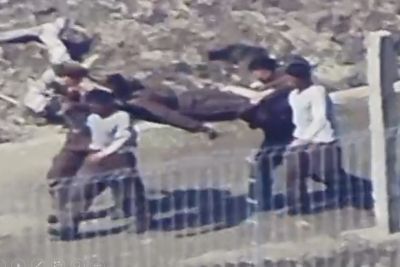
Additionally, North Korea resumed frontline area operations earlier this month, which had been temporarily halted at the end of last year for winter training. They are currently conducting work such as reinforcing barbed wire fences that isolate North Korea itself, deploying dozens to hundreds of personnel mainly in areas where operations were conducted last year. It is reported that recently, multiple casualties occurred due to landmine explosions. A Joint Chiefs of Staff official said, "It appears that excessive work was carried out without preparing replacement troops."
North Korea's winter training has been ongoing since December last year. However, compared to Kim Jong-un, Chairman of the State Affairs Commission of North Korea, emphasizing 'training according to the demands of modern warfare' and 'the year of training' during the battalion commander and battalion political instructor conference and visits to the Ministry of Defense, the Joint Chiefs of Staff assess that training by branch appears somewhat insufficient compared to previous years. The Joint Chiefs of Staff stated, "The current lackluster training is presumed to be due to mobilization efforts such as local factory construction, frontline area operations, preparations for additional troop deployments to Russia, and chronic energy shortages."
Meanwhile, since announcing the 'ultra-hardline strategy against the U.S.' at the end of last year, North Korea has used joint South Korea-U.S. exercises and the deployment of U.S. strategic assets as pretexts to launch a series of verbal exchanges and showcase its nuclear capabilities. This appears to be a 'raising the stakes' strategy coinciding with the inauguration of Donald Trump's second term as U.S. president.
North Korea has issued more than ten statements and commentaries criticizing South Korea following the Freedom Shield (FS) exercises. Although Kim Yo-jong mentioned "strategic-level revolutionary actions," the Joint Chiefs of Staff assess that no unusual developments have been identified so far. However, considering past provocations and North Korea's strong warnings against recent South Korea-U.S. joint exercises, the Joint Chiefs of Staff believe various strategic and tactical provocations may continue and are strengthening surveillance and readiness.
Furthermore, North Korea publicly launched missiles four times this year, a decrease compared to seven launches during the same period last year. However, the Joint Chiefs of Staff remain vigilant under South Korea-U.S. intelligence cooperation, keeping in mind the possibility of launches of solid-fueled intercontinental ballistic missiles (ICBM), hypersonic missiles, submarine-launched ballistic missiles (SLBM), and SRBMs.
© The Asia Business Daily(www.asiae.co.kr). All rights reserved.
![Clutching a Stolen Dior Bag, Saying "I Hate Being Poor but Real"... The Grotesque Con of a "Human Knockoff" [Slate]](https://cwcontent.asiae.co.kr/asiaresize/183/2026021902243444107_1771435474.jpg)















