Chubby Filter Trend Spreads on TikTok
Users Share Before-and-After Photos and Make Jokes
Some Criticize It as "Appearance Shaming"
Experts Warn, "It Influences Body Dissatisfaction"
There is growing criticism of the so-called 'chubby filter,' a correction effect on TikTok that makes users appear to have gained weight. Experts have also warned that the popularity of this filter fuels harmful diet culture and can even trigger eating disorders in severe cases.
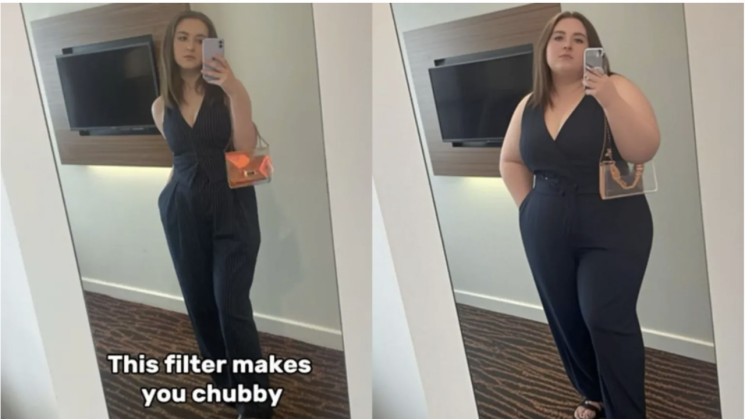 As the "Tongtong Filter" becomes popular on TikTok, influencers are urging a ban on its use, citing concerns that it may foster negative body perceptions. The photo shows before and after using the Tongtong Filter. Photo by BBC
According to the BBC on the 21st (local time), Sadie, an influencer with about 66,000 TikTok followers, is calling for a ban on the 'chubby filter.' She said she recently received messages from several women who deleted TikTok after developing negative perceptions of their bodies due to the filter's popularity on the platform. Sadie said, "It felt like women were saying, 'I won because I'm slim. Becoming fat would be the worst thing,'" adding, "I believe people should not be mocked for their body shape just because they use TikTok."
Currently, content showing before-and-after images using the 'chubby filter' is trending on TikTok. The BBC reported, "Many people share before-and-after images on the platform and joke about how different they look, but some say this is a form of 'appearance shaming' and should not be allowed."
Another TikTok user also expressed the opinion that the 'chubby filter' should be banned. Emma, who lives in Aire, UK, said, "People basically said being 'chubby' was disgusting," adding, "As a woman with curves essentially similar to the photos using this filter, I felt disheartened."
Dr. Emma Beckett, a food and nutrition scientist, pointed out that the popularity of this filter could have harmful effects on society. Dr. Beckett criticized, "(The trend of the chubby filter) deepens weight stigma, which is discrimination against people based on weight and body size," adding, "The stereotype that larger people are lazy and problematic is outdated and false. It is something that must be avoided."
Dr. Beckett also noted, "Fear of weight gain influences eating disorders and body dissatisfaction and fuels harmful diet culture," explaining, "It causes people to obsess over food and exercise in unhealthy ways and exposes them to scam products and fad diets." She continued, "Instead of everyone finding what suits their own body best, there is pressure to conform to uniform beauty and health standards, which is harmful to both physical and mental health."
There are also calls to strengthen platform responsibility. Sadie said, "There should be a way to label content that includes body shaming or eating disorders," adding, "This would allow people to post if they want to, but prevent it from reaching a wider audience."
© The Asia Business Daily(www.asiae.co.kr). All rights reserved.
![Clutching a Stolen Dior Bag, Saying "I Hate Being Poor but Real"... The Grotesque Con of a "Human Knockoff" [Slate]](https://cwcontent.asiae.co.kr/asiaresize/183/2026021902243444107_1771435474.jpg)















