Travel Research Organization: U.S. Tourism Expected to Drop by 5% Instead of 9% Growth
Canadian Visits to U.S. Forecast to Fall by 15%
"Tariffs and U.S.-Russia Relations May Deter Western European Tourists"
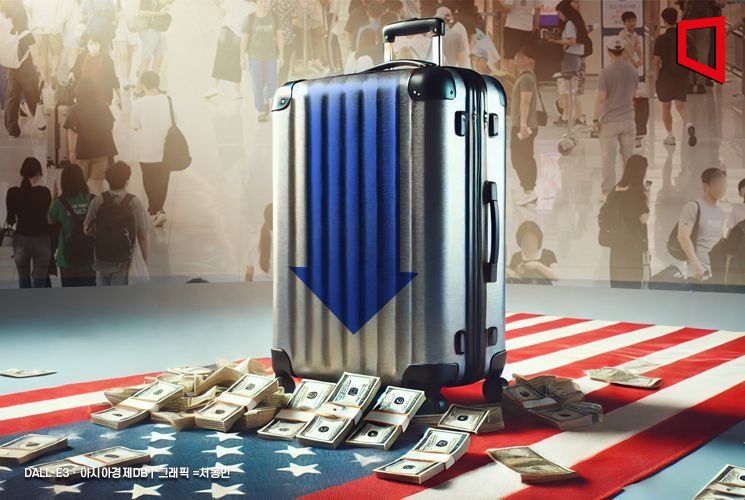
The Washington Post (WP) reported on the 16th (local time) that as more people cancel their travel plans to the United States due to President Donald Trump's trade policies and threatening remarks, the U.S. travel industry is expected to suffer a blow worth approximately 93 trillion won this year.
Tourism Economics, a travel research organization, predicted that international travel to the U.S. will decrease by 5% this year. The resulting loss is estimated at about $64 billion (approximately 92.87 trillion won). The organization initially expected a 9% increase in U.S. travel this year but revised its estimate at the end of February to reflect the Trump administration's policy stance.
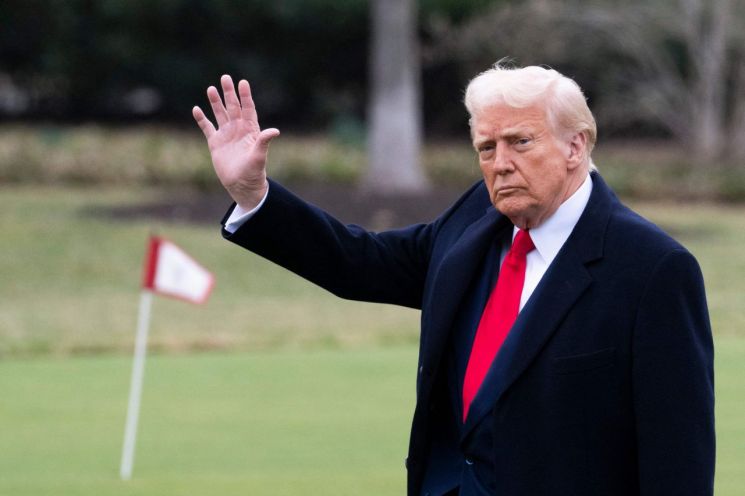
Adam Sacks, president of Tourism Economics, said, "There has been a dramatic change in our outlook," adding, "Not only tariffs but also (President Trump's) tariff-related remarks and arrogant tone are causing much weaker growth."
According to statistics from the U.S. International Trade Administration (ITA), the number of overseas visitors to the U.S. in February decreased by 2.4% compared to the previous year. By region, Africa declined by 9%, Asia by 7%, and Central America by 6%. By country, travelers from China, targeted by President Trump's 'tariff bomb,' decreased by 11%.
International tourism also sharply declined during Trump's first term. Even before the COVID-19 pandemic, unrealized revenue losses due to tourism slowdown reached about $20 billion, Sacks pointed out. At that time, travel bans, tariffs, and tough immigration-related remarks by the Trump administration significantly reduced tourists from Mexico, China, and the Middle East.
However, this time, the Washington Post forecasts a significant decrease in Canadian travelers, who make up a large portion of U.S. visitors. After President Trump expressed a desire to make Canada the 51st state of the U.S., former Canadian Prime Minister Justin Trudeau urged his citizens not to vacation in the U.S. According to Statistics Canada, the number of Canadians visiting the U.S. by car in February dropped by 23%, and those traveling by air decreased by 13%.
Tourism Economics expects travel from Canada to the U.S. to decline by 15% this year, resulting in a loss of $3.3 billion.
There are also observations that travel from Western Europe, which accounted for more than one-third of U.S. overseas visitors last year, may decrease. After the European Union (EU) imposed retaliatory tariffs against U.S. steel and aluminum tariffs, President Trump threatened to impose a 200% tariff on EU alcoholic beverages. Researchers at Tourism Economics stated that tariffs against Europe and the Trump administration's close ties with Russia could damage European demand for U.S. tourism.
The WP predicted that this decline in U.S. travel could exacerbate difficulties in the tourism industry, which is already experiencing poor performance. Last week, U.S. airlines such as Delta Air Lines, Southwest Airlines, and American Airlines lowered their first-quarter earnings forecasts. Hotel and travel agency executives reported that Americans are cutting back on vacations due to economic uncertainty. Despite overall growth in the labor market recently, jobs in the hotel and leisure industry have decreased for two consecutive months.
Edward Herman Bastian, CEO of Delta Air Lines, said on the 11th, "People are becoming cautious and refraining from travel," adding, "We are watching how trade and tariff issues or macroeconomic policy changes will unfold."
© The Asia Business Daily(www.asiae.co.kr). All rights reserved.
![Clutching a Stolen Dior Bag, Saying "I Hate Being Poor but Real"... The Grotesque Con of a "Human Knockoff" [Slate]](https://cwcontent.asiae.co.kr/asiaresize/183/2026021902243444107_1771435474.jpg)
















