February PPI Stagnates Month-on-Month Due to Decline in Service Prices
Egg Prices Surge 53.6 Percent
Inflation Concerns Ease as CPI Slows and PPI Remains Flat
Last month, the U.S. wholesale price index, the Producer Price Index (PPI), stagnated due to a decline in service prices, falling short of market expectations. Amid renewed inflationary pressures, the drop in wholesale prices following retail prices has somewhat eased concerns about rising inflation.
According to the U.S. Department of Labor on the 13th (local time), the PPI for February this year remained flat compared to the previous month. This figure was significantly below both the January figure (0.6%) and expert forecasts (0.3%). The PPI rose 3.2% year-over-year, also falling short of the previous month's figure (3.7%) and market expectations (3.3%).
The core PPI, which excludes volatile food and energy prices to show the underlying trend of inflation, fell 0.1% month-over-month. The market had expected a 0.3% increase, but it instead declined. This was also well below the January figure (0.5% increase). Year-over-year, the core PPI rose 3.4%, again below both the previous month (3.8%) and forecast (3.6%).
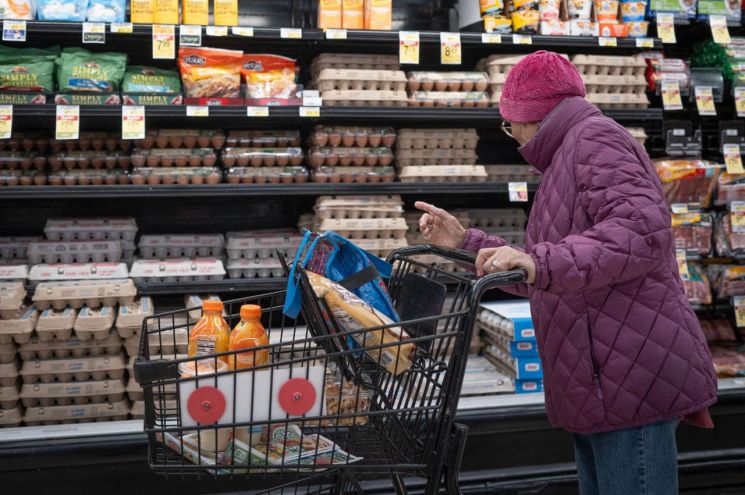
The stagnation in wholesale prices was largely due to a 0.2% month-over-month decline in service prices, the largest drop since July last year. Wholesale margins on machinery and vehicles fell 1.4%, pulling down service prices. Commodity prices rose 0.3% month-over-month, with egg prices surging 53.6% due to avian influenza. Prices of pork, fresh and dried vegetables, electricity, and tobacco products also increased. Gasoline prices fell 4.7%.
Since the wholesale price index (PPI) influences the retail price index (CPI) with a time lag, the stagnation of PPI last month has eased inflation concerns. The February CPI released the previous day also gave relief to the market, rising 2.8% year-over-year, below both market expectations (2.9%) and the previous month's figure (3.0%).
However, a concerning factor in the PPI report is the strength shown in components of the Personal Consumption Expenditures (PCE) price index, which the Federal Reserve (Fed) closely monitors. Specifically, hospital inpatient care costs rose 1%, and investment portfolio management fees increased by 0.5%. As a result, the February PCE price index, to be released on the 28th, may show a larger-than-expected increase.
U.S. President Donald Trump's ongoing tariff policies could also be a factor that stimulates future inflation. As the effects of tariffs begin to be fully reflected in the economy, import prices may rise, leading to increases in consumer prices.
All inflation indicators released before the Federal Open Market Committee (FOMC) regular meeting scheduled for the 18th-19th are positive, but the Fed is expected to keep the benchmark interest rate steady at the current 4.25-4.5% level for the time being. The Fed is likely to monitor inflation, growth rates, and employment indicators while assessing the impact of the Trump administration's trade policies going forward.
© The Asia Business Daily(www.asiae.co.kr). All rights reserved.
![Clutching a Stolen Dior Bag, Saying "I Hate Being Poor but Real"... The Grotesque Con of a "Human Knockoff" [Slate]](https://cwcontent.asiae.co.kr/asiaresize/183/2026021902243444107_1771435474.jpg)















