967,100 Koreans Visited Japan in January, Setting a New Record
Demand Surges After Japan Resumed Visa-Free Entry in 2022
Travel Industry Actively Developing New Products for Small Cities and Beyond
The number of Korean travelers visiting Japan has been increasing year after year. The close proximity and relatively affordable costs have lowered the threshold of crossing the border. Nearly one million people visited Japan in January alone this year, setting a new monthly record. With travel products and airline routes pouring out to meet travel demand, there is a forecast that surpassing 10 million visitors annually for the first time in history is not an impossible story.
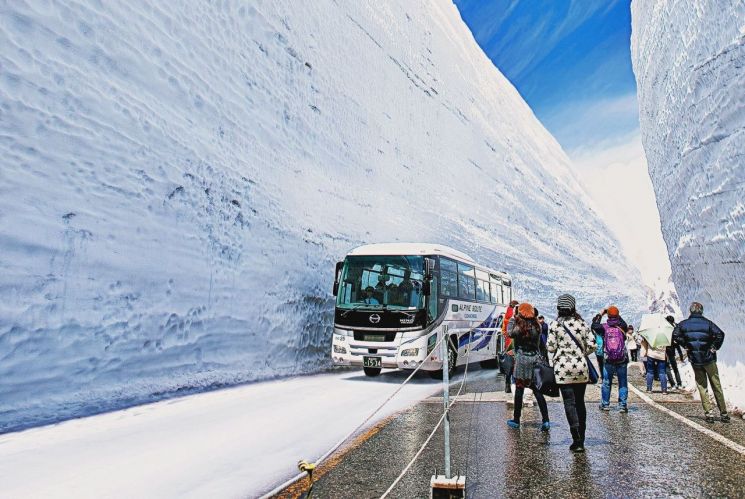
According to the Ministry of Justice on the 15th, the number of Korean visitors entering Japan in January this year was counted at 967,100. This is a 12.8% (110,061 people) increase compared to January last year, marking the highest monthly number ever. In January, 2,972,916 Koreans traveled abroad, and among them, one in three (32.5%) chose Japan as their destination.
By country, Japan ranked overwhelmingly first, with more than twice the number of visitors compared to second-place Vietnam (417,116 people).
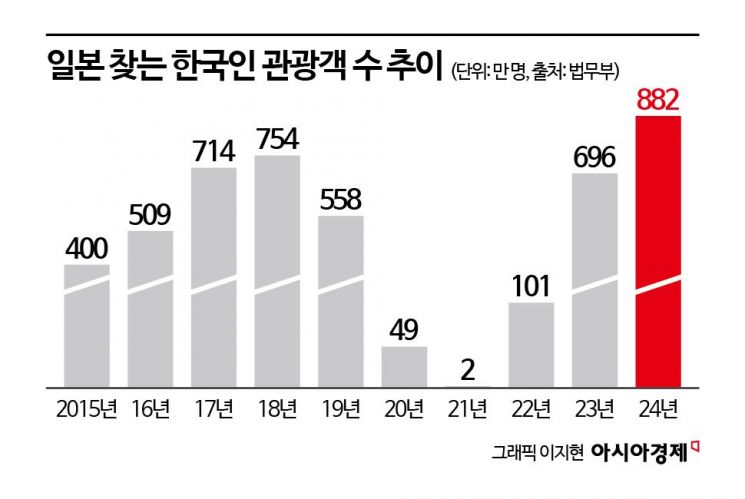
Since the mid-2000s, the number of visitors to Japan had maintained around 2 million annually for nearly a decade, but it jumped sharply to 4 million in 2015 and increased to about 7.5 million in 2018. After that, the COVID-19 pandemic and anti-Japan sentiments such as 'No Japan' caused a rapid decline, but overseas travel resumed in 2022, and the number rebounded sharply to a record high of 8.82 million last year. Based on the number of visitors in January this year, it is expected that the 10 million mark could be surpassed for the first time in history.
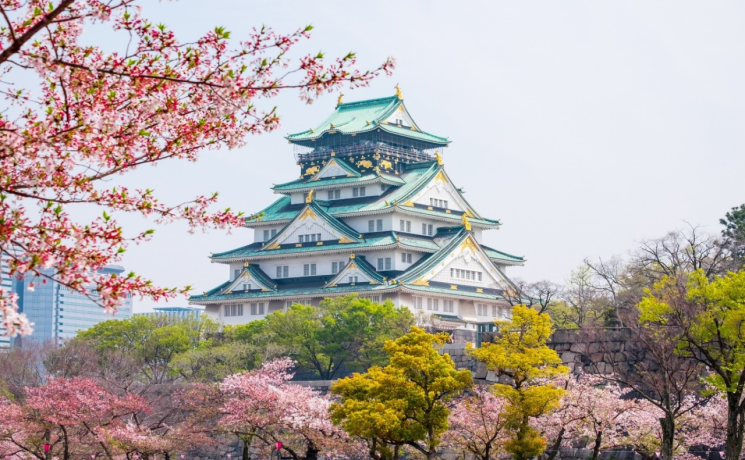
As the number of visitors to Japan increases, the travel industry has become busier in response to the market. A representative example is that Japanese travel products are rapidly expanding from crowded major cities to small and medium-sized cities. Hana Tour is introducing products linking western regional cities such as Itoshima, Nagasaki, and Kumamoto, moving away from the well-known eastern Kyushu travel pattern centered on Fukuoka, Yufuin, and Beppu. A Hana Tour official said, "We believe that demand for hidden small-town travel, where tourists are few and visitors can feel Japan’s unique tranquility and serenity, will continue to increase," adding, "We will diversify products by discovering new small-town travel destinations and linking small towns with popular major cities."
Modetour has also recently significantly increased small-town products targeting repeat visitors to Japan, such as the Alpen Route, Tottori-Okayama, and Shikoku. A representative product is the 'Modu Signature Tottori Onsen 3 Days,' which includes stays at luxury hot spring hotels and visits to cherry blossom spots on Mount Daisen, a symbol of Tottori Prefecture, the Tottori Sand Dunes, Uradome Coast, Adachi Museum of Art, and Matsue Castle.
Norang Balloon recently launched new small-town products in Tokushima and Takamatsu, where visitors can experience folk dances such as 'Awa Odori.'
The diversity of product themes is also expanding beyond tourism to cultural and artistic experiences. Nol Universe recently started selling tickets for the UK Birmingham City Symphony Orchestra’s Japan tour concerts held in Tokyo and Fukuoka this July. The concerts are expected to attract high interest from domestic classical music enthusiasts as they will feature a collaboration with pianist Lim Yunchan, who has recently gained great popularity in Korea.
With individual travel demand continuously increasing, local branch offices are being established to provide more sophisticated, customized local services. Norang Balloon opened an office in Osaka, the most visited city by domestic tourists, on the 10th to expand its business. A Norang Balloon official explained, "We will offer reasonably priced travel products by utilizing local adjacent networks," adding, "We will support travelers to enjoy more convenient and stable trips by securing hotel and transportation infrastructure within Japan." Norang Balloon plans to establish additional bases centered on major cities in Japan in the future.
The increased preference for travel to Japan is largely due to the resumption of visa-free individual travel for foreigners since the end of 2022 and the relatively reduced travel cost burden caused by the weak yen (Enjeo). An industry insider said, "Japan offers various travel themes from food to shopping and sightseeing, making it a destination with more repeat visitors than any other region," adding, "Although the yen depreciation effect has somewhat diminished since the end of last year, the fact that it is a short-distance travel destination means it will not affect the overall trend."
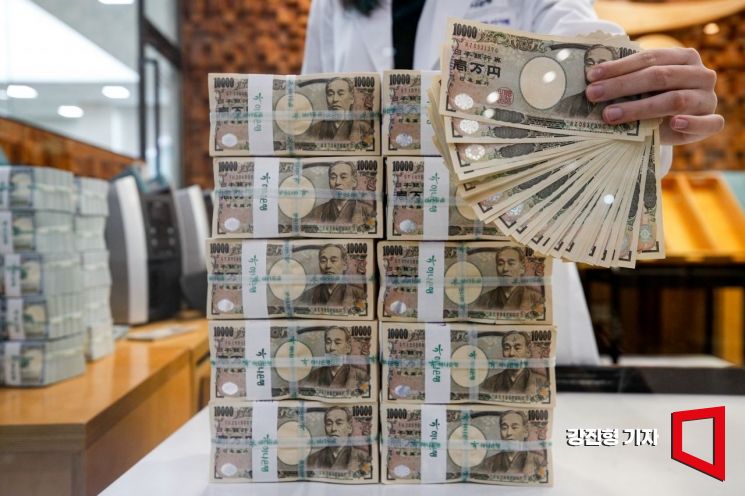
Meanwhile, while Korean visits to Japan are breaking records, Japanese people appear less active in overseas travel. According to the Japan Association of Travel Agents (JATA), as of the end of last year, the total number of valid passports in Japan was 21.64 million. The passport ownership rate is about 17.5%, significantly lower than Korea’s 40%. The industry views the main reasons as the increased cost burden of overseas travel due to the weak yen and the increased preference for domestic tourist destinations after the pandemic. Additionally, the high cost of passport issuance in Japan, about 16,000 yen (approximately 160,000 KRW), which is three times higher than in Korea, is also considered a barrier to overseas travel.
© The Asia Business Daily(www.asiae.co.kr). All rights reserved.
![Clutching a Stolen Dior Bag, Saying "I Hate Being Poor but Real"... The Grotesque Con of a "Human Knockoff" [Slate]](https://cwcontent.asiae.co.kr/asiaresize/183/2026021902243444107_1771435474.jpg)

















