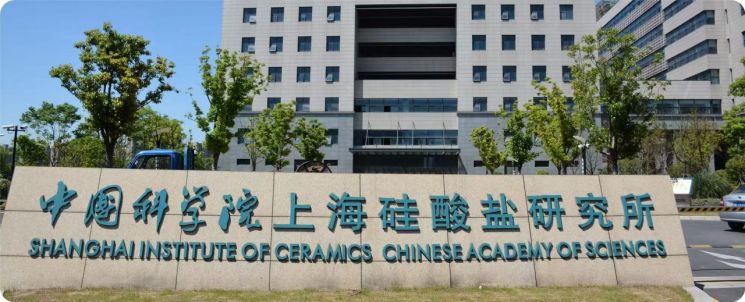
Coloray, a KOSDAQ-listed company, announced on the 11th that it visited the Shanghai Institute of Ceramics, Chinese Academy of Sciences, to collaborate on next-generation solar technology.
During the meeting, they had in-depth discussions on the industrial application potential of perovskite solar technology and explored ways to utilize it in electric vehicles and low-light environments.
Perovskite is a material with a specific crystal structure that is attracting attention as a next-generation solar material with high photoelectric conversion efficiency. It is lighter, more flexible, and can be produced at a lower cost than conventional silicon-based solar cells, generating great expectations in the renewable energy industry.
On the 3rd, Coloray Chairman Zhuo Zhongbiao and Ying Yuang, Director of the Deqing County Science and Technology Bureau, along with other officials, visited the Shanghai Institute of Ceramics. They discussed cooperation plans with Dr. Yang Songwang’s research team at the institute and explored ways to integrate perovskite solar technology into the automotive and renewable energy industries.
The Shanghai Institute of Ceramics is a leading inorganic materials research institution under the Chinese Academy of Sciences, conducting core technology research in various fields such as energy conversion, defense, and healthcare. At the meeting, two main research directions were discussed: ▲ solar power generation technology that maintains high efficiency even in low-light environments ▲ the potential application of thin-film solar cells for electric vehicles.
Perovskite solar cells boast higher photoelectric conversion efficiency and lower production costs compared to conventional silicon-based cells. In particular, the flexible perovskite thin film developed by the research team can be directly attached to vehicle surfaces, greatly enhancing the energy efficiency of electric vehicles. Dr. Yang explained, “If this technology is applied, it can generate enough power to support driving for more than four hours a day.”
Coloray has extensive experience in automotive coatings and special pigment development, and through this collaboration, plans to combine its pearl luster pigments with perovskite solar technology. The goal is to develop automotive coatings with solar power generation capabilities, leading innovation in eco-friendly electric vehicle design.
An industry insider stated, “If technology that integrates electric vehicle design with renewable energy is commercialized, it will attract significant attention not only as a simple aesthetic differentiation but also as a sustainable energy solution,” adding, “The collaboration between Coloray and the Shanghai Institute of Ceramics has great potential to present a new paradigm in the electric vehicle industry.”
Coloray plans to further strengthen its cooperation with the Shanghai Institute of Ceramics and actively pursue research and development for the commercialization of perovskite solar technology. Attention is focused on what changes technological innovation for a sustainable future will bring to the global renewable energy market.
© The Asia Business Daily(www.asiae.co.kr). All rights reserved.
![Clutching a Stolen Dior Bag, Saying "I Hate Being Poor but Real"... The Grotesque Con of a "Human Knockoff" [Slate]](https://cwcontent.asiae.co.kr/asiaresize/183/2026021902243444107_1771435474.jpg)















