Supreme Prosecutors' Office Leadership, Including Prosecutor General Shim Woo-jung, Unanimously Agrees on "Order of Release" at Meeting the Previous Day
Special Investigation Headquarters Insists on Immediate Appeal and Higher Court Review
The Supreme Prosecutors' Office leadership has reportedly instructed the investigation team to comply with the court's decision to cancel the arrest of President Yoon Suk-yeol and to order his release. However, the Special Investigation Headquarters for Emergency Prosecution (Headed by Park Se-hyun, Chief Prosecutor of Seoul High Prosecutors' Office) is opposing the Supreme Prosecutors' Office's directive, delaying the final conclusion.
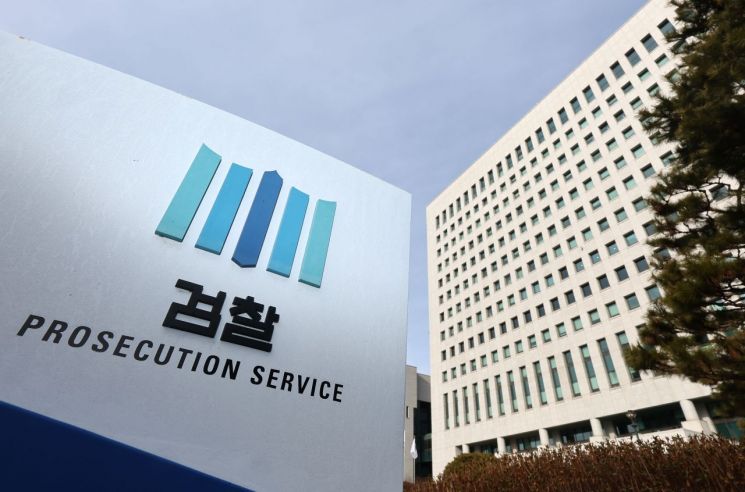
According to the legal community on the 8th, the top officials of the Supreme Prosecutors' Office, including Prosecutor General Shim Woo-jung, held a meeting the previous day after the court's decision to cancel the arrest, reaching a consensus that it was appropriate to order the release of President Yoon. The meeting reportedly included Prosecutor General Shim, Deputy Prosecutor General Lee Jin-dong, and six other senior officials at the level of chief prosecutors or higher who served as department heads at the Supreme Prosecutors' Office.
All attendees agreed without dissent that ordering the release of President Yoon and abandoning immediate appeals was appropriate, and this unanimous opinion was conveyed to the Special Investigation Headquarters for Emergency Prosecution (Special Investigation Headquarters). Regarding the immediate appeal to suspend the execution of the Seoul Central District Court's decision to cancel the arrest, consideration was given to the 2012 Constitutional Court ruling that deemed immediate appeals by prosecutors unconstitutional after a decision to suspend the execution of an arrest. Although immediate appeals against arrest cancellation are possible under the Criminal Procedure Act, the consensus appeared to be that considering the Constitutional Court's judgment, there is a risk of unconstitutionality.
Furthermore, regarding ordinary appeals, which had been proposed by some, the prevailing internal interpretation was that the court's decision to cancel the arrest is not subject to appeal, leading to the conclusion that it is preferable to abandon appeals after ordering the release.
However, the Special Investigation Headquarters reportedly expressed disagreement with the Supreme Prosecutors' Office's directive to order the release, insisting that the court's decision to cancel the arrest should be challenged through an immediate appeal. The Special Investigation Headquarters plans to hold its own meeting to discuss the appeal against the decision to accept the cancellation of the arrest and the order to release President Yoon. The Special Investigation Headquarters stated, "We are reviewing various aspects and will announce a decision once it is made."
As a result, the Supreme Prosecutors' Office and the Special Investigation Headquarters have continued discussions without reaching a conclusion on whether to order President Yoon's release by the afternoon of the day, more than 26 hours after the Seoul Central District Court decided to cancel the arrest. If the Special Investigation Headquarters holds its own meeting and the Supreme Prosecutors' Office accepts its position, President Yoon will immediately undergo release procedures.
Meanwhile, regarding the court's decision to cancel President Yoon's arrest, there are criticisms within and outside the legal community that excessive competition among investigative agencies such as the Corruption Investigation Office for High-ranking Officials (CIO), the prosecution, and the police has caused procedural flaws that could be controversial. Although the police have jurisdiction over the investigation of the crime of rebellion, the CIO launched a joint investigation headquarters and accelerated the arrest and investigation of President Yoon. The CIO arrested President Yoon on January 15 after two attempts and requested an arrest warrant on January 17. The arrest warrant was issued on January 19.
Subsequently, the prosecution, which has the authority to indict, took over the case from the CIO on January 23 and applied to the court for an extension of the detention period, citing the need for additional investigation. However, the court dismissed the request due to the absence of regulations for supplementary investigations. After various twists and turns, the prosecution held a nationwide chief prosecutors' meeting on January 26 and indicted President Yoon only at 6:52 p.m. Based on the court's calculation method for canceling the arrest, the indictment was made 9 hours and 45 minutes after the expiration of the detention period. The court also stated that even if there were no issues with the timing of the prosecution's indictment, there is doubt due to the lack of clear laws or precedents regarding the CIO's jurisdiction over the crime of rebellion, and that the arrest should be canceled and the defendant released before trial.
© The Asia Business Daily(www.asiae.co.kr). All rights reserved.
![Clutching a Stolen Dior Bag, Saying "I Hate Being Poor but Real"... The Grotesque Con of a "Human Knockoff" [Slate]](https://cwcontent.asiae.co.kr/asiaresize/183/2026021902243444107_1771435474.jpg)















