Two Out of Three Say Fine Dining and Omakase Are Too Expensive
Frequency of Premium Restaurant Visits Declines as High Costs Become a Burden
"Premium Restaurant Ready Meals (RMR)" Emerge as an Alternative
As interest in "gourmet food" grows, the popularity of high-end restaurants such as fine dining and omakase continues to rise. However, due to the economic downturn and increasing concerns over excessive costs, premium restaurant ready meals (RMR) that offer high-quality food at relatively affordable prices are being seen as a reasonable alternative.
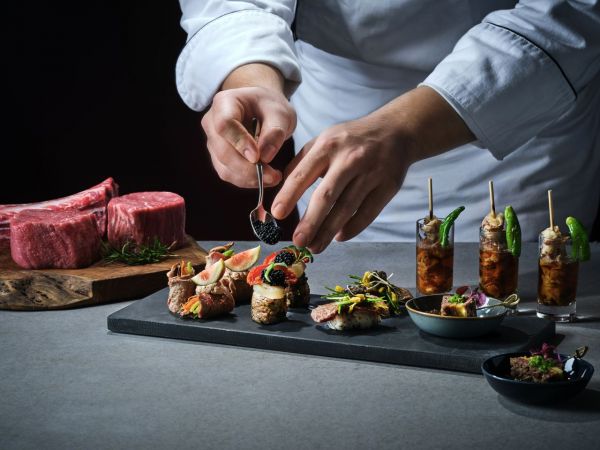
According to a "2025 Premium Restaurant Visits and RMR Survey" conducted by market research firm Embrain on 1st, targeting 1,000 men and women aged 19 to 59 who have dined out within the last six months, 54.5% of respondents said they have visited a high-end restaurant, an increase of about 10 percentage points compared to 44.0% in 2022.
Among all respondents, 67.5% stated that they have a strong interest in food, with many reporting that they feel happiness when eating delicious food (87.8%) or simply enjoy the food itself (77.4%). Notably, younger age groups showed a clearer tendency to have their own food preferences (teens 69.2%, 30s 65.2%, 40s 54.4%, 50s 48.0%), and they tended to assign more meaning to meals beyond just eating (20s 54.8%, 30s 53.6%, 40s 47.6%, 50s 40.0%).
These generations tend to view experiencing expensive food not merely as a meal but as a meaningful act of expressing their food preferences and respecting themselves, indicating that food consumption is perceived as a valuable investment that expands their experiences and tastes.
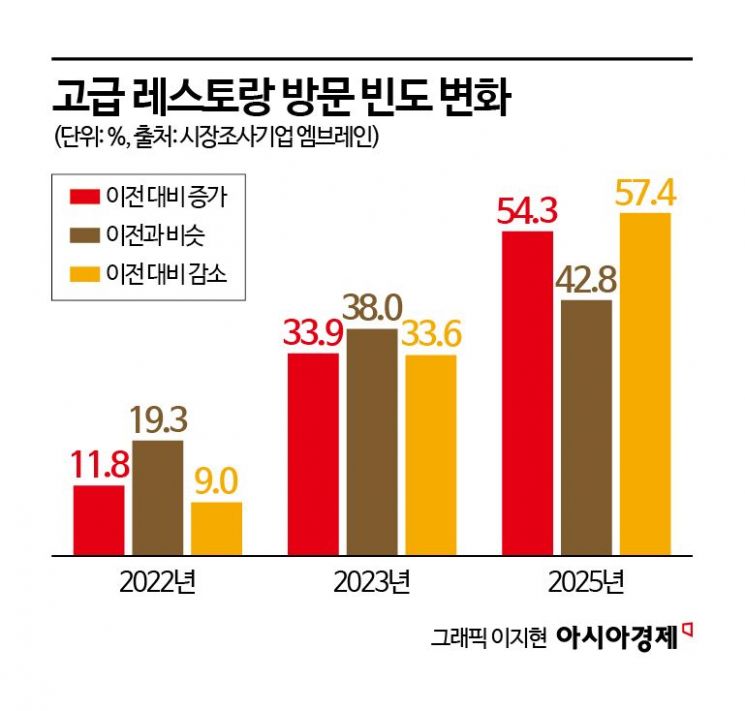
However, the frequency of visits to premium restaurants decreased from 42.8% in 2023 to 57.4% this year. While 67.6% of respondents agreed that visiting fine dining and omakase restaurants can broaden their experiences, a high percentage (64.7%) felt that the prices at premium restaurants have become excessively expensive, suggesting that recent economic conditions have influenced this trend.
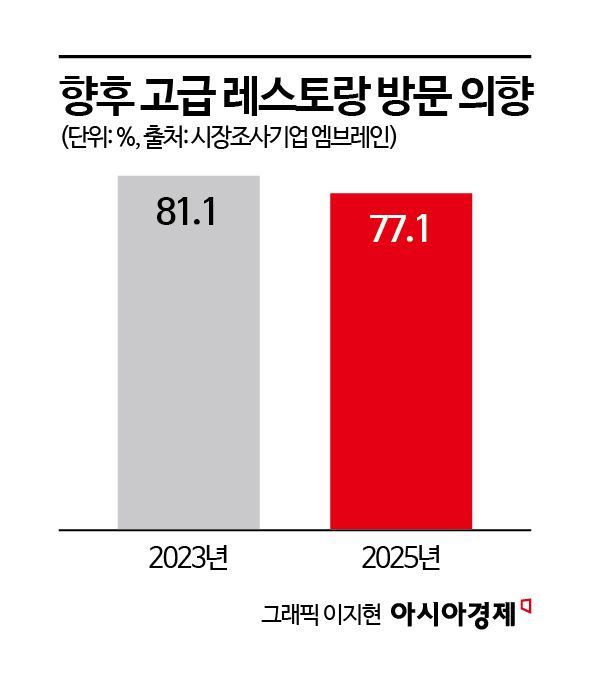
Additionally, the perception of visiting fine dining and omakase restaurants as a luxury increased from 21.7% in 2022 to 26.9% this year, and a significant portion (41.6%) believed that one visit to a premium restaurant is sufficient. Consequently, the proportion of respondents expressing willingness to visit premium restaurants in the future declined from 81.1% in 2023 to 77.1% this year.
In particular, respondents in their 20s viewed visits to premium restaurants as a special experience (20s 77.6%, 30s 72.4%, 50s 72.0%, 60s 68.4%) and as self-investment (20s 44.8%, 30s 36.8%, 40s 38.0%, 50s 34.0%), but also regarded it as a luxury (20s 34.0%, 30s 24.8%, 40s 26.0%, 50s 22.8%), showing a dual attitude toward premium restaurants.
This generation tends to be more sensitive to self-satisfaction and practicality, willing to invest in special experiences but perceiving expenses as unnecessary if satisfaction does not match the price. For premium restaurants to maintain continuous customer inflow, it will be increasingly important not just to emphasize a premium image but to provide price-to-satisfaction ratios that consumers find reasonable.
In fact, while the importance of gourmet experiences is highly valued, economic burdens are increasing. Although 54.0% of respondents are willing to pay high prices for delicious and special food, this is a slight decrease from 59.2% in 2023. Meanwhile, the attitude that dining at prices excessively above one’s economic situation is a luxury rose from 58.2% in 2022 to 64.0% this year.
Nearly half (47.8%) also responded that paying excessively high costs for a single meal is a waste of money, indicating a somewhat reduced demand for high-priced dining. This suggests that, amid high inflation and economic downturn, consumers are adopting a more cautious approach to spending.
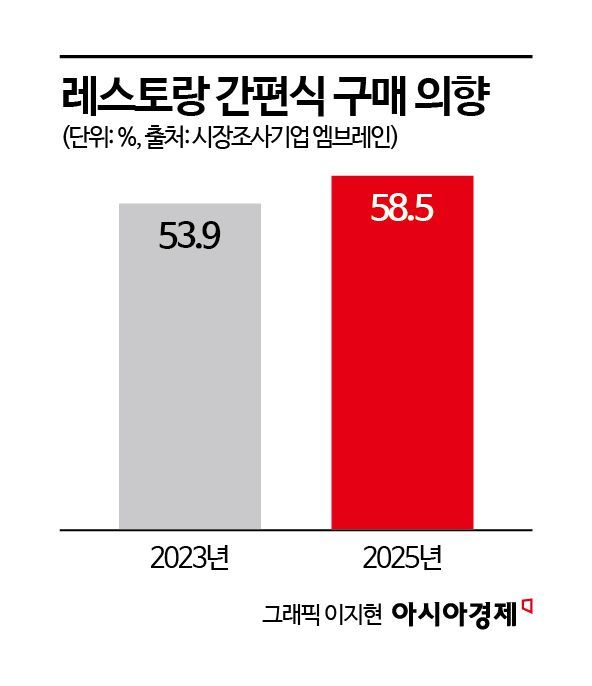
As the burden of expensive meals increases, demand for "premium restaurant ready meals (RMR)" that can be enjoyed at relatively affordable prices is slightly rising. A total of 58.5% of respondents expressed willingness to purchase premium restaurant ready meals in the future. The main reasons cited were the ability to enjoy special food at home (47.2%) and the desire to taste famous restaurant dishes at home (37.3%), highlighting the clear appeal of conveniently enjoying gourmet cuisine without the burden of dining-out costs.
© The Asia Business Daily(www.asiae.co.kr). All rights reserved.
![Clutching a Stolen Dior Bag, Saying "I Hate Being Poor but Real"... The Grotesque Con of a "Human Knockoff" [Slate]](https://cwcontent.asiae.co.kr/asiaresize/183/2026021902243444107_1771435474.jpg)

















