Sales, Operating Profit, and Debt Worsen
Biggest Challenge: "Intensified Competition"
The business performance of small business owners in 2023 has significantly deteriorated compared to 2022. The government plans to expand the issuance of Onnuri gift certificates and provide low-interest funds to revitalize domestic demand.
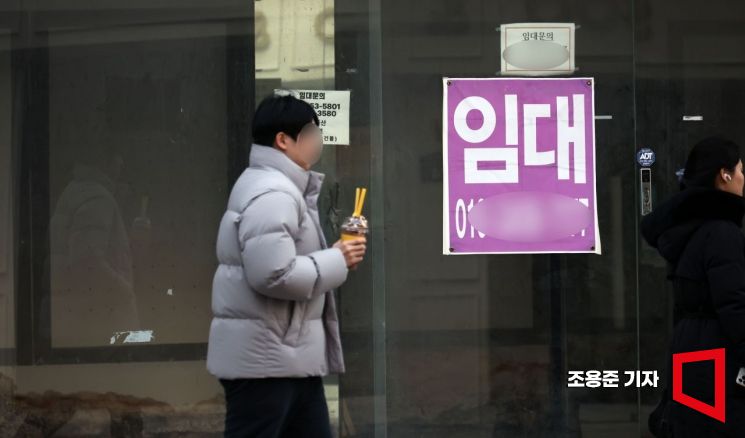 Amid domestic and international adversities such as economic recession and sluggish domestic demand, the number of small business closures is rapidly increasing, leaving many vacant stores lined up in a commercial area densely packed with shops in Sinchon, Seoul. Photo by Jo Yong-jun
On the 27th, the Ministry of SMEs and Startups and the Small Enterprise and Market Service announced the provisional results of the '2023 Small Business Owner Survey.' The small business owner survey is conducted annually to serve as basic data for establishing support policies for small business owners and self-employed individuals.
Unlike previous surveys jointly conducted by Statistics Korea and the Ministry of SMEs and Startups, this survey was conducted solely by the Ministry of SMEs and Startups. Additionally, instead of using the 'National Business Survey' list conducted by Statistics Korea at the business establishment level, the list was changed to the 'Business Statistical Register,' which combines survey data and administrative data at the enterprise level. As a result, the survey can more accurately grasp the status of small business owners at the enterprise level, and the scope of the survey has expanded to include small business owners who were previously omitted because they existed only in administrative data.
According to the survey results, the annual sales per small business enterprise in 2023 were 199 million KRW, a 14.95% decrease compared to 234 million KRW in the previous year. During the same period, annual operating profit decreased by 19.35%, from 31 million KRW to 25 million KRW. The debt situation also generally worsened. The proportion of enterprises holding debt increased from 59.3% in 2022 to 60.9% in 2023, and the debt amount per enterprise rose from 185 million KRW to 195 million KRW during the same period.
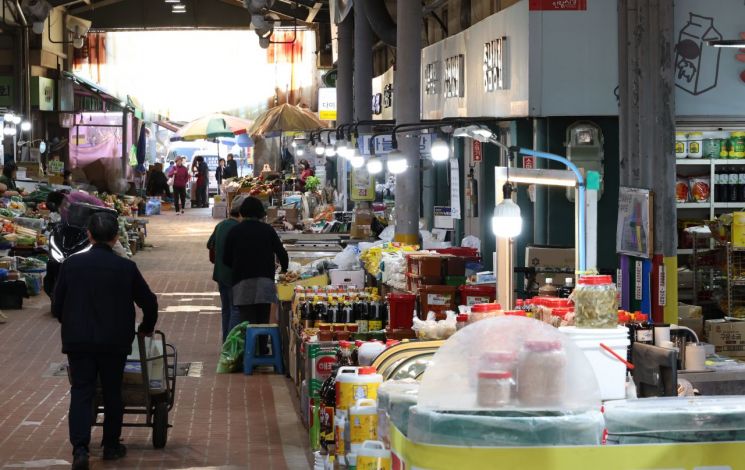
The biggest difficulties (multiple responses allowed) small business owners face in management were identified as intensified competition (59.1%). This was followed by raw material costs (42.1%), decline of commercial districts (36.7%), security deposits and monthly rent (25.6%), and minimum wage (14.9%).
Lee Dae-geon, Director of Small Business Policy at the Ministry of SMEs and Startups, stated, "Although 2023 saw a return to normalcy, the increased debt and high interest rates and inflation likely made the business environment for small business owners still challenging. The Ministry of SMEs and Startups plans to increase the issuance of Onnuri gift certificates to 5.5 trillion KRW this year and hold the Donghaeng Festival in March to revitalize domestic demand. Additionally, we will steadily implement low-interest fund supply and delivery and courier fee support to alleviate the management burden on micro small business owners."
The Ministry of SMEs and Startups plans to use the finalized survey results next month as reference data for establishing support policies for small business owners and the self-employed.
Meanwhile, according to this survey, the number of small business enterprises in 2023 was 5,961,000, and the number of workers was 9,551,000. The average number of workers per enterprise was about 1.60. By industry, wholesale and retail trade was the largest with 2 million enterprises (33.6%), followed by real estate with 854,000 enterprises (14.3%), and accommodation and food service with 790,000 enterprises (13.3%). Next were manufacturing (554,000 enterprises, 9.3%) and construction (551,000 enterprises, 9.2%).
© The Asia Business Daily(www.asiae.co.kr). All rights reserved.
![Clutching a Stolen Dior Bag, Saying "I Hate Being Poor but Real"... The Grotesque Con of a "Human Knockoff" [Slate]](https://cwcontent.asiae.co.kr/asiaresize/183/2026021902243444107_1771435474.jpg)
















