Sources Express Dissatisfaction with Companies Investing in China After Receiving Subsidies
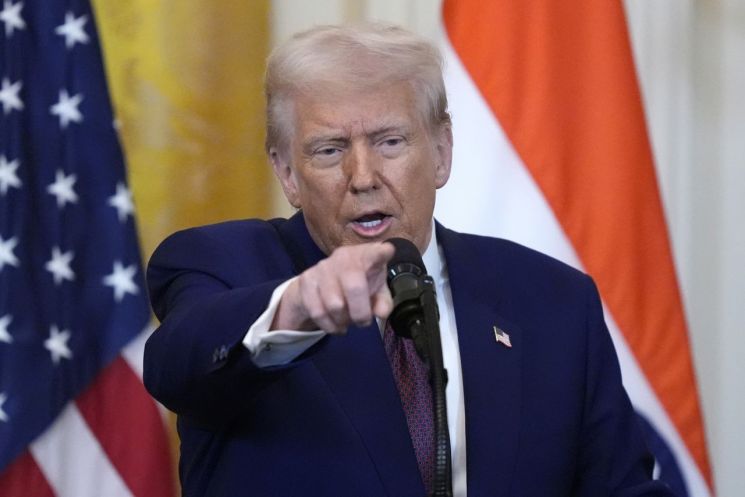
The Donald Trump administration in the United States is pushing for a renegotiation of the semiconductor law (Chips Act) subsidies, and as a result, some semiconductor subsidy payments may be delayed, Reuters reported on the 13th (local time), citing multiple sources. It is also suggested that this could affect Korean companies such as Samsung Electronics and SK Hynix, which have committed to investing in the U.S. and receiving subsidies under the law.
According to sources, the Trump administration is currently reviewing the Chips Act. They plan to assess the requirements, make changes, and then renegotiate with some companies. The scope of the changes and the impact on existing contracts have not yet been specifically disclosed.
The Chips Act primarily provides a total of $52.7 billion over five years, including $39 billion in direct subsidies and $13.2 billion in research and development (R&D) subsidies, to semiconductor companies building semiconductor factories in the United States.
GlobalWafers, a Taiwanese silicon wafer manufacturer, stated, "The semiconductor law program authorities said that certain conditions that do not align with President Trump's executive orders and policies are currently under review." GlobalWafers has decided to invest about $4 billion to build wafer factories in Texas and Missouri. The U.S. government plans to provide subsidies of up to $406 million. However, the company said it has not been directly notified about any changes in conditions.
The reason the Trump administration is seeking renegotiation appears to be that some companies have expanded investments in China and other countries after receiving subsidies. Four sources familiar with the matter said the White House is particularly concerned about the conditions for granting semiconductor law subsidies. One source said the White House is dissatisfied with companies that have made major announcements about plans to expand into China and other countries after receiving semiconductor law subsidies.
For example, Intel, a leading U.S. semiconductor company, announced in October last year that it would invest $300 million in assembly and testing facilities in China after agreeing to receive semiconductor law subsidies in March. TSMC, Samsung Electronics, and SK Hynix also have manufacturing facilities in China, so they could be affected if the Trump administration proceeds with subsidy renegotiations.
The U.S. Semiconductor Industry Association has begun gathering opinions from its member companies. David Isaacs, Vice President of Government Affairs at the Semiconductor Industry Association, said, "Both manufacturing incentives and research programs must continue without interruption," adding, "We are ready to work with members of the Trump administration, including Howard Lutnick, the nominee for Secretary of Commerce, to simplify program requirements and achieve the shared goal of strengthening U.S. leadership in semiconductor technology."
© The Asia Business Daily(www.asiae.co.kr). All rights reserved.
![Clutching a Stolen Dior Bag, Saying "I Hate Being Poor but Real"... The Grotesque Con of a "Human Knockoff" [Slate]](https://cwcontent.asiae.co.kr/asiaresize/183/2026021902243444107_1771435474.jpg)















