Global Defense Spending Hits Record High at 1.9% of GDP Last Year
UK Think Tank IISS Report: Total Defense Expenditure Up 7.4%
"Rising Defense Budgets Increase Economic Burden"
Last year, amid war and security threats, global defense spending reached $2.46 trillion (approximately 3,570 trillion KRW), accounting for 1.94% of the global gross domestic product (GDP), marking an all-time high.
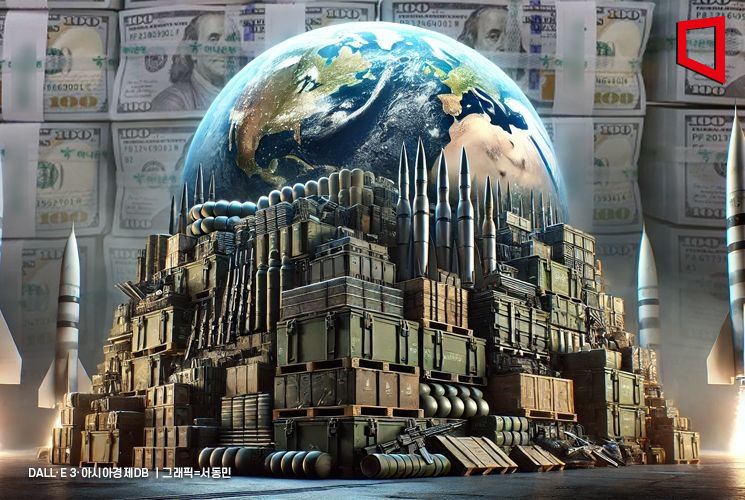
According to Bloomberg on the 12th (local time), the UK think tank International Institute for Strategic Studies (IISS) analyzed in its annual Military Balance report that global defense spending increased by 7.4% compared to the previous year.
Russia, engaged in war with Ukraine, increased its defense spending by 41.9% year-on-year, reaching $462 billion based on purchasing power parity (PPP). Penella McGerty, Senior Research Fellow in Defense Economics at IISS, stated, "Although Russia appears to have spent a relatively small budget in US dollars, it was actually able to purchase more military equipment," adding, "This was influenced by Russia's sharply increased defense budget and lower procurement costs."
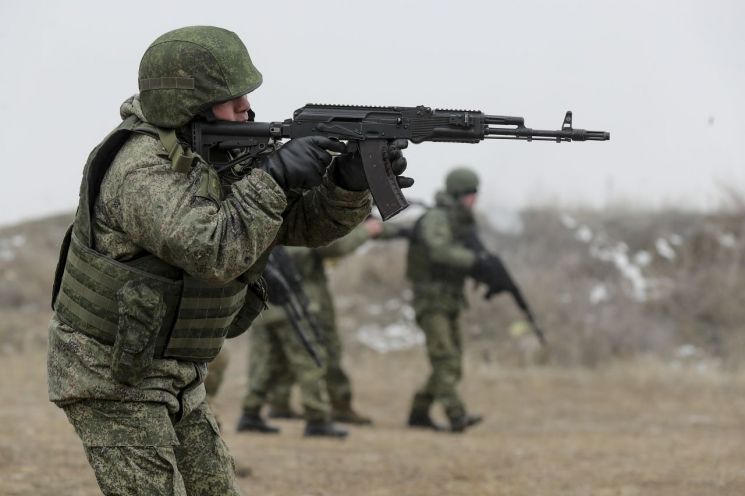 On the 12th (local time), Russian soldiers are engaged in combat training for a special military operation at a training ground in the southern Volgograd region of Russia. Photo by AP and Yonhap News.
European defense spending rose by 11.7% year-on-year amid US President Donald Trump's demand that Europe spend 5% of its GDP on defense. Notably, Germany spent $86 billion on defense, surpassing the UK ($81 billion) to become the largest defense spender in Europe. Consequently, Germany ranked second in NATO after the United States ($968 billion).
In contrast, Asia's share of defense spending decreased from 25.9% in 2021 to 21.7% last year due to the sharp increase in European defense expenditures.
As the world rapidly increases defense budgets due to security concerns, there are concerns about the economic burden. The IISS report warned, "Countries have increased defense spending at a time when there is high pressure to respond to the climate crisis and demographic changes," adding, "Allocating additional budgets amid ongoing security threats is a strong signal of each country's anxiety. Frequent budget changes like this can increase financial instability."
© The Asia Business Daily(www.asiae.co.kr). All rights reserved.
![Clutching a Stolen Dior Bag, Saying "I Hate Being Poor but Real"... The Grotesque Con of a "Human Knockoff" [Slate]](https://cwcontent.asiae.co.kr/asiaresize/183/2026021902243444107_1771435474.jpg)
















