Trump Announces 25% Tariff on Steel and Aluminum
U.S. Steel and Related Stocks Rise
Reciprocal Tariff Measures to Be Announced on 11th-12th
CPI, PPI, and Retail Sales Data to Be Released This Week
Powell to Testify Before Congress for Two Days Starting on the 11th
The three major indices of the U.S. New York stock market are showing an upward trend in the early trading hours on the 10th (local time). Investors seem to have temporarily shaken off the threat of a 25% tariff on steel and aluminum imposed by U.S. President Donald Trump the previous day. The market is awaiting key economic data releases this week, including January inflation and retail sales, along with Federal Reserve Chairman Jerome Powell's congressional testimony.
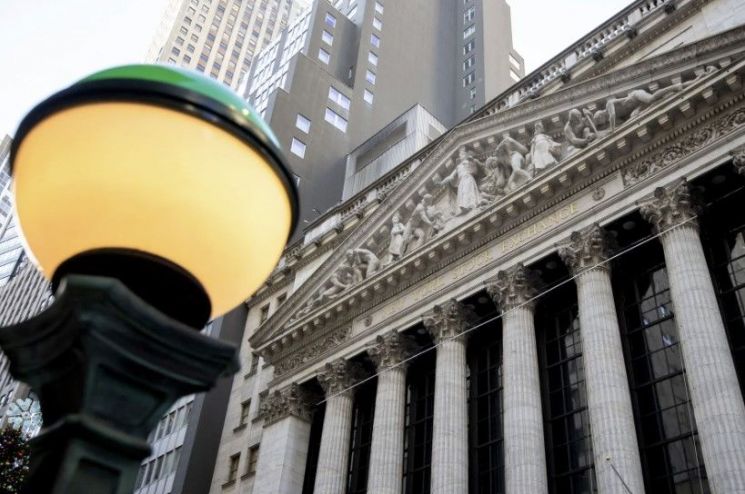
As of 10:56 a.m. in the New York stock market on the same day, the Dow Jones Industrial Average (Dow), which focuses on blue-chip stocks, is trading at 44,431.28, up 0.29% from the previous day. The S&P 500, centered on large-cap stocks, is up 0.73% at 6,069.98, and the Nasdaq, which focuses on technology stocks, is trading 1.2% higher at 19,756.82.
President Trump announced plans to impose a 25% tariff on all steel and aluminum products imported into the United States. Speaking to reporters aboard Air Force One, the presidential plane, while traveling to New Orleans for the Super Bowl, the final game of the American football season, he said, "Any steel coming into the U.S. will be subject to a 25% tariff," adding, "The same goes for aluminum." This tariff is in addition to the existing tariffs on steel and aluminum. During his first term, President Trump also applied Section 232 of the Trade Expansion Act, imposing a 25% tariff on steel products and a 10% tariff on aluminum products for national security reasons. At that time, South Korea negotiated with the U.S. to be exempted from steel tariffs in exchange for accepting a quota system limiting export volumes.
President Trump also announced plans for reciprocal tariffs on the 11th or 12th. Reciprocal tariffs mean that the U.S. would impose tariffs on imported goods from foreign countries at the same rate those countries impose on U.S. imports. He said, "Very simply, if they charge us tariffs, we will charge them the same." He added, "Not all countries will be affected; only those that take advantage of the U.S. will face reciprocity." This suggests that countries like South Korea, which have free trade agreements (FTAs) with the U.S. and have significantly reduced tariffs on American goods, may be treated differently from countries with high tariffs on U.S. imports.
By stock, shares related to steel and aluminum tariffs are rising across the board. U.S. Steel is up 3.23%. Following President Trump's statement on the 7th during the U.S.-Japan summit that Nippon Steel would invest rather than acquire U.S. Steel, he said the previous day, "No one can hold a majority stake in U.S. Steel." Nucor is up 5.35%. Cleveland-Cliffs and Alcoa are rising by 11.4% and 2.63%, respectively.
Fabio Bassi, an analyst at JP Morgan, said, "The volatility surrounding deep-sea shipping and concerns about tariffs do not derail our positive outlook on risk assets. We expect volatility to continue in the short term due to tariff headlines and the possibility of major legislation passing in April, but we maintain our year-end S&P 500 target of 6500."
Investors are also paying attention to key economic indicators to be released this week. On the 12th, the Consumer Price Index (CPI) will be released, followed by the Producer Price Index (PPI) on the 13th. Last month, the CPI is expected to have risen 2.9% year-over-year, and the PPI is expected to have increased 0.2% month-over-month, maintaining the previous month's growth rate. Retail sales for January, to be announced on the 14th, are expected to have slowed, increasing at the same level as the previous month. Retail sales in December last year rose 0.4% month-over-month. Chairman Powell will appear before both the House and Senate for two consecutive days starting on the 11th to deliver the semiannual monetary policy report.
Bond yields are on the rise. The U.S. 10-year Treasury yield, a global benchmark for bond yields, is trading at 4.46%, down 2 basis points (1bp=0.01%) from the previous trading day, while the 2-year Treasury yield, sensitive to monetary policy, is moving at 4.25%, down 2 basis points from the previous day.
© The Asia Business Daily(www.asiae.co.kr). All rights reserved.
![Clutching a Stolen Dior Bag, Saying "I Hate Being Poor but Real"... The Grotesque Con of a "Human Knockoff" [Slate]](https://cwcontent.asiae.co.kr/asiaresize/183/2026021902243444107_1771435474.jpg)















