The Financial Supervisory Service (FSS) inspected the chief executive officers (CEOs) of virtual asset service providers and discussed the causes of IT system failures and related risk factors, as well as response strategies. The CEOs attending the meeting agreed to create a market environment where virtual asset users can trade safely.
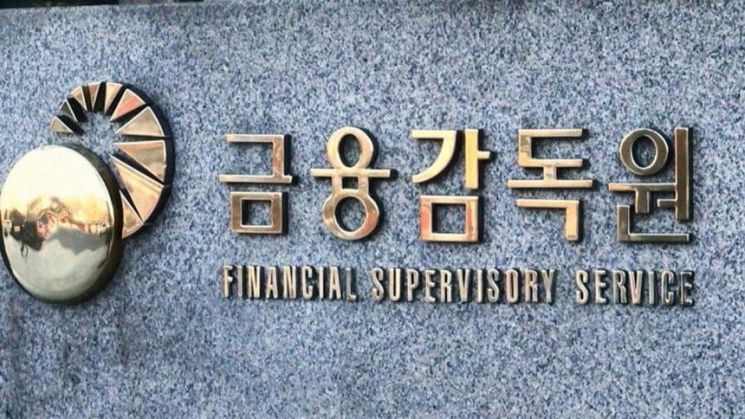
On the 6th, the FSS announced that it held a meeting with CEOs of virtual asset service providers at the FSS office located in Yeouido, Seoul, to discuss these measures.
The meeting was attended by Lee Jong-oh, Deputy Director of Digital & IT, along with the heads of the Virtual Asset Supervision Division and Virtual Asset Investigation Bureau from the FSS, as well as CEOs, chief technology officers (CTOs), and the vice chairman of the Digital Asset Exchange Association (DAXA) from virtual asset companies including Dunamu, Bithumb, Korbit, Coinone, and Streami.
The meeting was organized to identify the causes of recent IT system failures at major exchanges amid expectations for virtual asset activation following the inauguration of the Trump administration in the United States, and to discuss response directions. Building and operating a stable IT system as the most fundamental infrastructure for 24-hour market operation is considered essential.
However, on December 3rd last year, during the state of emergency, a massive influx of users to virtual asset exchange applications caused IT system failures. Virtual asset withdrawals and trading became impossible. At that time, more than 1.1 million users simultaneously accessed Upbit and over 500,000 users accessed Bithumb, resulting in service outages lasting up to 99 minutes.
In response, the FSS conducted two on-site inspections of the affected service providers to identify the causes of the failures. It also checked the implementation status of recurrence prevention measures such as server expansion by each provider. The on-site inspections confirmed that the main cause of the IT failures at the three major exchanges immediately after the emergency was a lack of server capacity due to concentrated traffic. Consequently, the exchanges expanded their servers. Dunamu increased its simultaneous user capacity to 900,000, Bithumb to 360,000, and Coinone to 500,000 transactions.
Deputy Director Lee Jong-oh stated, "It is necessary for the management of virtual asset service providers to have deep interest and caution regarding IT stability and user compensation." He added, "Considering the 24-hour operation characteristic of the virtual asset market, an enterprise-wide effort to secure IT stability beyond that of financial companies is required."
Regarding compensation, Dunamu, the operator of Upbit, decided to compensate 604 out of 1,135 claims submitted. The total compensation amount is 3.16 billion KRW. Bithumb decided to compensate 154 claims with 500 million KRW. Coinone excluded both of its two compensation claims.
He also explained the need to establish a reasonable compensation system for smooth user damage compensation. He said, "We must review the appropriateness of standards and procedures for compensation related to IT failures and immediately supplement any deficiencies," and added, "We need to cooperate with DAXA to establish common industry dispute resolution standards for user damage relief."
The virtual asset industry collectively pledged to create a market environment where safe trading is possible. To this end, following the large-scale IT failure, they expanded servers and increased infrastructure investment. They also committed to continuously strengthening system stability, improving failure response systems, operating dedicated response teams in case of IT failures or other incidents, and establishing compensation and communication systems.
The FSS plans to continue efforts to ensure IT stability suitable for the 24-hour operation characteristic of the virtual asset market. It will also actively review the introduction of related regulations, such as obligations for virtual asset service providers to secure IT system stability, in close cooperation with the Financial Services Commission and other authorities.
© The Asia Business Daily(www.asiae.co.kr). All rights reserved.
![Clutching a Stolen Dior Bag, Saying "I Hate Being Poor but Real"... The Grotesque Con of a "Human Knockoff" [Slate]](https://cwcontent.asiae.co.kr/asiaresize/183/2026021902243444107_1771435474.jpg)















