Seven Key Waterfront City Design Strategies for Climate Crisis Response
Presenting Core Directions for Creating Eco-Friendly and Sustainable Waterfront Cities
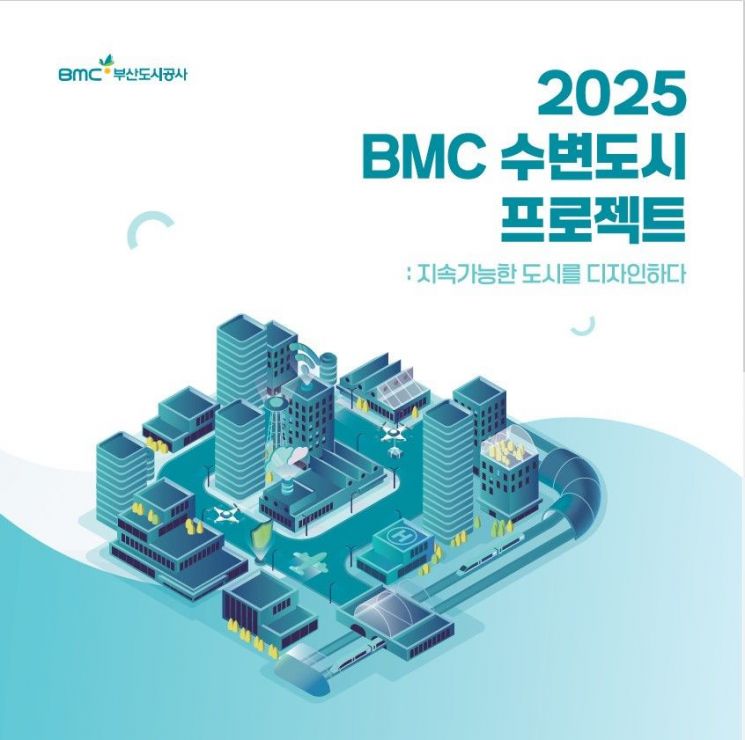
Busan Metropolitan Corporation (BMC) recently announced the results of the working group for the ‘2025 BMC Waterfront City Project: Designing a Sustainable City.’
This working group is significant in that it presents proactive response strategies to environmental and social crises caused by the climate crisis and contains practical solutions to realize a sustainable waterfront city in Busan.
As a coastal city, Busan is directly affected by climate change. Accordingly, BMC has sought a new development paradigm under the recognition that waterfront spaces are not merely development targets but important areas for responding to the climate crisis.
To this end, in March last year, BMC launched the ‘BMC Waterfront City Working Group’ to propose a new development paradigm for waterfront cities by pooling expertise and creativity, conducting research in collaboration with experts from various fields such as landscaping, urban planning, architecture, and landscape.
Through 10 months of working group activities, BMC derived directions and design strategies for Busan’s waterfront city, including building green infrastructure with climate resilience, restoring ecosystem health, responding to sea level rise, and introducing eco-friendly architecture. Additionally, experts from each field proposed feasible alternatives reflecting Busan’s regional characteristics through field-centered research and in-depth discussions.
The seven major waterfront city design strategies proposed by BMC for climate crisis response focus on an integrated approach to eco-friendly waterfront city design that minimizes environmental and social impacts caused by climate change while enhancing the sustainability of waterfront areas.
Through this, the project aims to restore ecosystems, reduce carbon emissions, improve residents’ quality of life, and promote a resilient urban structure. Furthermore, based on resilient green infrastructure, it seeks to realize a sustainable green city that can adapt to the climate crisis, providing citizens with a safe and pleasant living environment.
This report is expected to serve as a policy foundation for realizing a sustainable waterfront city in Busan beyond a simple research outcome. In particular, BMC plans to actively utilize this report in future urban development and policy-making processes to create an urban environment that can flexibly respond to climate change.
Shin Chang-ho, President of Busan Metropolitan Corporation, stated, “This final report will set the direction for the development of Busan’s waterfront spaces and serve as a foundation for realizing a sustainable future waterfront city,” adding, “We hope this report will contribute to Busan’s climate change response and urban development strategy formulation.”
© The Asia Business Daily(www.asiae.co.kr). All rights reserved.
![Clutching a Stolen Dior Bag, Saying "I Hate Being Poor but Real"... The Grotesque Con of a "Human Knockoff" [Slate]](https://cwcontent.asiae.co.kr/asiaresize/183/2026021902243444107_1771435474.jpg)















