As the climate of the Korean Peninsula warms due to global warming, it has been confirmed that species that once lived in tropical climates are now inhabiting the country.
According to the "National Species List of Last Year" released on the 30th by the National Institute of Biological Resources under the Ministry of Environment, 5 species of tropical fish and 10 species of tropical insects were newly added. Since 2008, the National Institute of Biological Resources has been conducting a project to catalog biological resources to conserve Korea's biodiversity and effectively protect biological sovereignty.
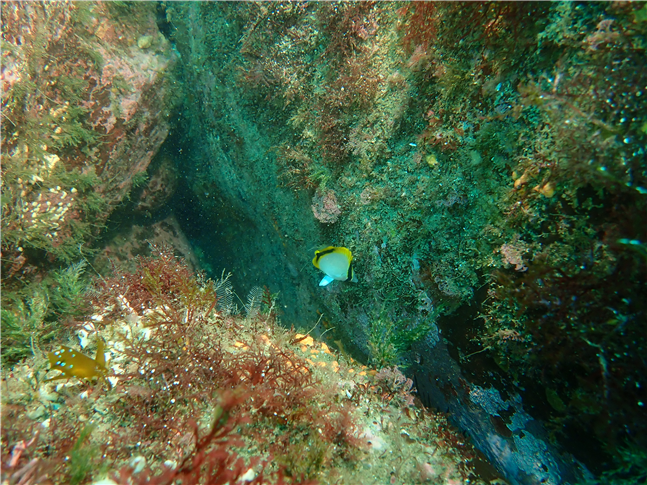 Yellowspotted Butterflyfish found in our waters. Photo by National Institute of Biological Resources
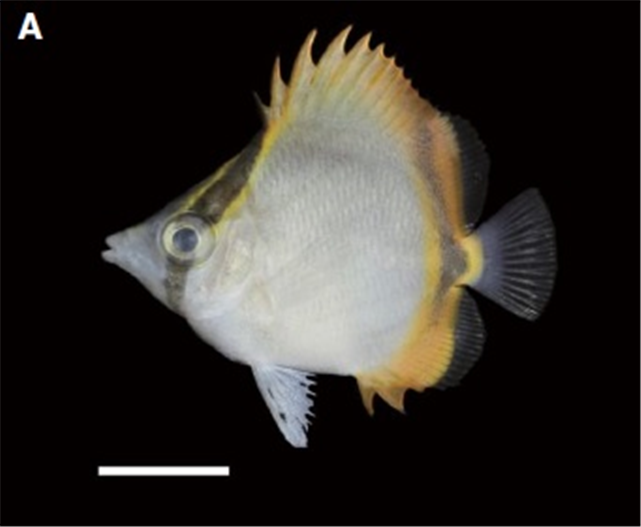
Last year, the yellow-spotted butterflyfish, which originally lived in the tropical climate of the western Pacific including Indonesia, was discovered for the first time in Tongyeong and Jeju. As sea temperatures rose due to global warming, it is believed to have entered by riding the Tsushima Current moving through the east of Jeju, the Korea Strait, and the East Sea. Additionally, the blunt-horned sand beetle, native to Sri Lanka, was also observed for the first time in Taean and Jeju.
In Jeju, the invertebrate species Meioglossus jejuensis was discovered. This is a completely new species that had not been reported in academic circles before. It belongs to the higher biological classification phylum Hemichordata.
The total number of species registered as inhabiting Korea is 61,230, an increase of 1,220 species compared to the previous year. This includes 22 species of plants (5,781 species), 62 species of vertebrates (2,152 species), 490 species of invertebrates (32,093 species), 111 species of fungi (6,402 species), 50 species of birds (6,703 species), 15 species of protozoa (2,590 species), and 470 species of prokaryotes (5,509 species).
Seo Min-hwan, director of the National Institute of Biological Resources, said, “The establishment of the national species list is the result of combining Korea’s research capabilities and efforts to conserve the natural environment,” adding, “It will serve as a foundation for research on biological characteristics using biological material information recognized internationally.”
© The Asia Business Daily(www.asiae.co.kr). All rights reserved.
![Clutching a Stolen Dior Bag, Saying "I Hate Being Poor but Real"... The Grotesque Con of a "Human Knockoff" [Slate]](https://cwcontent.asiae.co.kr/asiaresize/183/2026021902243444107_1771435474.jpg)
















