Chinese Criminal Organizations Forcing Voice Phishing and Online Scams
Chinese actor Wang Xing was kidnapped in Thailand and rescued in Myanmar, and similar cases of victimization continue to emerge. As a result, a 'kidnapping warning' has been issued for Thailand, a Southeast Asian country visited by more than 30 million foreigners annually. The seriousness of crimes involving Chinese and Hong Kong residents being captured by criminal groups in Thailand and taken to Myanmar and other places is being highlighted again, but there are also concerns that the problem is not easy to solve.
Myawaddy, Myanmar, where Wang Xing was taken, is notorious as a base for Chinese criminal organizations involved in voice phishing and online scams.
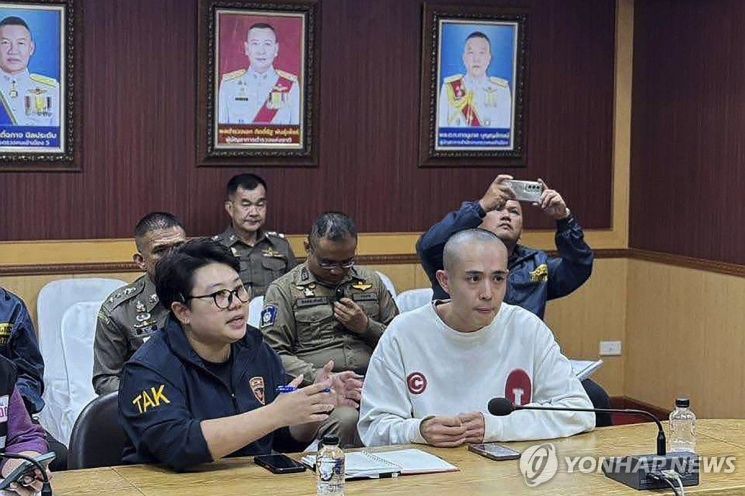
On the 14th, Yonhap News, citing the Bangkok Post and others, reported that even before Wang Xing's disappearance, there were many cases of Chinese people who disappeared in Thailand being found in Myanmar. In fact, in October last year, three Chinese university students were kidnapped from Bangkok to Myanmar and were released after paying a ransom of 500,000 baht (about 21 million won) each.
Twenty-five-year-old male model Yang Zhechi also disappeared in a similar manner, causing a great stir among Chinese people. There are even claims that this is a real-life version of the 2023 Chinese hit movie ‘Gao Zhu Yi Che’, which dealt with the true story of model and programmer kidnappings.
Thousands of people from countries around the world, including China, Thailand, Kenya, Morocco, and Bangladesh, have been captured, tortured, and abused while working, and some have even lost their lives. In this regard, the human rights organization 'Civil Society Coalition for the Support of Victims of Human Trafficking' estimated that about 3,900 Chinese and people from 21 countries are held captive by criminal organizations in Myanmar.
Some are still unaccounted for, and their families or relevant authorities are searching for them. It has been found that some of these victims entered Thailand lured by job offers and were then kidnapped.
The United Nations Office of the High Commissioner for Human Rights (OHCHR) analyzed in its 2023 report that "criminal organizations, having lost business opportunities due to COVID-19, expanded illegal operations into online spaces that are less regulated but more profitable." Tens of thousands of Southeast Asians were forcibly mobilized in international online crimes.
There is also an analysis that the ongoing crimes in Myanmar are influenced by the local political situation. Myanmar has been embroiled in civil war since the 2021 coup. It is often described as a de facto security vacuum. Especially, scam organizations have flocked to border areas where the military regime has lost control, and the scale of online crime has rapidly increased.
This incident has caused a great shock among Chinese people. On the 12th, SCMP reported that posts on Xiaohongshu, known as the 'Chinese Instagram,' about 'how to cancel a trip to Thailand' were searched more than 380,000 times. The Hong Kong government dispatched a task force on the 12th to repatriate 12 residents who were lured to Southeast Asian countries and forced into illegal labor.
According to SCMP, Hong Kong law enforcement agencies have received 28 requests for help from residents believed to be trapped somewhere in Southeast Asian countries and unable to leave since the second quarter of last year, and 16 have returned. Some of the remaining 12 cases involve victims who are safe. The media noted that while countries are seeking countermeasures, finding an immediate and effective solution is difficult.
© The Asia Business Daily(www.asiae.co.kr). All rights reserved.
![Clutching a Stolen Dior Bag, Saying "I Hate Being Poor but Real"... The Grotesque Con of a "Human Knockoff" [Slate]](https://cwcontent.asiae.co.kr/asiaresize/183/2026021902243444107_1771435474.jpg)
















