MAFRA Announces '2025 Major Work Plan'
Farmland Lease Criteria Eased
First Implementation of Rice Cultivation Area Adjustment System This Year
Area Direct Payment Rate Increased by 5% and Full Introduction of Income Stabilization Insurance
The government has decided to allow ownership of farmland in 'Agricultural Promotion Areas,' which are designated as absolute farmland only for agricultural use, for weekend experiential farming purposes to increase farmland utilization. Following the earlier approval for installing vertical farms and rural stay-type rest facilities in Agricultural Promotion Areas, the government will proceed with related legal amendments to permit farmland ownership for weekend farms.
The Ministry of Agriculture, Food and Rural Affairs (MAFRA) announced the '2025 Major Work Plan' including these details on the 13th. Park Su-jin, Director of Planning and Coordination at MAFRA, stated, "This year, considering the expanding internal and external uncertainties and sluggish domestic demand, the Ministry will focus all efforts on stabilizing the lives of farmers and the public. We will fully implement the four major structural reforms in agriculture and rural areas, including farmland and rice industries, and invest intensively in four new industrial innovation projects to prepare for future generations, as well as in animal welfare and environmentally friendly agriculture and livestock industries."
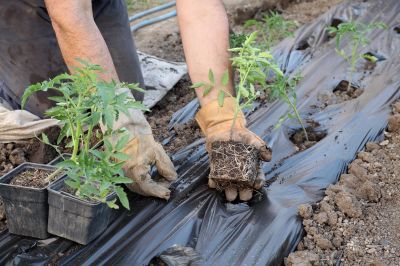
◆Bold Transformation of the Farmland System Framework= First, MAFRA will promote a transformation of the farmland system framework. Farmland, which has been used solely for agricultural production, will have its usage scope expanded to include weekend experiential farming and agribusiness. Until now, ownership of farmland for weekend experiential farming was only allowed in non-promotion areas, but through amendments to the Farmland Act and subordinate regulations, ownership of farmland in Agricultural Promotion Areas designated by local governments will be permitted. A MAFRA official explained, "If local governments designate possible districts based on utilization plans, ownership of farmland within Agricultural Promotion Areas for weekend farms will be allowed. We plan to predefine the possible scope such as districts and regions to prevent indiscriminate establishment of weekend farms within Agricultural Promotion Areas."
Restrictions on farmland lease regulations, which have been limited, will also be eased. Currently, under the Farmland Act, leasing is only permitted for farmers aged 60 or older who have cultivated their owned farmland for at least five years. MAFRA plans to review the appropriateness of these criteria and consider relaxing them.
To prevent chronic oversupply of rice, fundamental structural transformation of the rice industry will be pursued focusing on appropriate production, expansion of high-quality rice production, and increased consumption. Alongside implementing the 'Rice Cultivation Area Adjustment System' for the first time this year with a target reduction of 80,000 hectares, pilot operations of one high-quality rice specialized production complex per city/province will be conducted, and efforts to improve rice quality such as mandatory protein content labeling will be carried out. Additionally, to expand the food security base centered on strategic crops, new strategic crop direct payment items (sesame) will be added, and payment areas and rates will be increased.
Support for agricultural management entities will also be strengthened. To promote scaling up and incorporation of agriculture, joint farming models (contracted farming, leased farmland, mixed, shareholder types) as new alternatives will be expanded in the field with marketing and organizational support, along with consideration of tax incentives. The scope of agricultural corporations' business will be significantly expanded from production to agribusiness including education, consulting, and production and processing R&D. Furthermore, young people entering agriculture and agribusiness will be systematically supported with settlement funds, customized practical training, and long-term 10-year leased smart farms, and living support such as rural housing will be expanded from 17 locations last year to 27 this year, reflecting youth demand.
◆Strengthening Income Stability Models for Farmers= MAFRA plans to strengthen income stability models for farmers centered on direct payments and income stabilization insurance, and improve the quality of life for rural residents by changing service delivery methods. To raise the basic income level of farmers, the basic area direct payment rate will be increased by 5% for the first time since the implementation of the direct payment system, and the non-farm income criteria for direct payment recipients, currently set at 37 million KRW, will be relaxed.
Agricultural income stabilization insurance, which provides multi-layered coverage for risks including disasters and price fluctuations, will be fully introduced. The unit cost and support items for agricultural disaster recovery expenses will be expanded, and disaster insurance will be reformed this month to improve surcharge systems, prepare new coverage products for new disasters (pests, insufficient sunlight, etc.), and provide comprehensive risk coverage throughout the fruit tree period.
To alleviate farmers' management burdens caused by rapid exchange rate increases, allocation tariff support will be provided for fertilizer and feed raw materials with high import ratios, along with expanded loan support for purchase funds: 400 billion KRW for the fertilizer industry, 100 billion KRW for the feed industry, 1 trillion KRW for livestock farmers' feed purchase funds, and 2 trillion KRW from NongHyup's own funds. The joint purchase import method, previously applied only to feed, will be expanded to fertilizers and others. To ensure no labor shortages during peak farming seasons, the scale of foreign seasonal workers will be significantly expanded to about 67,000 in the first half of this year (61,000 in 2024).
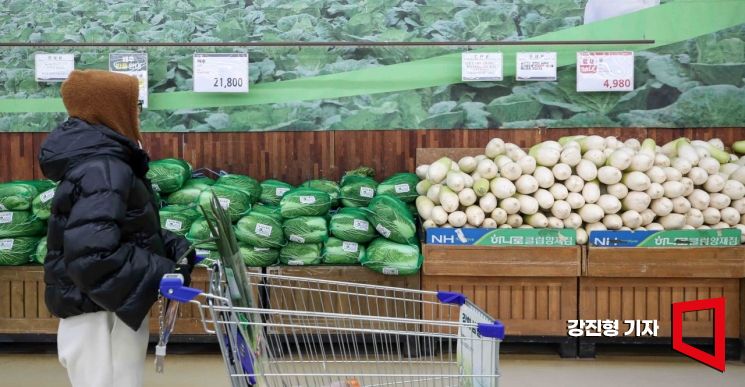
To stabilize supply and demand of agricultural and livestock products, the cabbage storage period will be extended from 2 to 3 months by introducing Controlled Atmosphere (CA) technology that suppresses crop respiration by adjusting oxygen and carbon dioxide concentrations, and the volume of contract cultivation for major vegetables will be increased from 25% to 30%. Additionally, from June this year, a pilot sale and distribution of short-term raised Hanwoo cattle will be conducted, followed by the introduction of a separate grading system to stabilize livestock product supply and demand.
To reduce the management cost burden on small business owners in the food and dining sectors, interest rates on raw material purchase funds will be lowered from 3% to 2% for youth-operated dining businesses, and requirements such as industry categories will be relaxed to establish the foreign employment permit system for restaurants. Also, in March this year, a platform that allows a comprehensive view of public delivery apps will be established, reducing delivery fees borne by businesses from the current 9.7% to 0-2%, creating a system that can lower food sale prices.
◆Promotion of Future Growth Industries in Agriculture such as Smart Farms and Food Tech= The share of smart agriculture production will be expanded from 16% to about 20%, and expansion through linkage with advanced technologies such as agricultural AI and robots and upstream and downstream industries will be pursued. Four new smart agriculture promotion zones integrating research, production, and demonstration functions will be newly established. Furthermore, to root and spread new forms of smart agriculture such as building-type vertical farms and container smart farms in the field, support will be provided for easing location regulations in development-restricted areas, standardization, R&D, and demonstration.
To accelerate growth of new upstream and downstream industries such as food tech and green bio, 121.2 billion KRW will be invested in production and research infrastructure. Research and production hubs will be expanded to allow the food tech and green bio markets to grow in various fields, and support for smart factories in food manufacturing will be increased from 30 to 70 companies through public-private collaboration. Private investment in new industries will also be expanded using a 40 billion KRW Future Innovation Growth Fund.
MAFRA set a K-Food Plus export target of 14 billion USD, including agriculture, food, and upstream and downstream industries. This is a 7.4% increase from last year's 13.03 billion USD. To achieve the export target, MAFRA will pioneer new markets such as the Middle East and South Africa, and focus on small and medium cities in the US, China, and Japan by maximizing available resources such as KOTRA overseas trade centers and overseas buyer consultative bodies. Support will be provided focusing on the top 10 agricultural food export strategic items through premiumization (grapes, strawberries), product development (rice processed foods), and large-scale marketing (ramen). Also, the smart farm export consortium, which had 4 locations last year, will be expanded to 6 this year, with support for local demonstration and consulting to prove technological capabilities.
Additionally, MAFRA will expand the scope of animals subject to mandatory registration this year, gradually including special-purpose dogs, and expand local government protection centers and personnel to prevent animal abandonment and loss. In June this year, a comprehensive plan for animal medical development will be prepared, including the introduction of veterinary specialists and advanced hospital systems and measures to balance medical personnel supply. Pet food will be separately classified, labeled, and nutritional standards established, and the scope of service industry operations will be expanded.
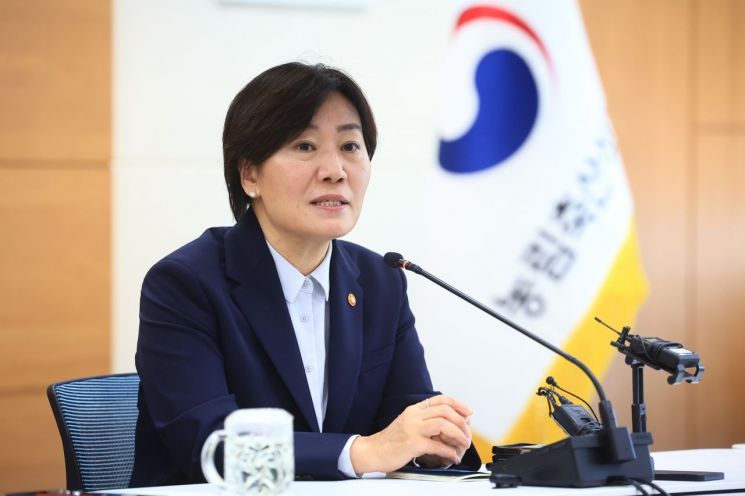
Minister Song Mi-ryeong of MAFRA said, "Since our agriculture and rural areas are directly linked to people's livelihoods, the policy role in restoring people's lives is important. This year, we will prioritize livelihood stabilization, intensively promote livelihood tasks to resolve farmers' difficulties and improve people's lives in the first half of the year, and steadily implement the tasks prepared for the future of agriculture and rural areas."
© The Asia Business Daily(www.asiae.co.kr). All rights reserved.
![Clutching a Stolen Dior Bag, Saying "I Hate Being Poor but Real"... The Grotesque Con of a "Human Knockoff" [Slate]](https://cwcontent.asiae.co.kr/asiaresize/183/2026021902243444107_1771435474.jpg)

















