Senate Confirmation Hearings Begin for Trump's Cabinet Nominees
Key Nominees Face Scrutiny Over Controversies and Qualifications
Vincent Pledges to Divest Investments if Confirmed as Treasury Secretary
Confirmation Process Expected to Proceed Smoothly with Republican Majority
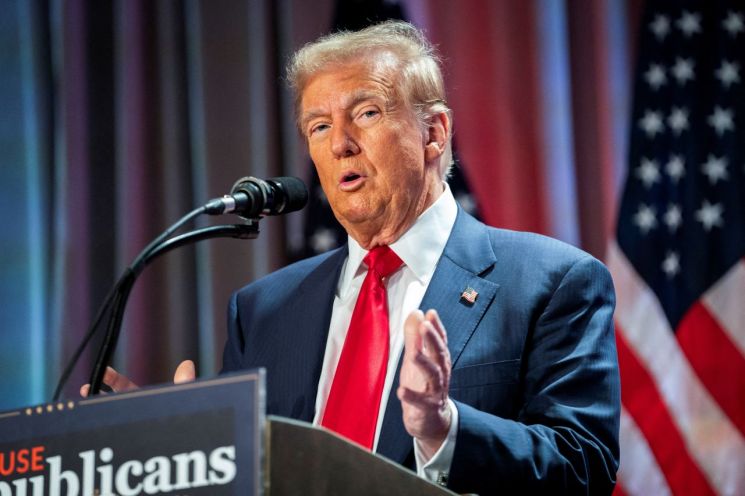
As the inauguration of President-elect Donald Trump approaches, the U.S. Senate will begin confirmation hearings on January 14 (local time) for cabinet nominees, including those for the State Department and the Department of Defense. Scott Vincent, CEO of the hedge fund Key Square Group and nominee for Treasury Secretary in the second Trump administration, announced that if he is ultimately confirmed, he plans to divest from dozens of funds, trusts, and investments.
According to foreign media including the AP on the 12th, the relevant Senate committees will hold confirmation hearings for candidates who will lead government agencies as follows: on the 14th, the Departments of Veterans Affairs, Defense, and the Interior; on the 15th, the Departments of Homeland Security, Justice (Day 1), Transportation, the Central Intelligence Agency (CIA), State, Energy, and the Office of Management and Budget (OMB); and on the 16th, the Departments of Housing and Urban Development, Environmental Protection Agency, Justice (Day 2), and Treasury. The AP reported that the hearing schedules for nominees to lead the Office of the Director of National Intelligence (DNI), Health and Human Services, Commerce, Federal Bureau of Investigation (FBI), and Labor have not yet been finalized.
Notable nominees include Pete Hegseth for Secretary of Defense, Tulsi Gabbard for DNI Director, Robert Kennedy Jr. for Secretary of Health and Human Services, and Kathy Patel for FBI Director.
Hegseth, a former Fox News host, has been embroiled in controversies over allegations of sexual misconduct, alcohol issues, and statements supporting North Korean leader Kim Jong-un's regime. His body covered with Christian extremist symbols, including the Crusader emblem, has also been criticized as inappropriate for the Defense Department role. After Matt Gaetz, the nominee for Attorney General, resigned in November last year amid allegations of involvement in underage prostitution, Hegseth faced increased risk of withdrawal, but President-elect Trump did not withdraw his nomination, allowing him to overcome the crisis.
Gabbard, a former Democratic congresswoman, has faced criticism for remarks that appeared to support Russia in the Ukraine war and for meeting with Bashar al-Assad, the recently ousted Syrian dictator, during her time in the House, raising concerns about her suitability to lead a foreign and security agency. However, as a military veteran, Gabbard holds a tough stance on North Korea's nuclear issue. If confirmed, she would become the second female DNI Director in U.S. history.
Kennedy Jr., who ran as an independent presidential candidate before supporting Trump and subsequently withdrawing, is considered unsuitable to lead a public health agency due to his anti-vaccine stance. He has lobbied against vaccines, claiming they cause autism and other conditions, even before the COVID-19 pandemic. Ahead of the confirmation hearings, he reversed some of his past statements. According to Axios, Kennedy Jr. previously opposed the polio vaccine but stated last month that he now supports it.
Patel, the FBI Director nominee, has advocated for political retaliation against those who investigated and prosecuted President-elect Trump. She belongs to Trump's loyalist faction. Given that the FBI Director manages vast amounts of information, the position requires high political neutrality and fair conduct, raising controversy over her suitability.
Meanwhile, according to foreign media including The New York Times (NYT), Vincent, the Treasury Secretary nominee, stated that if finally confirmed, he will divest from financial and investment interests such as the hedge fund Key Square Group. Vincent informed the Treasury Department's ethics office that he will "close Key Square Capital Management, resign from the Vincent-Freeman Family Foundation, and step down as chairman of the investment committee at Rockefeller University." The NYT reported that Vincent is selling several investments that could pose potential conflicts of interest, including a Bitcoin exchange-traded fund (ETF), accounts trading the Chinese currency yuan, and shares in the conservative publisher All Seasons.
Senate confirmation of cabinet nominees requires a majority vote. With 53 Republicans and 47 Democrats among the 100 senators, there should be no problem confirming nominees if there are no defections within the Republican Party. The most recent Senate rejection of a nominee in U.S. congressional history was John Tower, nominated for Secretary of Defense in 1989. Tower, who was also a senator at the time and nominated as the first Defense Secretary under the George H.W. Bush administration, was rejected by a Senate vote of 53 against and 47 in favor due to issues related to alcohol and women.
At the end of last month, President-elect Trump criticized Senate Democrats regarding the confirmation process of his nominees, saying, "Senate Democrats are improperly stalling and delaying the confirmation process for many of our great nominees," and urged, "Republicans, be smart and tough."
© The Asia Business Daily(www.asiae.co.kr). All rights reserved.
![Clutching a Stolen Dior Bag, Saying "I Hate Being Poor but Real"... The Grotesque Con of a "Human Knockoff" [Slate]](https://cwcontent.asiae.co.kr/asiaresize/183/2026021902243444107_1771435474.jpg)















