Restoration Work Underway at 5·18 Last Stand Site in Gwangsan-dong, Dong-gu, Gwangju
No Facilities or Items Present Due to Fire
A fire broke out at the restoration construction site of the old Jeonnam Provincial Government Office, which served as the setting for Han Kang's novel "The Boy Who Came," winner of the Nobel Prize in Literature.
On the 4th, Yonhap News reported that a fire occurred in the morning at the restoration construction site of the old Jeonnam Provincial Government Office located in Gwangsan-dong, Dong-gu, Gwangju. The fire is believed to have started on the third floor of the main building of the old Jeonnam Provincial Police Agency, an annex building of the old Jeonnam Provincial Government Office where the original restoration work is being carried out. Steel structure demolition work was underway there, and it is known that sparks from oxygen cutting ignited the insulation material, starting the fire.
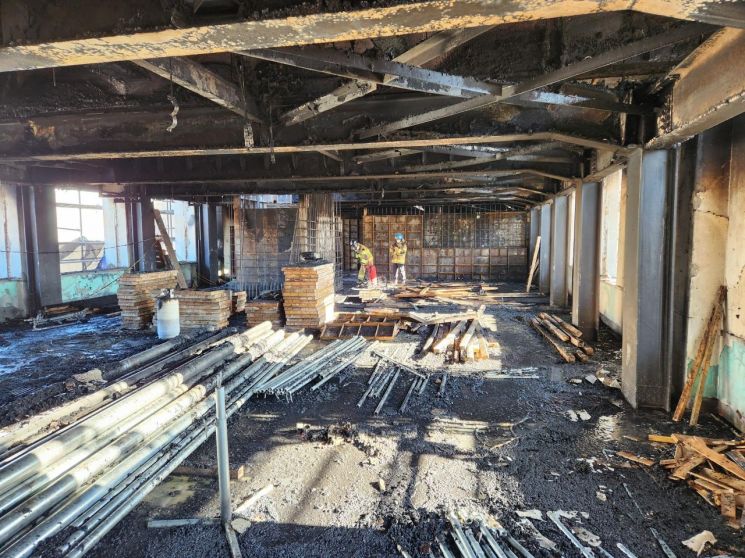 The restoration site of the old Jeonnam Provincial Police Department charred by fire. Provided by Gwangju Fire Headquarters, Yonhap News Agency
The old Jeonnam Provincial Government Office and Police Agency buildings were strongholds for the citizen army during the May 18 Democratic Uprising. Fourteen people died there while the citizen army fought their last stand to defend the site. The central lobby on the third floor of the Police Agency main building, where the fire broke out, is where high school student citizen soldiers Moon Jae-hak and Ahn Jong-pil were found dead. Moon Jae-hak is the real-life figure behind 'Dongho,' the protagonist of "The Boy Who Came."
It has been reported that there were no historical facilities or artifacts at the fire site as restoration work had been ongoing for several years. Six buildings related to the May 18 historical site?including the main and annex buildings of the Provincial Government Office, the conference room, the main building of the old Jeonnam Provincial Police Agency, the civil service office, and the Sangmugwan?became embroiled in controversy over the destruction of their original form during remodeling into the National Asia Culture Center’s Democracy and Peace Exchange Center. Bullet marks from the uprising on the interior and exterior walls disappeared, and the citizen army’s situation room and broadcasting room were converted into exhibition spaces and elevator corridors.
In response, May 18 organizations and civic groups dissatisfied with these changes staged a prolonged sit-in protest at the annex building of the Provincial Government Office in June 2016. Ultimately, the authorities accepted their demands and began restoration work in 2023 to return the buildings to their 1980 appearance. The construction was scheduled to be completed around September. However, the recent fire is expected to halt the restoration work for the time being. The fire was extinguished within about 30 minutes, but the interior of the construction site was blackened. The restoration will resume after removing the burnt debris and confirming there are no safety issues.
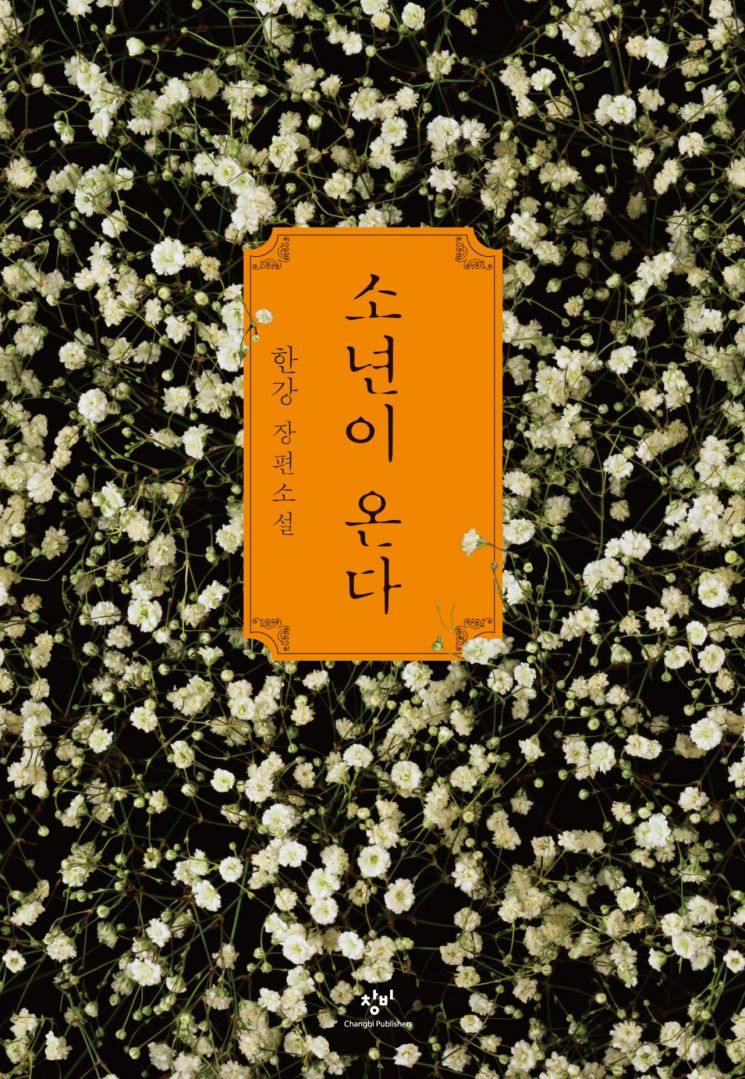
Meanwhile, Han Kang’s 2014 novel "The Boy Who Came" centers on the May 18 Democratic Movement, depicting tragic realities, inner suffering, and human dignity. The character 'Dongho' is a third-year middle school student who witnesses the death of his friend Jeong-dae and later manages corpses at the Provincial Government Office’s Sangmugwan before ultimately dying. After winning the Booker Prize, Han Kang expressed a hope that more people would read "The Boy Who Came" than her award-winning work "The Vegetarian." "The Boy Who Came" held the number one spot on Kyobo Bookstore’s bestseller list for nine consecutive weeks in the last week of December 2024.
© The Asia Business Daily(www.asiae.co.kr). All rights reserved.
![Clutching a Stolen Dior Bag, Saying "I Hate Being Poor but Real"... The Grotesque Con of a "Human Knockoff" [Slate]](https://cwcontent.asiae.co.kr/asiaresize/183/2026021902243444107_1771435474.jpg)

















