All Gas Pipelines to Europe Cut Off from the 1st
Eastern Europe Including Hungary and Slovakia Opposes
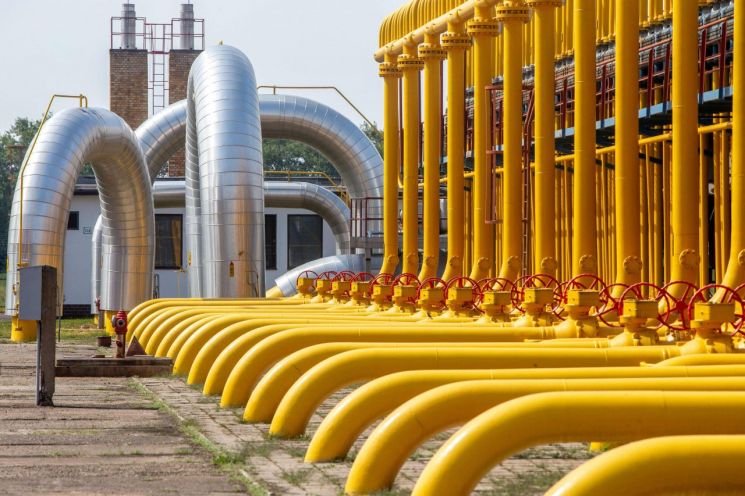 The Belke Kapusani gas pipeline located in the border area between Slovakia and Ukraine. Photo by AFP and Yonhap News.
Ukraine's complete blockade of Russian natural gas shipments to Europe via its territory has escalated diplomatic tensions with Eastern European countries. Unlike Western European countries, which can replace imports with U.S.-produced liquefied natural gas (LNG), most Eastern European countries are landlocked and lack basic infrastructure such as LNG terminals and pipelines, resulting in high dependence on Russian gas. As European gas prices, which had been declining last month, have started to soar again, concerns are growing that the East-West conflict within the European Union (EU) over Russian gas will intensify further.
Ukraine Fully Blocks Russia-Europe Gas Pipeline from the 1st... Russia Faces Annual Loss of 9 Trillion Won
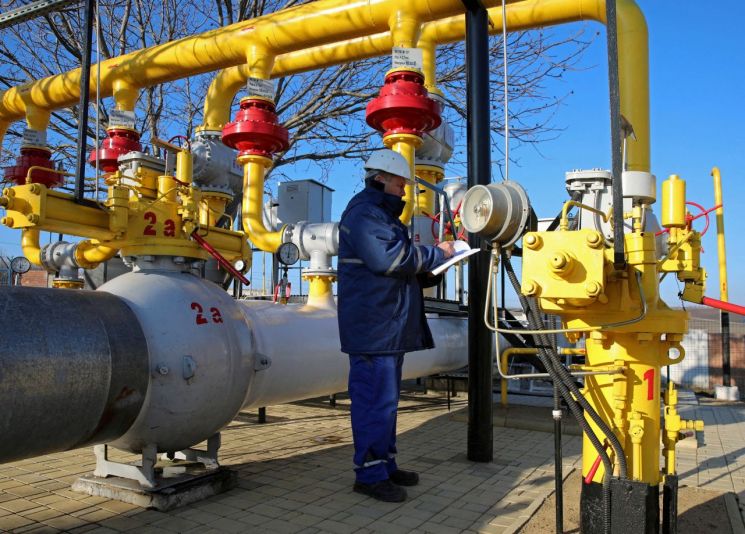 Inspection of the Chisinau-1 gas pipeline connecting Russia to Moldova. Photo by Reuters and Yonhap News Agency
On the 1st of this month (local time), Ukraine completely blocked the Urengoy gas pipeline that transported Russian gas to Europe through its territory. Although gas transportation had continued through this pipeline even after the outbreak of the Ukraine war in 2022, the Ukrainian government stated that the five-year usage contract with the Russian state-owned gas company Gazprom expired on December 31, 2024, and thus halted transportation.
Ukraine claims that the pipeline blockade is a measure to worsen Russia's financial revenues and cut off the possibility of continuing the war. In fact, the blockade is expected to reduce Russian gas exports by more than $6.5 billion (approximately 9.56 trillion won) annually. The European Commission also issued a statement saying, "We are prepared to cope with the transportation suspension and have cooperated with member states for over a year in anticipation of this scenario," adding that "the end of gas transportation through Ukraine will have a limited impact on the EU's energy supply security."
However, Eastern European countries such as Austria, Hungary, and Slovakia have all voiced strong opposition. They argue that the unilateral action disregards the positions of Eastern European countries, which still heavily depend on Russian gas. Slovak Prime Minister Robert Fico sent a protest letter to the European Commission, stating, "Implicit acceptance of Ukrainian President Volodymyr Zelensky's unilateral decision to block Russian gas is wrong and irrational. It will escalate tensions and provoke corresponding measures."
Since the outbreak of the Ukraine war, Western European countries like France, the United Kingdom, and Germany have imported LNG from the U.S. and the Middle East through strengthened sanctions against Russia. However, most Eastern European countries, being landlocked without ports, have continued importing Russian gas to avoid an energy crisis. As a result, despite three years of sanctions against Russia since the war began, the market share of Russian gas in Europe remained at about 8% until last year.
European Gas Prices Soar Again... Eastern European Countries Continue Bypassing Imports
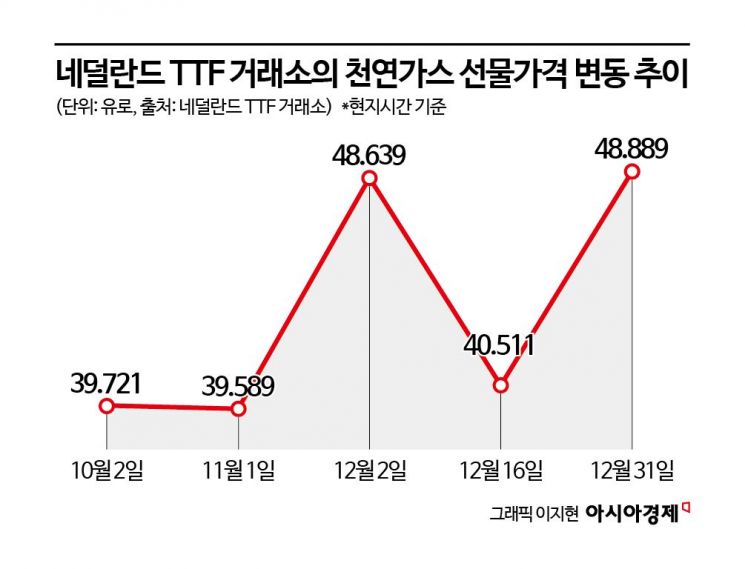
Until mid-last month, European natural gas prices had been declining amid hopes for a ceasefire in the Ukraine war, but they have recently rebounded sharply. The Dutch TTF exchange, a key indicator of European natural gas prices, saw futures prices rise from 40.511 euros per megawatt-hour (MWh) on the 16th of last month to 48.889 euros on the 31st, a rapid increase of 20.68%. Prices have climbed back above 48 euros since recording 48.639 euros earlier last month.
There is also a possibility that natural gas prices will rise further. The New York Times (NYT) analyzed, "Until now, pipelines passing through Ukraine continued exports to Eastern Europe and were not targeted by Russian forces, but with exports completely cut off, attacks are now expected. If a sudden cold snap occurs in January amid abnormal weather, gas prices could rise even more."
Eastern European countries with high dependence on Russian gas, such as Austria, Hungary, and Slovakia, continue to import Russian gas via Turkey, bypassing the direct route. This raises concerns that conflicts between Western and Eastern Europe over EU sanctions against Russia will deepen. CNN reported, "Prices for U.S. or Middle Eastern LNG are more than four times higher than Russian natural gas, making it difficult for Eastern European countries with weak financial and economic foundations to bear. If these countries continue independent gas contracts with Russia separate from EU sanctions, controversies within the EU will intensify."
© The Asia Business Daily(www.asiae.co.kr). All rights reserved.
![Clutching a Stolen Dior Bag, Saying "I Hate Being Poor but Real"... The Grotesque Con of a "Human Knockoff" [Slate]](https://cwcontent.asiae.co.kr/asiaresize/183/2026021902243444107_1771435474.jpg)

















