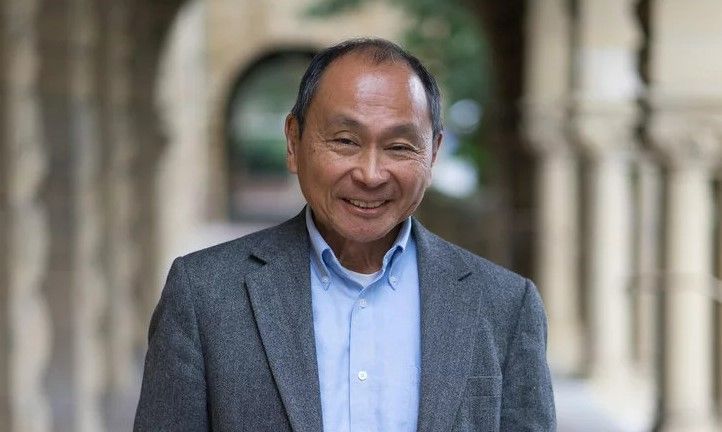
Francis Fukuyama, a third-generation Japanese-American political scientist and professor at Stanford University, stated, "We are currently in a period of 'Democratic backsliding,'" warning that "the return of Donald Trump as President of the United States would set a very bad precedent for American democracy." He also criticized the political situation in South Korea following the declaration of martial law and subsequent impeachment proceedings, calling it "a crisis caused solely by President Yoon Suk-yeol."
In an English-language interview released on the 2nd with Nihon Keizai Shimbun, Professor Fukuyama said that democracy, which has supported peace and economic growth since World War II, is now being tested. Previously, Fukuyama gained global attention with his 1989 paper "The End of History?" which predicted the rise of liberal democracy and capitalism after the Cold War. He is also well known domestically for his expanded work on the subject, including the bestseller The End of History and the Last Man.
Professor Fukuyama pointed out that President-elect Trump, who is set to take office this month, has refused to acknowledge his defeat in the 2020 presidential election and has claimed election fraud, calling it "an attack on the most important free election in a democratic system." He explained, "The 2024 U.S. presidential election was more than just a policy choice, but the American people chose him, who tried to illegally maintain office. The background is complex. First, there is dissatisfaction with inflation and the surge in immigrants due to failures in southern border control."
He also noted, "The rule of law supporting the 'freedom' of liberal democracy is gradually declining," highlighting the fact that Trump nominated Kash Patel, former acting Secretary of Defense and chief of staff, who has publicly mentioned punishing his opponents, as the next director of the Federal Bureau of Investigation (FBI). He added, "Using state power to imprison political opponents is something that happens only in very fragile developing democracies."
Professor Fukuyama diagnosed that American hegemony in the international community ended around the time of the 2008 global financial crisis. He warned, "What is concerning is that two huge authoritarian countries, Russia and China, are using military force to get what they want," adding, "Unfortunately, we are returning to scenes we saw in the 20th century." He also pointed out growing distrust in the established political order not only in the U.S. but also in Germany, France, and Japan, as well as the rise of exclusive nationalism in countries like Hungary and India.
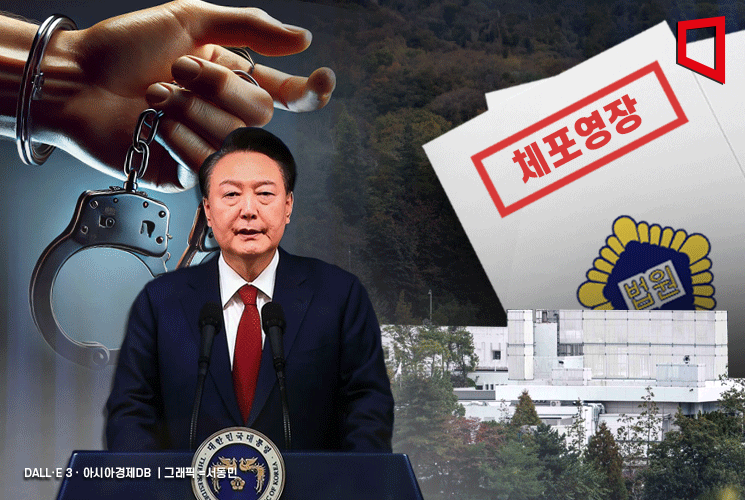
In particular, Professor Fukuyama drew attention by separately mentioning the political situation in South Korea during this interview. He said, "The controversy over the declaration of martial law in South Korea is a crisis caused solely by President Yoon, who was frustrated by the parliamentary deadlock," criticizing, "The impeachment motion shows the scale of mistakes made so far." He also expressed concern that "(President Yoon) should admit defeat and resign, but he says he will 'fight to the end,'" warning that "a leadership crisis in an important country like South Korea will continue for months."
However, while warning of democratic decline, Professor Fukuyama dismissed the idea that "this will continue indefinitely." He said, "Dictatorships where power is concentrated in individuals or families are ultimately unstable, and people do not want to live in such societies," referring to Syria, where a recent dictatorship collapsed. He added, "There is a good reason why liberal democracy is popular."
© The Asia Business Daily(www.asiae.co.kr). All rights reserved.
![Clutching a Stolen Dior Bag, Saying "I Hate Being Poor but Real"... The Grotesque Con of a "Human Knockoff" [Slate]](https://cwcontent.asiae.co.kr/asiaresize/183/2026021902243444107_1771435474.jpg)

















