Ministry of Industry, 2024 Annual and December Export-Import Trends
Last Year's Export Value $683.8 Billion... Up 8.2%
Global Export Ranking 2023: 8th → 2024: 6th
Last year, exports reached $683.8 billion, achieving the highest performance ever recorded. The export growth trend continued for 15 consecutive months, and the trade surplus persisted for 19 months.
On the 1st, the Ministry of Trade, Industry and Energy announced the '2024 Annual and December Export-Import Trends' report containing these details.
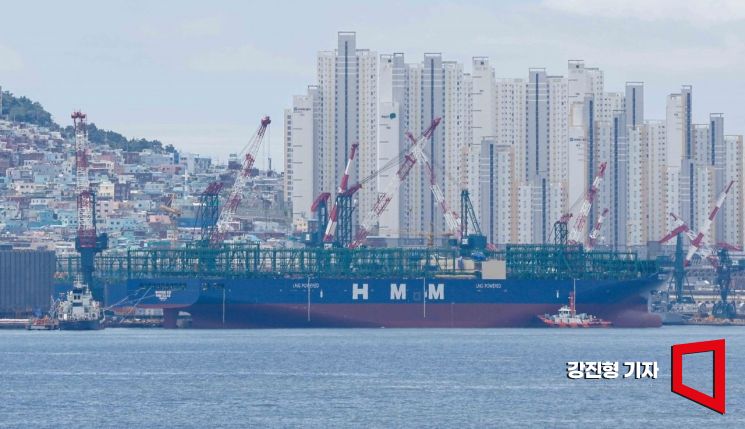
Exports in 2024 amounted to $683.8 billion, an 8.2% increase compared to the previous year. Surpassing the $683.6 billion recorded in 2022 after two years, it achieved the highest performance ever. The daily average export also exceeded the previous record of $2.51 billion in 2022, reaching $2.53 billion (8.2%).
Accordingly, based on the World Trade Organization (WTO) standards from January to September 2024, the global export ranking rose two places from 8th in 2023 to 6th. Among the top 10 exporting countries, it recorded the highest export growth rate (9.6%).
Minister An Deok-geun of the Ministry of Trade, Industry and Energy stated, "Last year, we simultaneously achieved the highest export performance and trade surplus in history, maintaining positive exports and surplus every month without missing a single moment. Despite challenging external export conditions such as persistent global high interest rates and inflation, the Russia-Ukraine war, and Middle East conflicts, as well as the recent severe domestic political situation, our companies have made unwavering efforts in the global market, which led to these results."
In 2024, exports increased in 8 out of the 15 major export items. Semiconductor exports, the largest export item, rose 43.9% to $141.9 billion, continuing an upward trend for 14 consecutive months since November 2023, surpassing the previous record of $129.2 billion in 2022 after two years. Particularly in the fourth quarter, despite a decline in prices of general-purpose memory, exports expanded centered on high value-added products such as DDR5 and High Bandwidth Memory (HBM), resulting in an overall upward quarterly export trend this year.
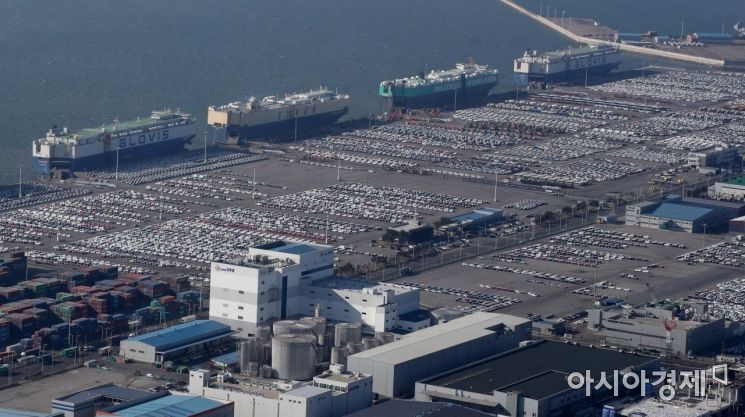
Automobile exports recorded $70.8 billion (-0.1%), remaining flat compared to the previous year due to some production disruptions caused by strikes in major finished car and parts industries in the second half. Ship exports increased by double digits (18%) to $25.6 billion, as high-value-added ships such as liquefied natural gas (LNG) carriers and large container ships, ordered at high prices in 2021, were actively exported. Petrochemical exports rose 5.0% to $48.0 billion, with export volume expanding despite a decline in export unit prices due to falling oil prices in the second half.
Biohealth exports increased 13.1% year-on-year to $15.1 billion, centered on pharmaceuticals such as biosimilars. With the global expansion of preference for K-Food and K-Beauty, agricultural and marine food exports reached $11.7 billion (7.6%), and cosmetics exports ($10.2 billion, 20.6%) surpassed $10 billion for the first time, setting a new record for the highest export performance.
By region, exports increased in 7 out of the 9 major export markets. Exports to China, the largest export market, rose 6.6% to $133 billion, with all three major export items?semiconductors, petrochemicals, and wireless communication devices?showing favorable trends. Notably, in 2024, exports increased in all periods except February and November, and quarterly exports showed an upward trend.
Exports to the United States reached $127.8 billion (10.5%), marking the highest export performance for seven consecutive years. Automobile and general machinery exports showed strong performance, and semiconductor exports increased threefold, linked to expanded data center investments by major U.S. big tech companies.
ASEAN (Association of Southeast Asian Nations) exports rose 4.5% to $114 billion, with strong performances in semiconductor and petroleum product exports, and double-digit growth in IT items such as computers and wireless communication devices, excluding displays.
Exports to Latin America ($29 billion) recorded the highest growth rate (17.8%) among the nine major export markets. Exports to India ($18.7 billion, 4.2%) achieved the second-highest performance ever, and exports to the Middle East ($19.7 billion, 4.8%) recorded positive growth for four consecutive years, showing strong performance in emerging markets. Exports to Japan also increased 2.0% to $29.6 billion.
Last year, imports decreased 1.6% to $632 billion due to reduced energy imports. The trade balance improved by $62.1 billion compared to the previous year, recording a surplus of $51.8 billion, the largest surplus since 2018 ($69.7 billion surplus).
In 2022, despite record-high combined exports of petroleum products and petrochemicals due to sustained high oil prices, energy imports surged significantly, resulting in the largest deficit ever of $47.8 billion despite record exports. In 2024, unlike 2022, oil prices stabilized downward, and IT items such as semiconductors, major items like ships and automobiles, and consumer goods such as biohealth, agricultural and marine food, and cosmetics all showed balanced strong performance, achieving the highest export performance and trade surplus simultaneously.
Exports in December last year increased 6.6% year-on-year to $61.4 billion, imports rose 3.3% to $54.9 billion, and the trade balance recorded a surplus of $6.5 billion.
Exports in December reached a record high of $61.4 billion, continuing the positive export trend for 15 consecutive months. The daily average export also set a record for December at $2.67 billion (4.3%).
In December last year, 7 out of the 15 major export items recorded positive growth. Semiconductor exports, Korea's largest export item, increased 31.5% to $14.5 billion, setting a new record for the highest export performance in December, following June and September. Wireless communication devices ($1.4 billion, 16.1%) and computer exports ($1.5 billion, 118.0%) also showed double-digit growth rates.
Imports in December rose 3.3% year-on-year to $54.9 billion. Energy imports were $10.6 billion, down 22.8%, while non-energy imports ($44.3 billion) increased 12.4%. The trade balance recorded a surplus of $6.5 billion, up $2 billion from the same month last year, marking 19 consecutive months of surplus.
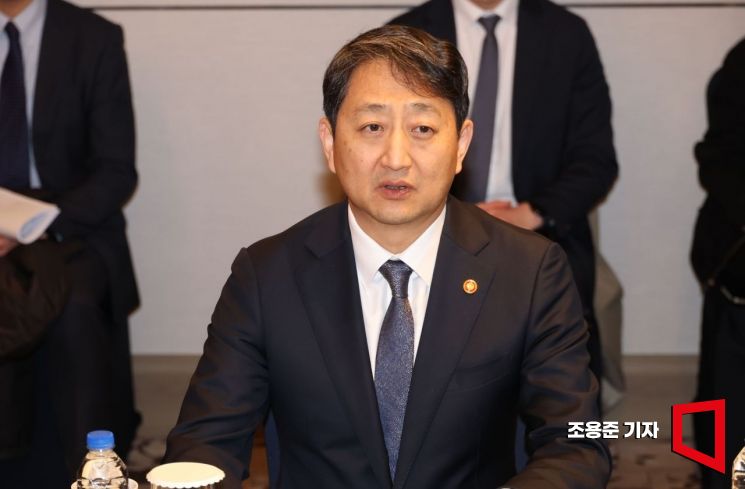
The government plans to mobilize all available resources as a public-private one team to ensure exports continue to lead the economy in 2024. Minister An said, "To minimize risks for export companies and support liquidity, we will expand trade insurance supply in 2025 to a record high of over 250 trillion won. We will focus 100 trillion won on supporting small and medium-sized export companies, and in response to recent rapid exchange rate fluctuations, we will raise the loan guarantee and foreign exchange fluctuation insurance limits for small businesses to 150%, and offer a special 30% discount on foreign exchange fluctuation insurance premiums."
© The Asia Business Daily(www.asiae.co.kr). All rights reserved.
![Clutching a Stolen Dior Bag, Saying "I Hate Being Poor but Real"... The Grotesque Con of a "Human Knockoff" [Slate]](https://cwcontent.asiae.co.kr/asiaresize/183/2026021902243444107_1771435474.jpg)

















