Record $1 Trillion ETF Inflows in November
Reflecting Trump Trade Optimism Including Tax Cut Promises
Active Funds Unable to Beat Index, Record Largest Outflows
This year, passive investors and active investors experienced contrasting fortunes. While the U.S. exchange-traded fund (ETF) market, buoyed by the booming New York stock market, attracted record-breaking funds and surpassed $10 trillion in cumulative assets, the active fund market failed to outperform stock indices and suffered record capital outflows.
According to ETF consulting firm ETFGI, cited by the Wall Street Journal (WSJ) on the 30th (local time), the U.S. ETF market saw a net inflow of $1.03 trillion (approximately 1,519 trillion KRW) through the end of November this year. This exceeded the previous record of about $803 billion set in 2021, a rebound period following the pandemic. Fueled by this record inflow, the cumulative assets of U.S. ETFs also reached an all-time high of $10.6 trillion.
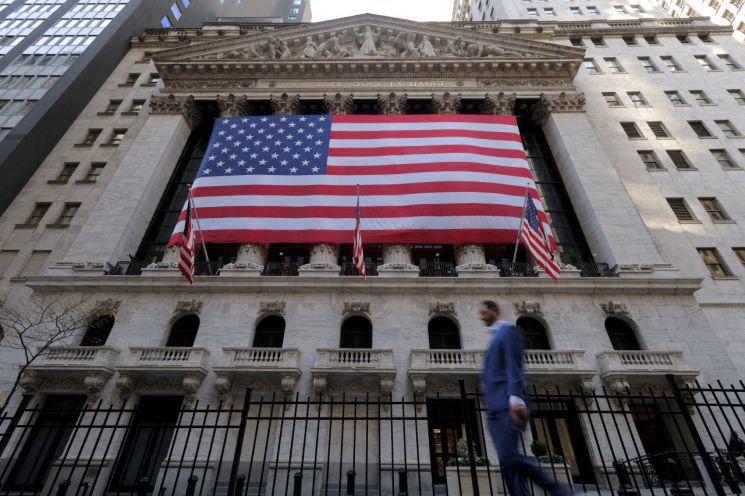
Among major ETFs, index funds tracking stock indices scooped up large amounts of money. In particular, BlackRock’s ETF ‘VOO (ticker)’ tracking the large-cap S&P 500 index attracted $105 billion this year, securing an overwhelming first place. Invesco’s ‘QQQ,’ which tracks the tech-heavy Nasdaq 100 index, also raised $28 billion, showing nearly fourfold growth compared to $7.3 billion last year.
Experts attribute the U.S. ETF market boom to the victory of then-President-elect Donald Trump. In November alone, when Trump’s election victory was confirmed, $164 billion flowed in, setting a monthly record. Expectations for Trump’s tax cut promises and various deregulations were reflected in the market, with 97% of the global ETF net inflows in November concentrated in the U.S.
Matthew Bartolini, Head of Research at SPDR Americas, evaluated, "The U.S.’s unique position in terms of economic growth, earnings, and performance is exciting investors." Brian Hartigan, Head of ETF and Index Investments at Invesco, said, "Investors have clearly regained confidence this year," adding, "There is a growing willingness to take risks."

Behind this ETF market boom was the slump in active funds. According to EPFR, which tracks fund data, the global active equity fund market saw outflows of about $450 billion this year, surpassing the previous record of $413 billion set last year. Unlike index funds, active funds charge higher fees and must select individual stocks to achieve returns exceeding stock indices.
However, this year, these funds’ performance lagged behind the gains of the S&P 500 and Nasdaq indices, prompting investors to withdraw. Active funds investing in key U.S. large-cap companies such as the Magnificent 7 achieved average annual returns of 20% over the past year and 13% over five years, which are lower than the returns of simple index-tracking ETFs (23% for one year, 14% for five years).
Adam Sarban, Senior Research Analyst at Morningstar, diagnosed, "The investor base of equity active funds is mostly elderly, who invest for retirement and must withdraw at some point," adding, "Going forward, new funds are much more likely to flow into index ETFs rather than active funds."
© The Asia Business Daily(www.asiae.co.kr). All rights reserved.
![Clutching a Stolen Dior Bag, Saying "I Hate Being Poor but Real"... The Grotesque Con of a "Human Knockoff" [Slate]](https://cwcontent.asiae.co.kr/asiaresize/183/2026021902243444107_1771435474.jpg)
















