High Risk of Secondary Trauma from Photos and Videos
Rescue Operations to Manage Accident Continue Overnight
On the 29th, following an aircraft collision accident at Muan International Airport in Jeollanam-do that resulted in the deaths of most of the 181 passengers on board, voices expressing concern over the mental shock and psychological aftereffects caused by the accident have emerged. On the same day, the Korean Medical Association Emergency Response Committee issued a statement saying, "We cannot help but share the nation's grief over this unfortunate accident," and added, "Currently, the Jeollanam-do Medical Association is coordinating with nearby hospitals in Jeollanam-do and Gwangju Metropolitan City to manage the situation." They also stated, "We will seek additional cooperation measures in coordination with local medical associations to ensure smooth emergency treatment and transfer," and expressed "deep gratitude to those dedicated to rescue operations under difficult conditions."
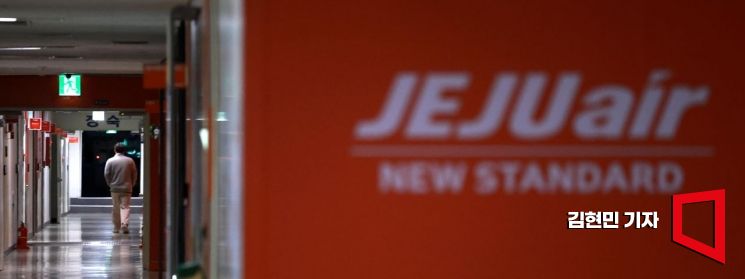 On the 29th, when the Jeju Air passenger plane disaster occurred at Muan International Airport, officials were busy moving around at the Jeju Air Seoul branch in Gangseo-gu, Seoul. Photo by Kim Hyun-min
The Jeollanam-do Medical Association and the Gwangju Medical Association also announced, "To alleviate the deep sorrow of the bereaved families, we will provide psychiatric support such as psychological counseling and medication treatment in cooperation with mental health specialists." These medical associations emphasized the need for psychological support for the bereaved families and stated that psychiatric counseling, psychological, and medication treatment support involving mental health specialists will be provided to help ease the families' grief and pain even slightly.
The medical community stressed that those who witnessed the accident scene or saw it on video are highly likely to suffer secondary trauma, making psychological care urgent. Professor Baek Jong-woo, head of the Korean Trauma Stress Society and a psychiatrist at Kyung Hee University Hospital, posted on his social media, "I hope that mental health professionals will provide psychological first aid to the bereaved families as soon as possible," and urged, "The media should refrain from repeatedly broadcasting the accident scenes unnecessarily or sensationalizing the coverage."
Meanwhile, as of 10 p.m. that night, the Fire Agency and other rescue authorities announced that they had recovered two additional missing persons who had died, rescued two crew members, and finalized the death toll at 179. Rescue workers continued their busy search operations around the accident site after sunset, wearing headlamps and entering under the tail wing of the crashed aircraft lifted by a crane. Some rescue workers were seen from around 8 p.m. moving out to the reed fields beyond the runway fence, digging through debris such as airplane seats to find personal belongings. One rescue worker, relying on flashlight beams to continue the search, said, "We are re-examining personal belongings such as identification cards necessary for confirming the identities of the deceased," and added, "Search operations for missing persons are also underway around the accident aircraft."
© The Asia Business Daily(www.asiae.co.kr). All rights reserved.
![Clutching a Stolen Dior Bag, Saying "I Hate Being Poor but Real"... The Grotesque Con of a "Human Knockoff" [Slate]](https://cwcontent.asiae.co.kr/asiaresize/183/2026021902243444107_1771435474.jpg)















