Over 400 Passengers Onboard
Traveling 2.5 km at 300 km/h
Damage Prevented Thanks to 'Driver Monitoring' Automatic Emergency Braking
In southeastern France, a high-speed train engineer committed suicide, nearly causing casualties, but the train's automatic emergency braking system activated and prevented a disaster.
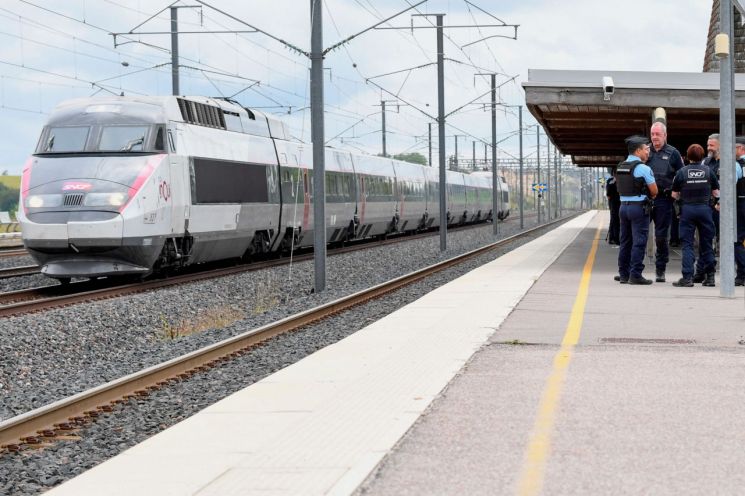
According to French daily Le Parisien, BFM TV, and other foreign media on the 25th (local time), the high-speed train departing from Paris Lyon Station and heading to Saint-?tienne in the southeast stopped on the tracks after one hour of operation the previous day at 7 p.m. At that time, about 400 passengers were on board, traveling home for Christmas. Ticket inspectors tried to contact the engineer to assess the situation but received no response, and upon checking the control cabin, it was found empty.
The control authorities immediately halted train operations on both tracks and reported the incident to the fire department. The engineer was found dead about 2 km upstream from where the train had stopped. After handling the accident, the French National Railway Company (SNCF) stated, "The engineer took his own life while the train was running," adding, "The entire railway family mourns and is deeply shocked by this terrible Christmas tragedy." It was reported that the engineer had recently been suffering from depression due to personal reasons.
It was revealed that the high-speed train, which was traveling at 300 km/h at the time of the accident, took 2.5 km to come to a complete stop. According to SNCF, the train stopped automatically through the automatic braking system. Known as 'Vacma,' this automatic braking system checks whether the engineer is properly on duty and activates the brakes in emergencies to stop the train.
Meanwhile, the accident caused delays in the departure and arrival of 12 high-speed trains, affecting more than 3,000 people. SNCF announced that it would compensate passengers on the most affected trains up to 100% of their ticket price.
© The Asia Business Daily(www.asiae.co.kr). All rights reserved.
![Clutching a Stolen Dior Bag, Saying "I Hate Being Poor but Real"... The Grotesque Con of a "Human Knockoff" [Slate]](https://cwcontent.asiae.co.kr/asiaresize/183/2026021902243444107_1771435474.jpg)
















