After Building Trust with Victims, Disappeared After Taking Money Through Fake Travel Agency
A new type of scam has been revealed in which fraudsters impersonate travelers to extort millions of won from tourists visiting Mongolia and other regions.
Recently, travel YouTuber ‘Ssoi’, who has 600,000 subscribers, also shared related victim experiences. In a recent video, Ssoi explained that even her acquaintances were scammed while preparing for a trip to Mongolia, and she shared details of a new travel scam method currently spreading in Korea.
 A new type of scam has been reported where fraudsters impersonate travelers to extort hundreds of thousands of won from tourists visiting Mongolia and other regions. YouTube Soy capture
According to compiled victim reports, three people including Mr. A, who were preparing for a trip, were connected to scammers while recruiting travel companions for Mongolia through online communities. Due to Mongolia’s geographical characteristics, it is common for six people to travel together using a package tour that includes a guide and vehicle, so finding travel companions is a usual practice.
The scammers’ tactics were sophisticated. They approached Mr. A and others who posted about looking for travel companions and lured them into an open chat room. Then, while discussing travel plans, they recommended a specific travel agency, saying, “A friend of mine went there, and the guide takes great photos.”
Even when Mr. A and others mentioned cheaper packages from other travel agencies, the scammers discouraged them by saying, “That’s an illegal advertising company. I’ve seen posts about scam victims,” making them hesitate. Then they said, “Try asking directly if you’re curious,” and provided a link to the open chat room of the travel agency they recommended.
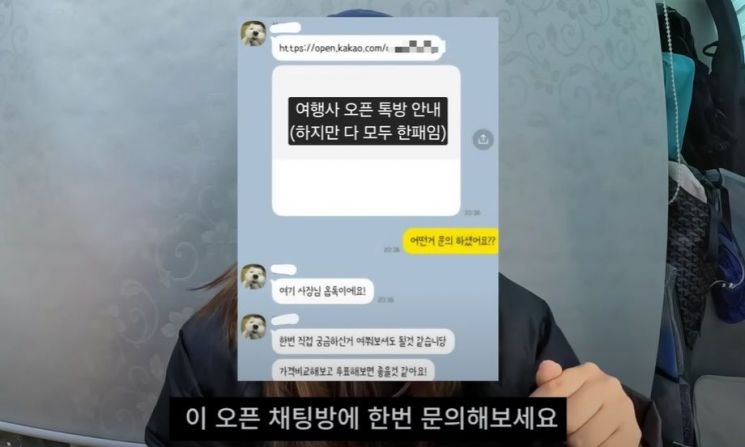
However, the travel agency was a fake chat room operated by the scammers. They pretended to offer real travel products, and after Mr. A and others transferred the travel fees, the scammers cut off contact and disappeared. The amount lost was 2.88 million won.
Ssoi said, “I’ve been to Mongolia myself, but the scammers seemed to know quite a bit about Mongolia and gave very detailed consultations. It was really creepy.” She explained, “I was surprised at how meticulously they could carry out the scam. Even when I inquired, I felt like I could easily be tricked.”
The scam is occurring not only in Mongolia but also in other travel destinations. One netizen shared their experience of being scammed while preparing for a trip to the United States. The scammer claimed, “My uncle works at a travel agency, so I can book hotels cheaply,” took the money, and then disappeared.
Another victim said, “A person approached me saying they could help book at a good price through a travel agency connection, but after I transferred the money, they cut off contact.”
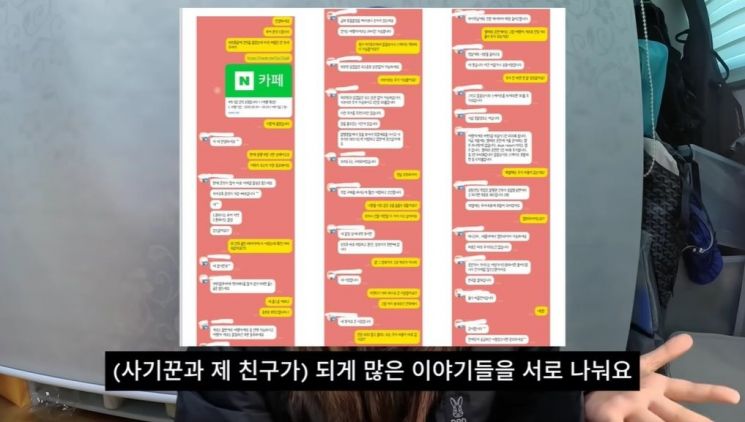 A new type of scam has emerged involving inducing payments through open chat rooms related to travel in Mongolia. YouTube Soy capture
Experts advise that sufficient verification before planning a trip can prevent such damage. Even if a travel agency is recommended in travel-related communities, you must verify whether the agency is legally registered and legitimate.
You can check the registration status of a travel agency at the local city, county, or district office, and also check for any scam history of the account through scam report sites or account inquiry services.
Additionally, it is necessary to thoroughly verify the identity of strangers before conducting any transactions and exercise caution in advance. New types of scams are difficult to prove as crimes, and once damage occurs, compensation is hard to guarantee.
© The Asia Business Daily(www.asiae.co.kr). All rights reserved.
![Clutching a Stolen Dior Bag, Saying "I Hate Being Poor but Real"... The Grotesque Con of a "Human Knockoff" [Slate]](https://cwcontent.asiae.co.kr/asiaresize/183/2026021902243444107_1771435474.jpg)

















