Construction of Youth Culture Center Supports Various Youth Experience Activities
Family Care and Isolated Reclusive Youth, Implementation of Care Policies for Youth and Middle-aged Groups
Ulsan City has allocated 1.7868 trillion KRW for the 2025 welfare budget and plans to meticulously implement welfare policies tailored to each life cycle.
Through various policies, the city aims to help youth grow into key players leading the future of the local community by establishing a foundation for youth activities and growth support, supporting youth experiences and activities, strengthening customized welfare for family caregivers and isolated reclusive youth, and expanding care services for young and middle-aged adults, thereby eliminating welfare blind spots and improving quality of life.
Ulsan City is actively working to create a foundation for youth activities so that local youth can grow into leaders of the future.
The Youth Culture Center, currently under construction on the site of the former Jungbu Fire Station in Seongnam-dong, Jung-gu, will be a building with two basement floors and seven above-ground floors, including a book cafe, pop-up store, 4th industrial revolution experience room, K-POP specialized education center, multipurpose performance hall, and gymnasium.
This space is expected to function as a complex cultural space that goes beyond simply providing facilities to help youth express creativity and prepare for the future. The project went through a design competition this year, and a contractor was finally selected in October. The basic and detailed designs are scheduled to be completed in 2026, with construction completion targeted for 2028.
The Buk-gu Ihwajeong Creative Center, which reflected youth opinions from the design stage, opened last November, and the Nam-gu Haesol Youth Center is scheduled to open in January 2025.
Various experiential programs are also being operated to allow youth to explore their potential through broader experiences.
The Youth Activity Promotion Center is implementing various programs such as a Coming-of-Age Day commemorative event and traditional culture experiences with a budget of 707 million KRW, with about 100 youth participating to experience both traditional and modern values simultaneously.
Additionally, through events such as the National Song Festival (with about 2,000 participants), the Hanmaeum Grand Festival (about 1,000 participants), and roundtable discussions (83 participants), youth cooperation and a sense of ownership toward the local community were enhanced.
Professional instructors numbering 10 have been assigned to youth training facilities to strengthen the systematic and professional operation of programs, and through international exchange programs, 12 youth visited Kumamoto City in Japan to experience cultural exchange and historical exploration activities.
The Ulsan Youth Future Center, which opened in July 2024, is equipped with an education hall, program rooms, and counseling spaces. Fifteen professionals, including the center director, collaborate with local universities, hospitals, and related institutions to identify family caregiving youth and isolated/reclusive youth and provide close case management.
The family caregiving youth support project provides up to 2 million KRW annually as self-care expenses and connects youth caring for sick family members with various welfare services such as daily care services, long-term care, and support for disabled activities.
The isolated and reclusive youth support project identifies cases early through an online self-diagnosis window and provides customized services ranging from initial counseling to interpersonal relationship recovery programs.
Since the center’s opening, 160 family caregiving youth and 77 isolated/reclusive youth have received support, and self-care expenses have been paid to 48 family caregiving youth.
Ulsan City provides “daily care services” targeting young and middle-aged adults aged 19 to 64 who need care due to illness, injury, or isolation, as well as youth aged 13 to 39 who care for sick family members.
This service includes customized support such as home care, housekeeping and meal management, hospital accompaniment, psychological support, and healthy lifestyle assistance. In urgent situations, emergency care support projects provide up to 30 days of home care and transportation support.
This project started as a pilot by the Ministry of Health and Welfare and is now expanded as a full project. The number of service providers has increased from 13 to 31, enabling more tailored support for a larger number of beneficiaries. Applications for this service can be made at the administrative welfare center of the resident registration address.
Ulsan City stated, “We will actively identify youth and young to middle-aged adults who are in welfare blind spots and support youth to grow into leaders of the local community’s future through sustainable, customized welfare policies.”
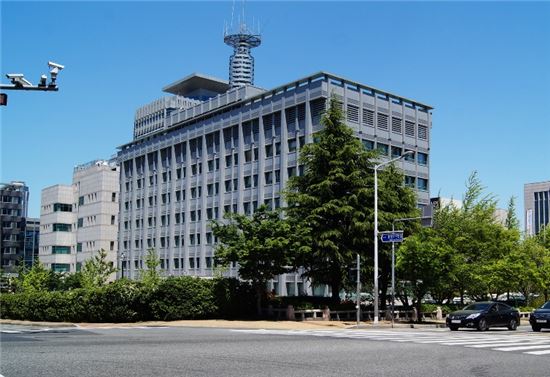 Ulsan City Hall.
© The Asia Business Daily(www.asiae.co.kr). All rights reserved.
![Clutching a Stolen Dior Bag, Saying "I Hate Being Poor but Real"... The Grotesque Con of a "Human Knockoff" [Slate]](https://cwcontent.asiae.co.kr/asiaresize/183/2026021902243444107_1771435474.jpg)














