Gaining Weight After a Long Time Since COVID-19
Desserts Available for Under 20,000 Won
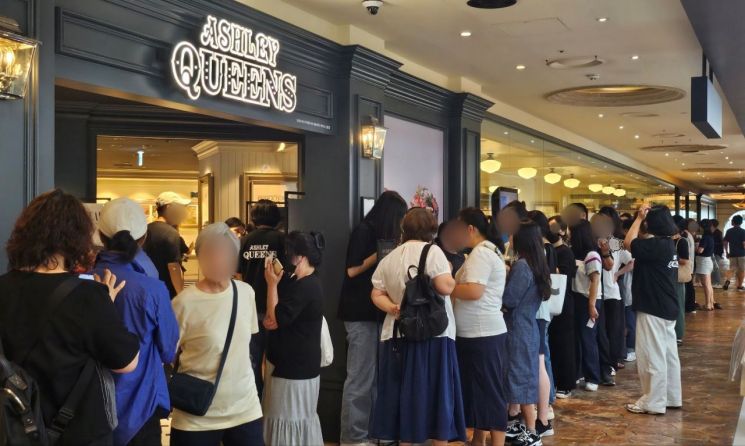
All-you-can-eat and buffet-style restaurants, which had experienced a slump for a while, have entered a new heyday. It is evaluated that consumers, weary from the high inflation era, have turned to all-you-can-eat and buffet-style restaurants offering reasonable prices.
According to market research firm Euromonitor on the 19th, the domestic family restaurant (chain store) market size grew by 30.3%, from 685.4 billion KRW in 2022 to 893.1 billion KRW last year. It is expected to reach 931.9 billion KRW this year.
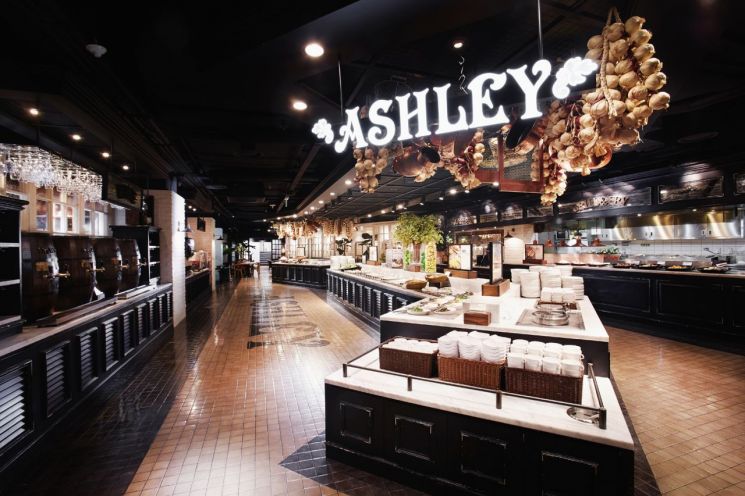
All-you-can-eat and buffet-style restaurants enjoyed their heyday in the early 2000s but were hit hard and sharply contracted due to social distancing measures caused by COVID-19. Ashley, operated by E-Land Eats, had 155 stores in 2014 but decreased to 59 stores by 2022 after the pandemic, and CJ Foodville’s Season’s Table and Shinsegae Food’s Olban completely withdrew from the business.
However, this year they have aggressively expanded. Ashley Queens had 77 stores nationwide at the end of last year, but this month the number explosively increased to 110. That is an addition of 28 stores in just one year. New stores will open early next year as well. Ashley Queens’ sales this year are expected to reach 400 billion KRW, about 70% higher than last year. Other buffets operated by E-Land Eats, such as Rowoon Shabu Shabu and Jayeon Byeolgok, also saw sales increase by 35% and 32%, respectively, during the same period.
VIPS stores decreased from 61 at the end of 2018 to about half this year, but sales and profits actually increased. VIPS’ sales per store rose by 66% in 2022 compared to the previous year and by 13% last year.
Galbi all-you-can-eat buffet Myeongnyun Jinsagalbi opened 138 new franchise stores just last year. As of November this year, the total number of franchise stores surpassed 630. Its 2023 sales also recorded an all-time high of 250.8 billion KRW, a 162.2% increase compared to the previous year.
The main reason for the revival of all-you-can-eat and buffet-style restaurants is the skyrocketing dining-out prices. According to the Korea Consumer Agency’s price information portal “Chamgagaek” on the 15th, the average price increase rate of eight popular dining-out menus in Seoul from January to November this year was 4.0%. Among the most preferred dining menus by Koreans, pork belly (converted to 200g) crossed into the 20,000 KRW range for the first time in Seoul in May this year, and samgyetang (ginseng chicken soup) surpassed the 17,000 KRW threshold in July.
In contrast, all-you-can-eat and buffet-style restaurants offer unlimited meals at prices ranging from 10,000 to 20,000 KRW. For 10,000 to 20,000 KRW, customers can enjoy a hearty meal as well as coffee and dessert. The ability to satisfy diverse tastes in one place is also an attractive factor.
© The Asia Business Daily(www.asiae.co.kr). All rights reserved.
![Clutching a Stolen Dior Bag, Saying "I Hate Being Poor but Real"... The Grotesque Con of a "Human Knockoff" [Slate]](https://cwcontent.asiae.co.kr/asiaresize/183/2026021902243444107_1771435474.jpg)
















