Announcement of Improvement Measures for Hydrofluorocarbon Management System
'Hydrofluorocarbon' Used in Air Conditioner Refrigerants
Has Greater Global Warming Impact than Carbon Dioxide
Promotion of Transition to Products with Lower Global Warming Potential
The government has decided to reduce the use of hydrofluorocarbons, which are used as refrigerants in air conditioners and refrigerators, by 20 million tons within 10 years. Despite being substances that have a detrimental effect on global warming, they are being indiscriminately used in domestic industries, making urgent management necessary.
On the 18th, the Ministry of Environment and related ministries announced the "Improvement Plan for the Management System of Hydrofluorocarbons to Reduce Greenhouse Gas Emissions" at the Economic Ministers' Meeting, which includes these measures.
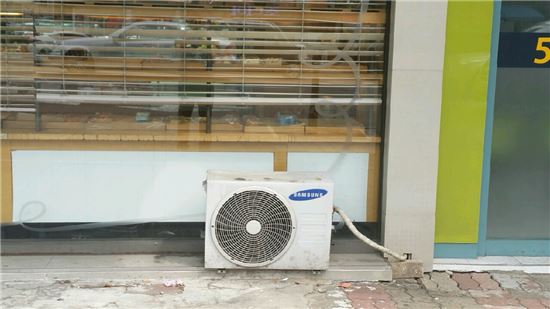 The photo is unrelated to the article content.
Hydrofluorocarbons are synthetic substances used as refrigerants in air conditioners, foaming agents in insulation materials, and extinguishing agents in fire suppression systems. They were developed to replace ozone-depleting substances, but their Global Warming Potential (GWP) is very high. The GWP indicates the impact on global warming when 1 kg of a chemical is released into the atmosphere, and the GWP of hydrofluorocarbons is up to 12,400 times greater than that of carbon dioxide.
The government plans to promote the transition to products using substances with lower GWP to reduce hydrofluorocarbon usage. For example, the hydrofluorocarbon refrigerant currently used in household refrigerators has a GWP of about 1300. However, from 2027, household refrigerators must use refrigerants with lower GWP when manufactured.
This transition will start with products using substances with lower GWP. From next year, the government will consider providing national subsidies to ease the burden on small and medium-sized enterprises and mid-sized companies switching substances. In 2026, research and development related to alternative substances and key components will begin. Efforts will also be made to activate related products through improvements in certification systems and mandatory purchases by public institutions.
A full lifecycle management system will also be established. During the usage phase, manufacturers and maintenance companies will be required to report refrigerant usage, and leak management will be strengthened through expanded management targets and inspections. In the disposal phase, the use of recycled refrigerants will be promoted. Infrastructure construction and pilot projects will be implemented to facilitate the smooth collection, transportation, and recycling of waste refrigerants, and a quality certification system will also be established. Companies with high refrigerant usage will be obligated to use recycled materials.
The background for the government’s hydrofluorocarbon reduction plan lies in the national greenhouse gas reduction target (NDC). Under the Paris Agreement, the government must submit targets for how much greenhouse gases will be reduced every five years until 2030. As the international community includes hydrofluorocarbons among greenhouse gases, they have been identified as a major cause of Korea’s increasing greenhouse gas emissions. Applying the revised standards to recalculate 2021 greenhouse gas emissions results in an increase of 44.7 million tons, half of which (22.3 million tons) is due to hydrofluorocarbons.
If hydrofluorocarbon usage is not reduced, it is expected to affect overall environmental policies. Korea’s hydrofluorocarbon consumption has approached 27,459 tons over the past three years since 2020. In particular, 71% of domestic refrigerants for freezing and refrigeration are made of hydrofluorocarbons. This is due to the habitual use of these substances without a systematic domestic transition policy, and if not controlled, emissions are expected to increase until 2034.
Major advanced countries have already begun reducing hydrofluorocarbon usage. The European Union (EU) restricts the use of hydrofluorocarbons in certain products and enforces the use of products with lower GWP. This year, it passed legislation to completely eliminate hydrofluorocarbon usage by 2050. Japan has been suppressing hydrofluorocarbon emissions since 2015 by setting GWP targets for each product. The United States plans to reduce hydrofluorocarbon usage by 85% by 2036 compared to the 2011?2013 average through usage restrictions and manufacturing/import controls.
The government plans to revise laws and expand organizations and personnel for the operation and management of the system next year to implement the improvement plan.
© The Asia Business Daily(www.asiae.co.kr). All rights reserved.
![Clutching a Stolen Dior Bag, Saying "I Hate Being Poor but Real"... The Grotesque Con of a "Human Knockoff" [Slate]](https://cwcontent.asiae.co.kr/asiaresize/183/2026021902243444107_1771435474.jpg)














