Exports Decline... Domestic Demand Clearly Weak
Disagreement Over Expansionary Fiscal Policy to Resolve Uncertainty
International Community Recognizes Economic Team's Resilience
Need to Respond to US Trump Administration's Second Term
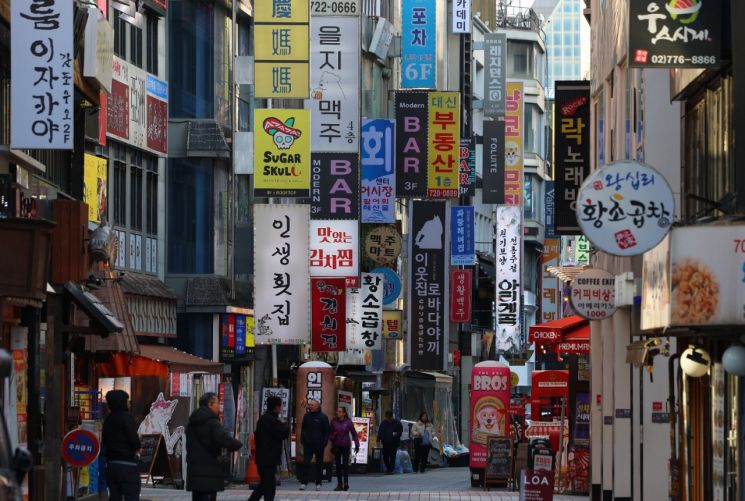
With sluggish domestic demand persisting and concerns about weakening export momentum next year, the Korean economy is facing its worst crisis as martial law and impeachment turmoil overlap. The soaring won-dollar exchange rate is feared to further fuel inflation, increasing the burden on vulnerable groups and amplifying the pain of small and medium-sized enterprises and self-employed individuals. Because of this, voices calling for active fiscal and monetary policies are growing louder.
On the 17th, economic experts unanimously agreed in a phone interview with Asia Economy that the martial law and impeachment crisis has significantly increased uncertainty amid the already difficult situation of sluggish domestic demand in the Korean economy. However, opinions on solutions were somewhat divided. While many believed that it is not advisable to pursue expansionary fiscal policy immediately, as demanded by the political circles for an additional supplementary budget (추경), there were also opinions that expansionary fiscal policy is necessary.
However, there was consensus that even if a supplementary budget is formulated, it should focus on revitalizing the economy of the common people, such as the self-employed. There were also calls to focus on responding to the incoming Trump administration in the United States next year. Below are the main interview excerpts with the experts.
- How do you view the impact of the martial law and impeachment phase on the Korean economy?
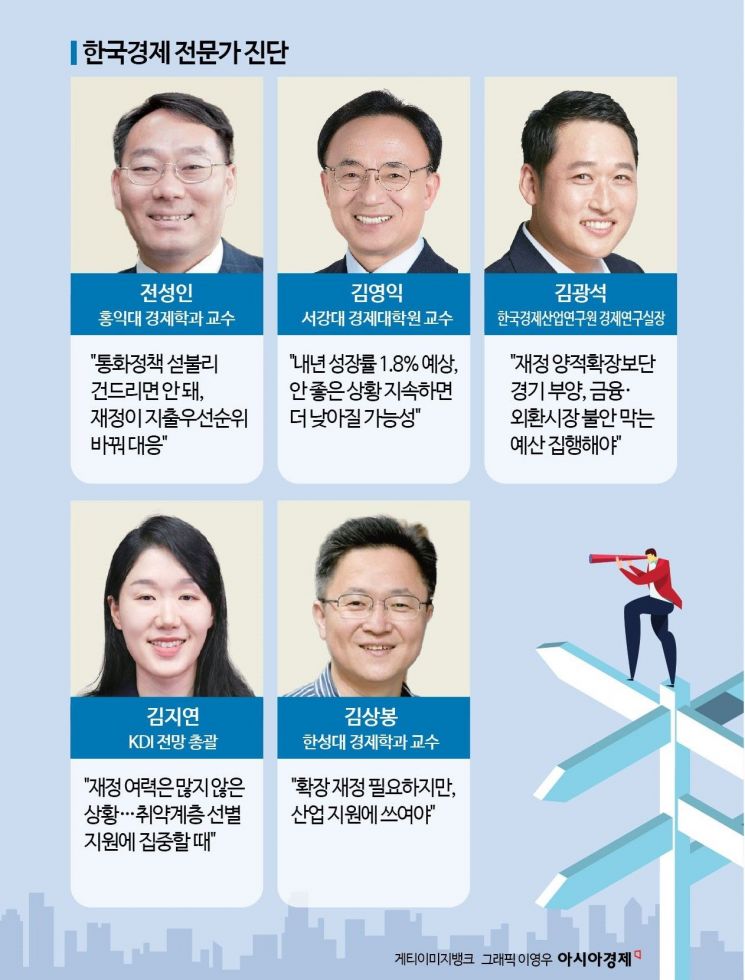
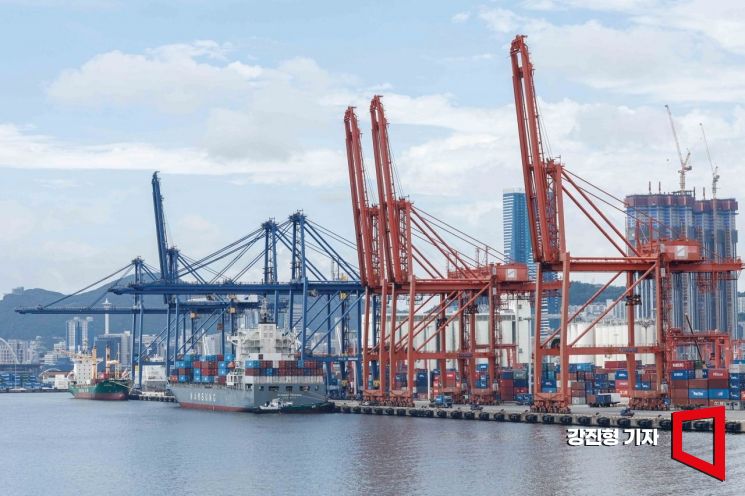
▲ Ji-yeon Kim, Head of KDI Forecasting Division: I believe exports are not immediately sluggish. Semiconductor daily average exports are still growing over 30% compared to the same period last year, showing a favorable trend. However, downside risks are high. While semiconductor exports are fine, adjustments are expected next year due to the base effect. Domestic demand is definitely not good. Looking at retail sales and construction performance indicators, they continue to be poor. In this situation, internal uncertainty caused by impeachment and martial law has increased. Increased uncertainty inevitably negatively affects consumer and investment sentiment. The already sluggish domestic demand may shrink further.
▲ Kwang-seok Kim, Director of Economic Research at Korea Economic Research Institute: The bad situation will continue. Comparing two political scenarios?if impeachment had been rejected and impeachment motions continued, and if impeachment had been passed?uncertainty has indeed been somewhat resolved. But this comparison is between future and future. Comparing past and present or past and future, our economy was already in a bad political situation, and after the martial law incident, uncertainty increased further. So this will have a negative effect. Both exports and domestic demand will likely cause economic downturn effects.
▲ Young-ik Kim, Professor at Sogang University Graduate School of Economics: Even without the martial law incident, signs of economic growth slowdown were visible, and all institutions have lowered their forecasts. Due to this incident, consumer and investment sentiment have shrunk, so if this continues, economic growth next year is expected to be even lower. I forecast next year's economic growth rate at 1.8%. There is also a possibility it could be even lower.
- What measures are needed to prevent prolonged sluggish domestic demand?
▲ Seong-in Jeon, Professor of Economics at Hongik University: Now is not the time to solve but to endure. Raising interest rates to control the exchange rate? That would destroy other sectors. Conversely, lowering interest rates could cause side effects like foreign capital outflow.
▲ Ji-yeon Kim, Head of Forecasting: Until this incident, we believed domestic demand sluggishness would ease. Interest rates had turned to a downward trend, and nominal wages turned positive in the third quarter. But suddenly, a series of incidents increased downside risks. For now, stabilizing political turmoil quickly is urgent. Fiscal policy capacity is limited. The managed fiscal balance deficit is high, and fiscal demand is expected to increase significantly due to low birthrate and aging population. For now, selective policies focusing on supporting vulnerable groups are needed. However, since inflation is easing, monetary policy still has some room.
▲ Sang-bong Kim, Professor of Economics at Hansung University: Domestic demand should not be artificially stimulated. It is likely temporary. Artificially stimulating with fiscal spending could bring worse results.
- What direction should fiscal policy take? There are opinions that expansionary fiscal policy is needed. Is monetary policy okay as it is?
▲ Seong-in Jeon, Professor of Economics at Hongik University: It should not be touched rashly. The Bank of Korea has said it will supply unlimited liquidity, so monetary easing has already been somewhat implemented. Further action could cause inflation, won depreciation, and foreign capital outflow. The remaining option is fiscal policy, and something must be done there. Fiscal spending priorities should be adjusted while maintaining the current level.
▲ Kwang-seok Kim, Director: Detailed and strong fiscal policy is needed rather than quantitative expansion. Since fiscal soundness is deteriorating, expansionary stimulus that further worsens fiscal health should be cautious. Instead, budgets aimed at defending against financial instability or foreign exchange market instability and stimulus budgets should be planned and executed more.
▲ Young-ik Kim, Professor: This is a time when expansionary fiscal policy is actively needed. Korea's household and corporate debt levels are much higher than the global average. Consumer sentiment is further shrinking, and companies are postponing investments. If the government also refrains from spending, the economy could shrink further.
- The supplementary budget seems to be becoming a foregone conclusion. Do you think it is necessary? If so, what direction should it take?
▲ Seong-in Jeon, Professor: If a supplementary budget is necessary, it should focus on supporting small business owners and self-employed individuals struggling with debt repayment. Many small self-employed cannot pay interest, and due to the impeachment phase and economic downturn, their difficulties will continue not only in December this year but throughout the first half of next year. This will inevitably lead to cases where individual self-employed and construction sectors fail to repay debts properly, causing debt deterioration. If the budget for this is insufficient, it must be urgently formulated.
▲ Kwang-seok Kim, Director: Habitual supplementary budgets make resource allocation inefficient. It is possible to use next year's budget or the second half's budget more actively in the first half, so formulating a supplementary budget now is not good.
- There are calls to expand local currency issuance during the supplementary budget process. Do you think this can have a positive impact on our economy?
▲ Young-ik Kim, Professor: It could help the local economy somewhat, but the issue is who receives it. I oppose giving it to everyone. It should be given only to those truly in need, not distributed to all.
- How do you evaluate and advise the short-term response of the top economic team amid the martial law and impeachment aftermath?
▲ Seong-in Jeon, Professor: If the economic team makes missteps, a major crisis will come. Still, there is awareness that management must be diligent. Fortunately, the international community views Korea as having 'quick resilience.' We must maintain the current situation well. Specifically, the Financial Supervisory Service should thoroughly inspect non-performing loans of financial institutions.
▲ Young-ik Kim, Professor: The Trump administration will take office in January next year. It is uncertain how Trump will raise tariffs or pressure on defense costs. At times like this, the Ministry of Strategy and Finance should create an economic control tower. Instead of departments responding separately to the U.S., a control tower should be established to respond to the U.S. Domestic issues are important, but focus should be on U.S. issues.
- How do you see the burden on our economy from the high exchange rate in terms of exports and domestic demand? How should we respond to the high exchange rate?
▲ Ji-yeon Kim, Head of Forecasting: Many worry about rising import prices due to the exchange rate. However, since international oil prices are falling significantly, I do not think import prices will rise enough to cause inflation to rebound. The risk of overseas capital outflow is also not high. Net external assets relative to GDP are about 50%, a very high level, so there is capacity to respond. I do not think it is yet time for high exchange rate measures.
▲ Sang-bong Kim, Professor: The current exchange rate is too high. Stabilization is necessary. Foreign exchange reserves should be used. That is what foreign exchange reserves are for.
© The Asia Business Daily(www.asiae.co.kr). All rights reserved.
![Clutching a Stolen Dior Bag, Saying "I Hate Being Poor but Real"... The Grotesque Con of a "Human Knockoff" [Slate]](https://cwcontent.asiae.co.kr/asiaresize/183/2026021902243444107_1771435474.jpg)


















