A former trade policy advisor from the first Trump administration in the United States has raised concerns that trade regulations are expected to become more stringent under the second Trump administration, emphasizing the urgent need for companies and the government to prepare countermeasures and communicate with the U.S. government. Due to the strong regulations, the significance of major companies' investment performance in the U.S., including Samsung, SK, Hyundai Motor, LG, Lotte, and Hanwha, may diminish, prompting advice that investing companies should promptly devise risk mitigation plans.
The Korea Chamber of Commerce and Industry (KCCI) announced on the 16th that it held a seminar titled "Trump's Second Term Trade Regulations: Risk Management and Response Strategies for Korean Companies" at the KCCI building in Jung-gu, Seoul.
Steven Bon, a key trade policy advisor during the first Trump administration and former Acting U.S. Trade Representative (USTR), stated, "President Trump was re-elected based on his America First policy," adding, "During his first term, aggressive America First policies such as imposing tariffs on steel and aluminum and establishing new trade agreements with South Korea, Japan, China, Canada, and Mexico were major reasons for his return to the White House."
Bon further advised, "With another victory, Trump will have more influence in Washington than during his first term and is expected to take a tougher stance toward countries trading with the U.S. It is essential to initiate communication with U.S. administration officials as soon as possible."
Paul Gong, a senior researcher at the U.S. think tank the Ruggie Center, pointed out, "Although Korean companies actively invested in the U.S. during the Biden administration, the investment achievements so far may lose significant meaning after the regime change."
Gong added, "Unlike during Trump's first term, the U.S. Department of Commerce's export controls have become weaponized, making negotiations more difficult. However, Trump's direct mention of cooperation with the Korean shipbuilding industry could be helpful in future negotiations."
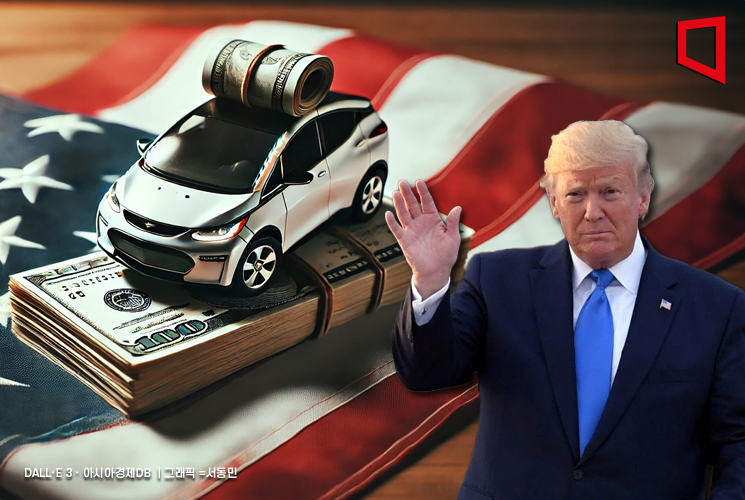
Lee Gye-in, Chairman of the KCCI International Trade Committee and CEO of POSCO International, predicted, "Under the second Trump administration, trade regulations such as the reduction or repeal of the Semiconductor Act and the Inflation Reduction Act (IRA), the imposition of universal tariffs on all imports, and export bans on strategic goods will be pursued more aggressively than before."
Lee emphasized, "Based on past experience, it is necessary to prepare pragmatic diplomatic and negotiation strategies while also expanding outreach activities at the private sector level."
Jung In-kyo, Director General of Trade Negotiations at the Ministry of Trade, Industry and Energy, stated, "South Korea and the U.S. have walked a path of mutual complementarity and reciprocal economic cooperation for a long time, and this cooperation will remain steadfast regardless of domestic political uncertainties."
Jung stressed, "We will fully mobilize the cooperation foundation built through corporate trade and investment and government networks to prepare thoroughly for the policies of the new U.S. administration."
The KCCI plans to devise countermeasures through analyzing changes in trade policies and engaging in contact activities with the U.S. in response to the launch of the second Trump administration.
Lee Sung-woo, Director of the KCCI International Trade Headquarters, said, "Although there is currently a lack of clear leadership from the Korean government to respond to the second Trump administration due to the impeachment situation, Korea will overcome the crisis based on its excellent democratic resilience," adding, "Economic organizations and companies will become a 'one team' to effectively prepare for the Trump second term era."
Meanwhile, trade experts from major law firms such as Kim & Chang, Bae, Kim & Lee, Yulchon, Tae-Youngyang, and Sejong, who attended the discussion, advised that the U.S. government is expected to amend provisions of the IRA and Semiconductor Act to favor domestic companies.
Attorney Song Ji-yeon of Kim & Chang said, "The second Trump administration will negotiate external issues such as trade deficit reduction and job protection through faster and stronger tariff policies, as well as immigration policy and China containment," adding, "Domestic companies should closely monitor tariff imposition and exemption trends by country and product and establish plans to mitigate tariff risks."
Attorney Park Jung-hyun of Bae, Kim & Lee predicted, "Since Trump and the Republican Party advocated for the repeal of the IRA during the election, its repeal or equivalent changes are inevitable," adding, "Rather than deleting all tax credit items, the approach will focus on narrowing the technological gap with China in the electric vehicle and battery sectors."
Park also noted, "The Semiconductor Act is less likely to be changed than the IRA, but subsidy benefits will be concentrated on U.S. companies or U.S.-centered supply chains."
© The Asia Business Daily(www.asiae.co.kr). All rights reserved.
![Clutching a Stolen Dior Bag, Saying "I Hate Being Poor but Real"... The Grotesque Con of a "Human Knockoff" [Slate]](https://cwcontent.asiae.co.kr/asiaresize/183/2026021902243444107_1771435474.jpg)















