Less Impact from Political Uncertainty
Monetary Easing Policy Expected to Continue
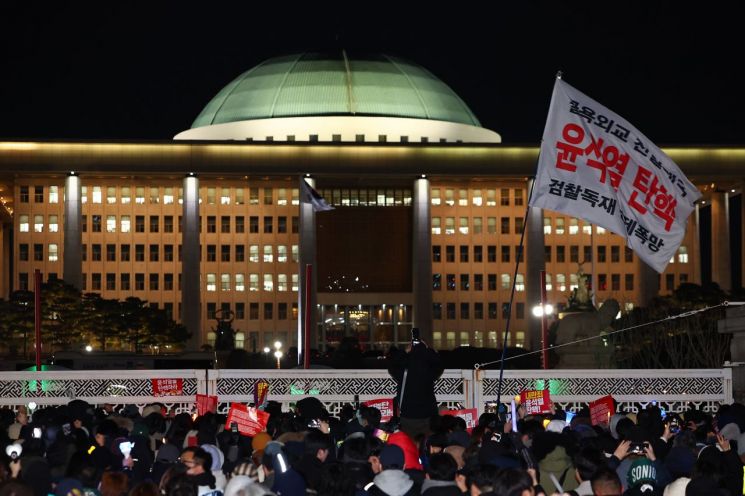
Political uncertainty, ranging from the state of emergency to the impeachment crisis, is not expected to have a significant impact on the bond market. Considering this, the annual yield for the 3-year Treasury bond in 2025 is projected to be between 2.20% and 2.70%, while the 10-year Treasury bond yield is expected to range from 2.30% to 2.80%.
Kim Seongsu, a researcher at Hanwha Investment & Securities, stated, "The 2025 yield band for the 3-year Treasury bond is forecasted at 2.20% to 2.70%, and for the 10-year Treasury bond at 2.30% to 2.80%."
Since 2000, there have been about six major domestic political and security turmoil events, including the Second Battle of Yeonpyeong (2002) and the impeachment of former President Park Geun-hye (2016). During each event, bond market yields generally declined. The average yield changes for these six events were -11.3 basis points for the 3-year bond and -4.3 basis points for the 10-year bond, respectively.
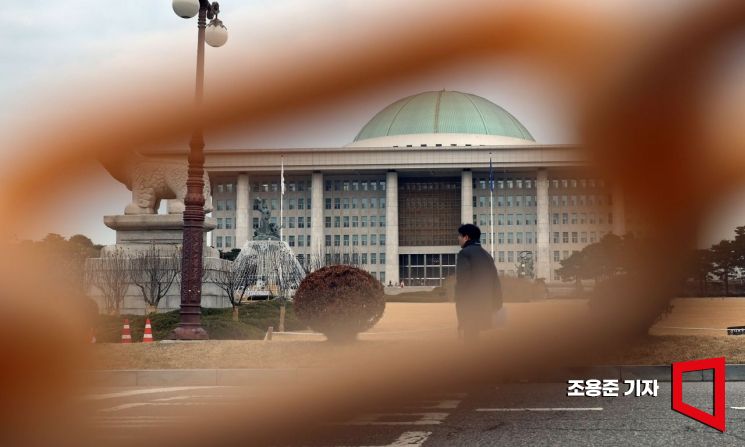 On the morning of the 13th, one day before the second impeachment vote of President Yoon Suk-yeol, the main building of the Speaker of the National Assembly in Yeouido, Seoul, was shrouded in silence as Korea's crisis stood at a crossroads. Photo by Jo Yong-jun
Just before the 2016 impeachment of former President Park, yields rose sharply, but the bearish market sentiment was largely driven by overseas issues. Following the news of Donald Trump's election as U.S. President, yields in most countries, including South Korea, surged sharply around the U.S. presidential election on November 6.
Afterwards, the bond market remained in a box range until the third quarter of 2017. The domestic economy was steady, supporting the lower bound of yields. That year, despite sluggish exports, investment led by the construction sector showed strong performance, resulting in moderate growth. Inflation rose by only 1.0% on average annually, prompting the Bank of Korea to cut the base rate from 1.50% to 1.25% in June.
Researcher Kim explained, "Yields had already sharply declined before the current political situation unfolded," adding, "The decline is expected to be smaller than that in 2004."
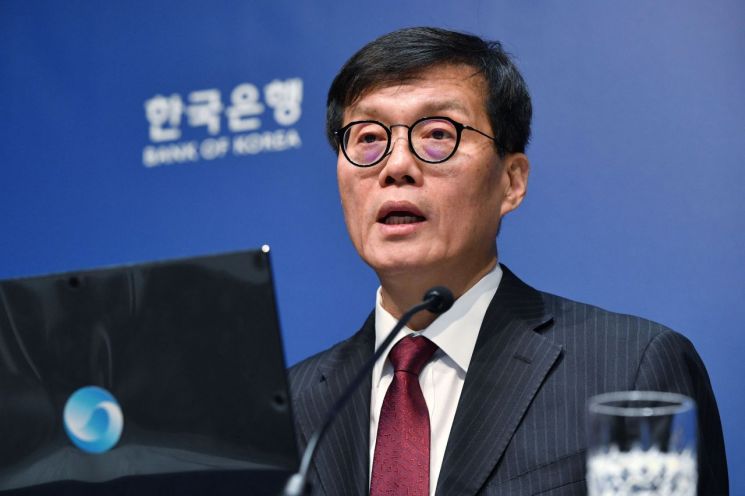
Additionally, Kim forecasted that the monetary easing stance would continue. He predicted, "The timing for the base rate cut is more likely to be concentrated in the first and second quarters rather than the first and third quarters."
Assuming an economic improvement in the second half and a political stabilization phase, the market yield trend is expected to follow a pattern of 'year-end box range → expanded decline in the first half → slight rebound in the second half.'
Kim recommended, "At this point, buying is advised within the ranges of 2.55% to 2.65% for the 3-year Treasury and 2.65% to 2.75% for the 10-year Treasury."
Meanwhile, the supplementary budget (추경) is assessed to have little impact. Kim stated, "If the supplementary budget is in the range of 10 to 20 trillion won, it will not cause a significant shock to the market," adding, "The temporary increase in debt is not at a level that would become a burden, so the current situation justifies the supplementary budget."
© The Asia Business Daily(www.asiae.co.kr). All rights reserved.
![Clutching a Stolen Dior Bag, Saying "I Hate Being Poor but Real"... The Grotesque Con of a "Human Knockoff" [Slate]](https://cwcontent.asiae.co.kr/asiaresize/183/2026021902243444107_1771435474.jpg)

















