Drama Title Wins This Year's Buzzword and New Word Award
80s Father Time-Slipped to the Present
Once Normal, Now Inconsiderate
Bribery Scandal, Medalist Quotes, and Netflix Lines Too
In Japan, every year at the end of the year, the most mentioned buzzwords or new words of that year are selected.
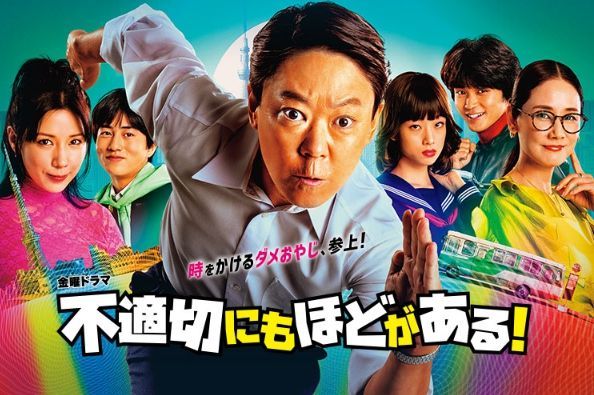
The number one winner of the '2024 New Words and Buzzwords Awards' is ‘Fut?hodo’, an abbreviation of ‘Futekisetsu na koto mo hodo ga aru’ (There is a limit to what is inappropriate). This word won the award reflecting the popularity of the drama of the same name. This drama aired on TBS as a Friday drama from January 26 to March 29 and is a comedy drama centered on time travel. It depicts the process of a single father from 1986 trying to somehow return to the past in 2024, but whenever he opens his mouth, inappropriate remarks for the modern era come out. For example, when smoking is prohibited on buses or in public places, he says, "What has happened to the world?" and when he makes remarks to women that sound rude nowadays and gets scolded, he responds, "Why is the world like this?" The episode titles are also like "Can't you cheer up?", "Can't I say you're cute?", "Can't I leave a message unread?", "Can't I talk about old stories?" and so on.
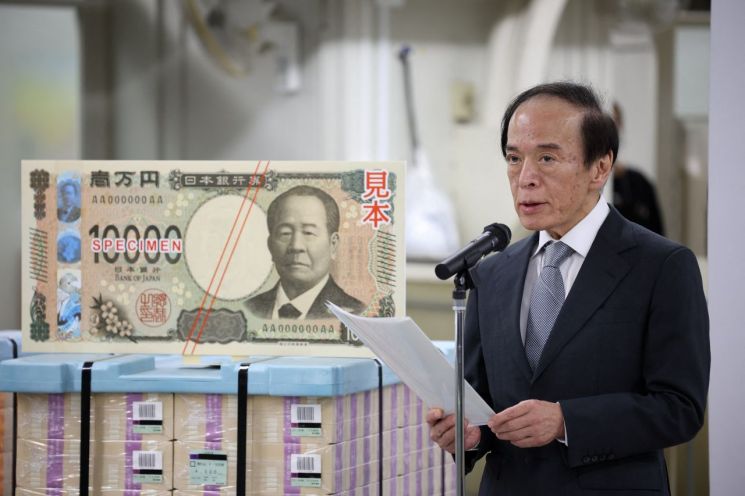 Kazuo Ueda, Governor of the Bank of Japan, is explaining the newly issued 10,000 yen, 5,000 yen, and 1,000 yen banknotes at the Bank of Japan headquarters in Tokyo, Japan, on July 3. Photo by Yonhap News
Among the top 10 words is Urakanemondai (裏金問題), a bribery scandal that shook Japanese politics. In kanji, it means "secret money problem," where "secret money" refers to bribes or under-the-table payments. In Japan, the character for secret (裏, ura) is used, so it is called Urakanemondai. Kaiwai (界外) is a word frequently used on the internet and social networking services (SNS) to refer to a group with the same community, interest, or hobby. It was originally a term often used by otaku but has become generalized.

Shorojapan (初老ジャパン, Choro Japan) is a satire on the aging of the national team that won the first bronze medal in the Paris Olympics all-around gymnastics. ‘Shin Jihyepae’ (New Banknotes) refers to the issuance of three new banknotes after 20 years, and ‘50-50’ refers to Otani’s 50 stolen bases and 50 home runs in American professional baseball. Bling-Bang-Bang-Born is a single by the hip-hop duo Creepy Nuts, known as the hottest song in Japan.
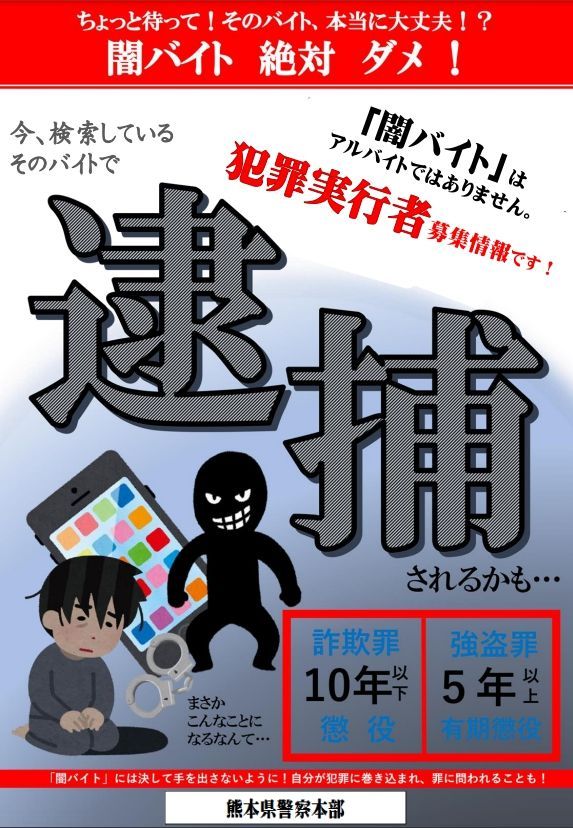 A Japanese police flyer promoting the absolute prohibition of working a "Yami Baito" (illegal part-time job).
‘White Angeon’ refers to jobs promoted on SNS and the internet as "legal ways to easily earn high income," but in reality, it is a type of dark part-time job that involves participation in various crimes.
 Haruka Kitaguchi, who won the gold medal in javelin throw at the Paris Olympics. She created a quote saying, "I couldn't leave a famous saying." Photo by Afrosports
The phrase "I couldn't leave a memorable quote" by Haruka Kitaguchi, who won the gold medal in javelin throw at the Paris Olympics, also made it into the top 10. Kitaguchi switched from swimming and badminton to javelin throw after entering high school. After winning the gold medal, she expressed regret and disappointment in an interview, saying she could not honestly express her feelings and "couldn't leave a memorable quote," which ironically became a hot topic. The line "Sore de ii janai" (Now it's enough) from the Netflix series 'Tokyo Swindlers' was also selected as a buzzword of the year.
© The Asia Business Daily(www.asiae.co.kr). All rights reserved.
![Clutching a Stolen Dior Bag, Saying "I Hate Being Poor but Real"... The Grotesque Con of a "Human Knockoff" [Slate]](https://cwcontent.asiae.co.kr/asiaresize/183/2026021902243444107_1771435474.jpg)

















