Focus on Enhancing Financial Sustainability
Gyeonggi Yangju City (Mayor Kang Su-hyun) announced on the 25th that it has prepared the 2025 budget proposal amounting to 1.2525 trillion won and submitted it to the Yangju City Council.
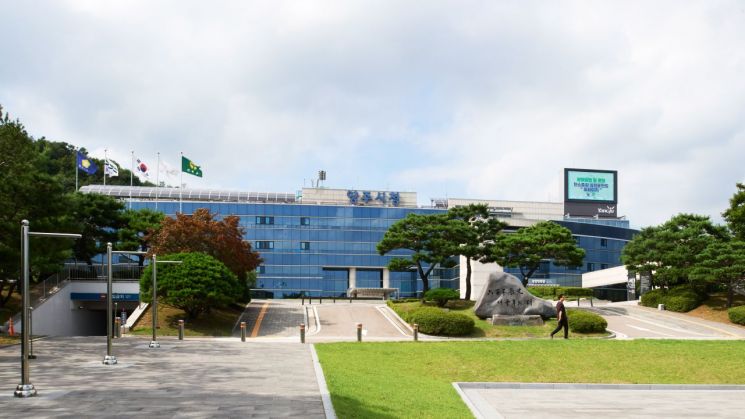
This is an increase of 134.3 billion won compared to this year's initial budget of 1.1181 trillion won. Among this, the general account is 1.0699 trillion won, an increase of 110.4 billion won (11.5%) compared to the previous year, and the special account is 182.6 billion won, showing an increase of 23.9 billion won (15%) compared to the previous year.
The main revenues of the general account are local taxes and non-tax revenues of 283.4 billion won, local allocation tax and adjustment grants of 294.3 billion won, with autonomous resources increasing by 65.6 billion won compared to the previous year. National and provincial subsidies amount to 467.9 billion won, an increase of 48.2 billion won compared to the previous year.
The general account expenditures consist of 427.6 billion won for self-funded projects and 642.3 billion won for national and provincial subsidy projects.
In the case of national and provincial subsidy projects, social welfare projects have expanded, increasing by 65 billion won (11.2%) compared to the previous year.
Looking at the general account by sector, it is organized as follows: ▲Social welfare 503.4 billion won (47%) ▲General public administration 84.9 billion won (7.9%) ▲Transportation and logistics 80 billion won (7.5%) ▲Land and regional development 77.1 billion won (7.2%) ▲Environment 71.8 billion won (6.7%) ▲Agriculture, forestry, marine and fisheries 40.2 billion won (3.7%) ▲Culture and tourism 37.4 billion won (3.5%) ▲Health 21 billion won (1.9%) ▲Industry, small and medium enterprises and energy 19.9 billion won (1.8%) ▲Education 18.5 billion won (1.7%) ▲Public order and safety 5 billion won (0.4%).
Due to the worsening external conditions and the continued decline in national tax revenues caused by economic slowdown, local allocation tax remains at the usual level, and the decrease in local income tax and local consumption tax due to reduced real estate transactions has intensified, resulting in a decrease of 2.8 billion won in local tax revenues, failing to recover to the 2024 level.
In particular, although the overall budget size of Yangju City for 2025 has increased compared to the previous year, the proportion of national and provincial funds, which are earmarked resources, accounts for 43% of the total increase, limiting the city's autonomous use of resources and leading to a reduction in investment projects.
In this situation, the city explained that it formulated the core promotion strategy for the second half of the 8th term of the elected government, selected priority projects, and prepared the budget with choices and concentration to enhance fiscal sustainability, including ▲Eunnam Industrial Complex ▲Securing new growth engines through the creation of Yangju Technovalley ▲Expansion of metropolitan transportation networks ▲Pilot operation of education development special zones ▲Establishment of a life-cycle tailored social security system in response to demographic changes.
Major projects included in the budget proposal are ▲20 billion won for the completion of road expansion and paving between Bangseong and Sanbuk ▲5 billion won for the Gyeonggi Ggumteul Life SOC Complex Project ▲3 billion won for the construction of a sports center for the disabled ▲9.9 billion won for the construction of administrative welfare centers in Yangju 1-dong and Okjeong 2-dong ▲13.2 billion won for the development of Eunnam Industrial Complex and Yangju Technovalley.
Mayor Kang Su-hyun of Yangju City said, “The 2025 budget was reviewed from scratch considering the difficult fiscal conditions,” and added, “We will strive to ensure that investments are made in areas essential to citizens, such as strengthening welfare and establishing new growth engine foundations, by blocking wasteful spending and utilizing the secured resources.”
© The Asia Business Daily(www.asiae.co.kr). All rights reserved.
![Clutching a Stolen Dior Bag, Saying "I Hate Being Poor but Real"... The Grotesque Con of a "Human Knockoff" [Slate]](https://cwcontent.asiae.co.kr/asiaresize/183/2026021902243444107_1771435474.jpg)















