"We Will Take a Leading Role in Standardization to Ensure Korea Leads the Related Industries"
Professor Moon In-hyeok of the Department of Robotics and Automation Engineering at Dong-Eui University was recently elected as the chair of the medical robot safety working group (TC299/JWG5) of ISO (International Standardization Organization), an international standardization organization.
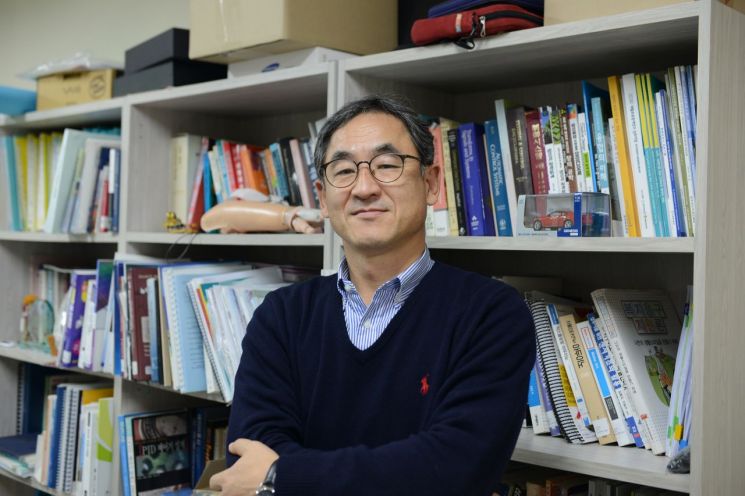
Professor Moon was finally elected as chair after a fierce competition with a candidate from the United Kingdom in an election held over two months starting last September. His term will be three years, beginning in 2025.
ISO, headquartered in Geneva, Switzerland, was established with the goal of developing and disseminating internationally accepted standards, with representatives from national standardization bodies participating. It is a leading international standardization organization that sets specifications for products and services in all fields except the electrical and electronic sectors.
The ISO medical robot safety working group chaired by Professor Moon is a joint group established in cooperation with TC62, the medical device technical committee of IEC (International Electrotechnical Commission), which is the international standardization organization for the electrical and electronic fields. This working group jointly carries out projects related to medical robots.
This field is particularly noteworthy as it is experiencing rapid growth worldwide. Until now, advanced countries such as the United States, Japan, and Europe, where the related industries have developed, have led standardization efforts. However, with Professor Moon’s election as chair, South Korea’s international influence and status in the medical robot standardization field are expected to rise.
Since 2006, Professor Moon has participated as the Korean representative in ISO’s TC173 on rehabilitation welfare technology, and since 2014 in ISO’s TC299 on robot standardization and IEC’s TC62, which focuses on medical robots. He currently also chairs ISO’s powered wheelchair standardization group (ISO TC173/SC1/WG10) and the walking aid standardization group (ISO TC173/WG1).
Notably, in April, he achieved the publication of ISO 5363, a test method for lower limb exoskeleton robots that he directly proposed, as an international standard.
Domestically, he has actively contributed to the medical robot and rehabilitation welfare device fields both at home and abroad, serving as a medical device expert committee member at the Ministry of Food and Drug Safety, a welfare technology expert committee member at the National Institute of Technology and Standards, president of the Korean Society of Rehabilitation Welfare Engineering, president of the Korean Society of Biomechanics, and vice president of the Korean Society of Rehabilitation Robotics.
Professor Moon In-hyeok said, “As South Korea enters a super-aged society, the technology and industry related to medical robots and care robots that integrate robotics and AI technology are becoming increasingly important. I feel a great sense of responsibility in taking on the role of chair of the international standardization group for medical robot safety.” He added, “Going forward, I will play a leading role in standardization in the medical robot field so that South Korea can lead the related industry.”
© The Asia Business Daily(www.asiae.co.kr). All rights reserved.
![Clutching a Stolen Dior Bag, Saying "I Hate Being Poor but Real"... The Grotesque Con of a "Human Knockoff" [Slate]](https://cwcontent.asiae.co.kr/asiaresize/183/2026021902243444107_1771435474.jpg)















