Shinhan Investment Corp Research Report
High Possibility of Leading Stocks Reassessment Centered on Early Next Year's Earnings
The Trump Trade (the phenomenon of money flowing into assets benefiting from Donald Trump's election victory) is expected to continue until mid-January next year, when President-elect Donald Trump takes office at the White House. Shinhan Investment Corp. predicted that once the Trump Trade ends, leading stocks will likely be reorganized around earnings again in early next year.
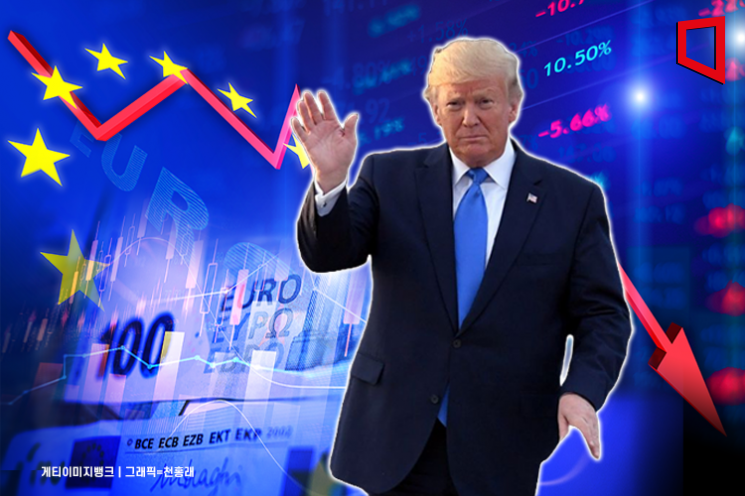
On the 19th, Sung-hwan Kim, a researcher at Shinhan Investment Corp., stated in a report, "After the election, the S&P 500 surpassed 6000 points, and the honeymoon rally, where the U.S. stock market shows strength after the election, is about to become a reality again. Typically, from election day until May of the following year, the S&P 500 rises by 10%." He added, "Moreover, the Russell 2000 also hit a new high, making it appear on the surface that risk appetite in the financial markets has spread broadly."
In the two weeks following the U.S. presidential election, winners and losers in the asset markets have clearly diverged. The dollar financial sector, energy sector, Bitcoin, and Tesla have emerged as winners, while U.S. Treasury bonds, healthcare, real estate sectors, Korean and Chinese stock markets, crude oil, and renewable energy have struggled.
Researcher Kim said, "Trump's policy stance of △America First, △preference for fossil fuels, △deregulation, △tax cuts and expanded fiscal deficits, and △preference for Bitcoin justifies the above trades." He added, "While this trade is seemingly positive for stocks and its narrative cannot be denied, it touches on the market's Achilles' heel?interest rates?and since the affected assets are undershooting, it raises questions about how long this trade will last."
He argued that the periods before and after the 2016 and 2020 elections are good examples to examine the sustainability of election themes from the perspective of regime change after Trump's election.
Researcher Kim noted, "First, during the initial Trump Trade period right after the 2016 election, the strength of sensitive value stocks such as energy, materials, industrials, and financials was impressive, and their outperformance lasted exactly two months after the election." He pointed out, "However, after Trump took office in January 2017, the leading stocks were FANG and the IT sector. The key reason for this shift in leadership was the overwhelming earnings momentum of IT." In contrast, energy, which had lackluster earnings, quickly fell out of favor as a leading stock.
Regarding the situation right after the 2020 election, Kim analyzed that even before Biden was elected, the strength of renewable energy and cannabis and the weakness of energy were clearly overlapping, and renewable energy experienced a near overshooting price rise for three months after the election.
He said, "However, once Biden actually took office, renewable energy and cannabis formed historical highs and then began to plummet, while financials and energy, classified as Republican beneficiary stocks, started a major upward trend." He concluded, "Comparing these two cases leads to the conclusion that the effective period during which stock prices can rise strongly solely because of the election theme is until mid-January when Trump takes office at the White House."
Accordingly, the Trump Trade is likely to maintain leadership until the end of this year, but for it to become a medium- to long-term trend, concrete policy actions and, furthermore, actual changes in fundamentals need to be demonstrated. He predicted, "As we enter the beginning of the year, leading stocks are likely to be reorganized again around earnings."
© The Asia Business Daily(www.asiae.co.kr). All rights reserved.
![Clutching a Stolen Dior Bag, Saying "I Hate Being Poor but Real"... The Grotesque Con of a "Human Knockoff" [Slate]](https://cwcontent.asiae.co.kr/asiaresize/183/2026021902243444107_1771435474.jpg)















