Call for 'Domestic Demand Stimulus' to Counter Export and Economic Slowdown
Harsh Impact on Korean Companies Amid Subsidy Phase-Out Prospects
"Shift to Pursuing Dynamic Balance in Fiscal Soundness"
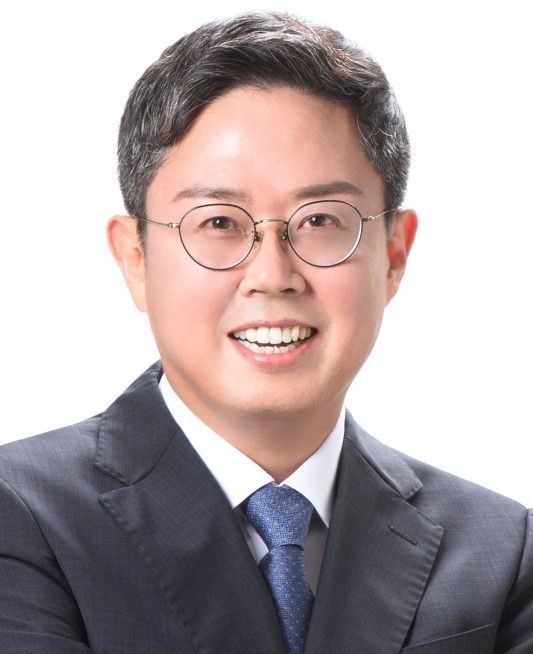
Democratic Party of Korea lawmaker Ando-geol (Gwangju Dongnam-eul) warned on the 18th that “it is urgent to prepare management measures for the ‘three major risks’ following the inauguration of the Trump administration in the United States.”
With South Korea being re-designated as a currency monitoring country by the U.S. Treasury Department on the 15th, the domestic economy is expected to face the triple burden of high interest rates, high exchange rates, and high inflation once again. Despite the base rate cut, the 3-year government bond yield rose to 2.94%, and the 10-year yield increased to 3.09%. The won-dollar exchange rate fell by 7.92% compared to the beginning of the year, marking the second largest decline worldwide. Additionally, import prices in October rose by 2.2%, reaching the highest level in six months, which is expected to lead to consumer price increases in three months.
Exports and employment conditions are also worsening. The export growth rate plummeted from 13.5% in July to -17.8% in early November, and the number of employed persons increased by only 83,000 in October. The wholesale and retail sectors saw a decrease of 148,000 people, the lowest in 39 months, and the construction industry also lost 93,000 jobs.
As the U.S. is expected to accelerate the reorganization of global supply chains centered on itself by imposing universal and punitive tariffs and abolishing investment subsidies and tax credits, concerns are rising over the profitability deterioration of companies investing in the U.S. Samsung Electronics and SK Hynix’s investments in the U.S. amount to $45 billion and $3.87 billion respectively, with subsidies of $6.4 billion and $450 million respectively.
In a press release on the same day, lawmaker Ando-geol emphasized, “Since the trade surplus with the U.S. surged from $16.6 billion in 2020 to $44.4 billion in 2023, a proactive U.S. trade negotiation package and diversification of export markets are necessary,” adding, “As automobile exports increased from $68.6 billion in 2017 to $115.7 billion in 2023 and universal tariffs are expected, countermeasures must be prepared promptly.”
He continued, “A strategy to respond to the reorganization of global supply chains centered on South Korea is needed,” stating, “Negotiations on subsidies for already invested sectors such as semiconductors, electric vehicles, and secondary batteries should be completed early, and efforts to secure new investment bases in shipbuilding, defense, and LNG, along with accelerating investments in domestic production bases for core technology products, must be intensified.”
He also urged expanding fiscal investment to boost domestic demand to compensate for export contraction and to secure competitiveness in advanced industries.
Lawmaker Ando-geol said, “It is urgent to secure fiscal ammunition to prepare for emergency situations,” and called for “a shift from fiscal austerity and tax cut policies to a dynamic balance approach for fiscal soundness.”
© The Asia Business Daily(www.asiae.co.kr). All rights reserved.
![Clutching a Stolen Dior Bag, Saying "I Hate Being Poor but Real"... The Grotesque Con of a "Human Knockoff" [Slate]](https://cwcontent.asiae.co.kr/asiaresize/183/2026021902243444107_1771435474.jpg)















