Proposal to Include 'Transport Industry' in E-9 Visa Issuance Targets
Ministry of Employment and Labor Begins Review of Proposal and Related Documents
The Seoul Metropolitan Government is pushing forward with plans to introduce foreigners not only as home care workers but also in the field of village bus driving.
According to Seoul city officials on the 18th, the city recently requested the Office for Government Policy Coordination to include the 'transportation industry' as a target for issuing non-professional employment (E-9) visas to introduce foreign village bus drivers. This proposal was submitted to the Office for Government Policy Coordination at the end of last month, and the Ministry of Employment and Labor, which is the main agency responsible for issuing foreigner visas, has received the proposal from the Office and begun reviewing it.
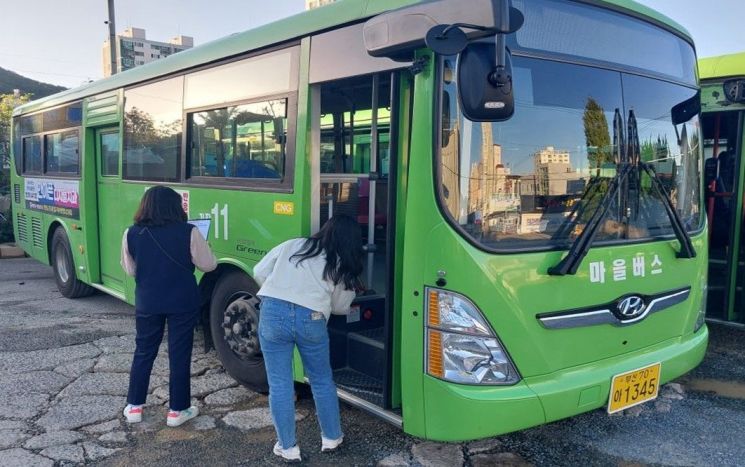
The proposal includes adding the transportation industry to the list of eligible sectors for the non-professional employment (E-9) visa and extending the employment activity period from 3 years to 5 years. Currently, the non-professional employment visa is issued only to foreigners employed in non-professional sectors such as manufacturing, agriculture, and livestock farming.
For foreigners to work as drivers, they need to obtain visas such as visit employment (H-2) or overseas Korean (F-4). These visas are only issued to foreign nationals of Korean descent or marriage immigrants, so the eligibility is limited, and even if included in the issuance target, conditions such as family ties are required.
So far, the bus industry has consistently complained about labor shortages. According to the Seoul Village Bus Transportation Association, the appropriate number of transportation workers per village bus is 2.2, but as of last month, the shortage of village bus drivers reached 600. The industry believes that with the development of non-face-to-face service industries, many transportation workers have shifted to the delivery industry, which offers higher wages.
Seoul city expects there to be demand once visa issues are resolved for 16 countries under the Employment Permit System, including Myanmar and Cambodia. However, there are social concerns. If foreign employment expands throughout the domestic industry, it could lead to further controversies regarding securing jobs for native workers as well as wage systems.
© The Asia Business Daily(www.asiae.co.kr). All rights reserved.
![Clutching a Stolen Dior Bag, Saying "I Hate Being Poor but Real"... The Grotesque Con of a "Human Knockoff" [Slate]](https://cwcontent.asiae.co.kr/asiaresize/183/2026021902243444107_1771435474.jpg)















