November 4-7: 3 Nights 4 Days Benchmarking Advanced Cases of Urban Complex Development, Parks, and Senior Housing in Japan
Site Visits to Major Policy Projects Including Large-Scale High-Density Mixed-Use Developments with Residential, Office, Commercial, and Cultural Facilities... Insights and Application Plans Explored for Gwangwoon University Station Area Development, Changdong Vehicle Depot Development, and Reconstruction-Ready Nowon District
Nowon-gu, Seoul (District Mayor Oh Seung-rok) announced that it is exploring various directions for creating urban spaces in the development of the Kwangwoon University Station area by benchmarking advanced overseas cases.
Urban development in Japan is characterized by large-scale mixed-use developments that harmoniously combine tourism, shopping, business, and residential functions. In particular, unlike Seoul where residential and business functions are separated, Tokyo has established an urban model by creating mega mixed-use complexes that organically connect offices, hotels, residences, and commercial facilities.
Mayor Oh Seung-rok visited Tokyo and nearby areas for 3 nights and 4 days starting November 4 to directly observe urban development and mixed-use complex operation methods. This schedule focused especially on cases of utilizing large sites including railway vehicle depots and confirming spatial models integrating workplace proximity and leisure.
On the first day of the visit, November 4, the delegation visited Ashikaga Flower Park in Tochigi Prefecture and received explanations on the operation methods of this tourist attraction where various flowers and lights can be enjoyed throughout the four seasons.
Particular attention was paid to the 160-year-old wisteria tunnel and seasonal illumination displays, exchanging opinions with officials on ways to add seasonal atmosphere to the Gyeongchun Line forest trail section and create landscapes where nature and light harmonize.
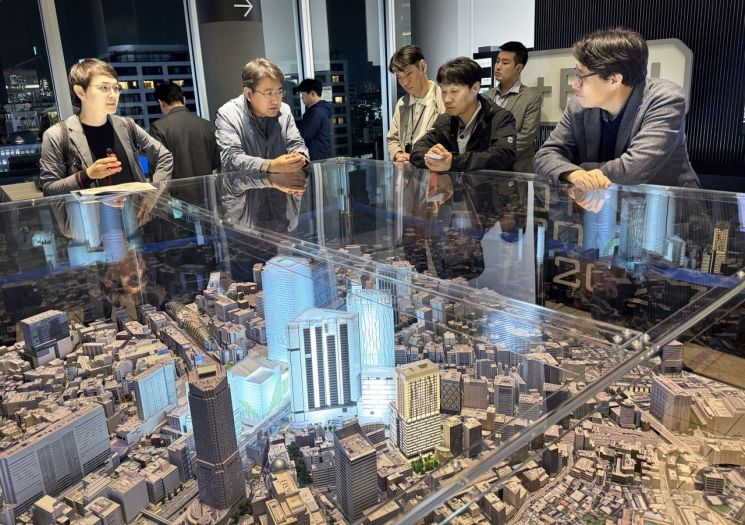
On November 5, the delegation visited Futako Tamagawa, a mixed-use city in southern Tokyo. This area is a workplace-residence-leisure (Jikjurok) complex that utilizes the natural environment along the river and proximity to the city center, similar to the Kwangwoon University Station area development model. Futako Tamagawa, which combines the Rakuten headquarters, hotels, bookstores, and street events, is attracting attention as a model of urban revitalization that coexists with the local community amid the decline of large offline shopping malls.
Next, the delegation visited Miyashita Park in Shibuya, a downtown mixed cultural space with an X-Games arena and climbing wall on the rooftop. The delegation is considering introducing such leisure spaces at the entrance of the Gyeongchun Line forest trail to create a dynamic space.
They also toured Kokopan Kachidoki, a senior service-support housing designed with the safety and convenience of elderly residents as a top priority, reaffirming the need for residential types for the elderly within the city in Nowon-gu.
On November 6, the delegation visited Marunouchi, Tokyo’s business center, and mixed-use complexes including Toranomon Hills, Ark Hills, and Azabudai Hills. These are representative models of vertical cities that solve urban overcrowding through super high-rise buildings and create green spaces by placing parks and plazas on lower floors.
In particular, Ark Hills, completed in 1986 by utilizing a hilly area, is Japan’s first mixed-use complex introducing workplace proximity functions, demonstrating the possibility of creating a living zone encompassing residential, cultural, and leisure facilities. The delegation focused on the plaza and the culture of various events held there, seeking ways to create vibrant spaces in the Kwangwoon University Station area as well.
At Toranomon Hills, they observed an advanced development model maximizing businesspeople’s convenience through a route directly connecting the train station and offices. This pedestrian-friendly structure and high-density mixed-use space provided valuable insights as important ideas.
On November 7, the delegation visited Shinagawa Station and Takanawa Gateway City to examine mixed-use development cases utilizing railway vehicle depots. This model is similar to the Changdong Vehicle Depot project and provided many implications.
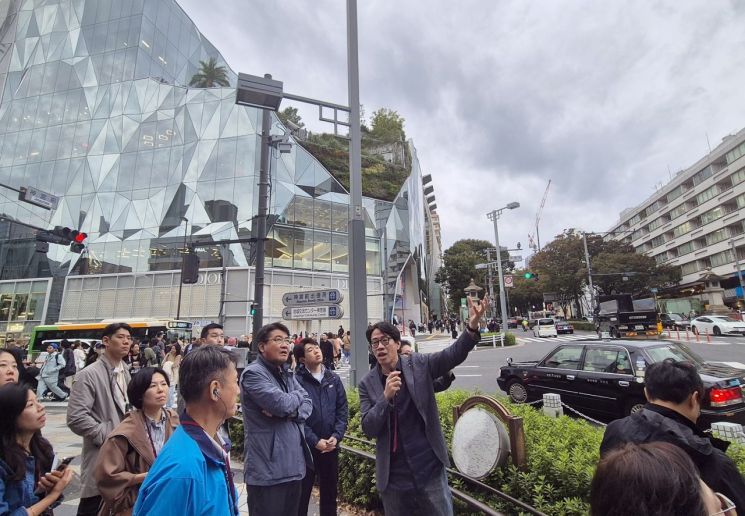
Currently, the district is promoting a project to develop a 156,581㎡ site including logistics land within Kwangwoon University Station into a new economic hub combining office, commercial, and residential facilities. Since the Kwangwoon University Station area development project is the first to apply advanced overseas cases through this benchmarking, the project implementer HDC Hyundai Development Company was also met on site to exchange many opinions. The district and Hyundai Development Company plan to apply workplace-residence-leisure culture, open plazas, and pedestrian-friendly spaces to the Kwangwoon University Station area development.
Mayor Oh Seung-rok said, “The Kwangwoon University Station area development is a long-cherished project for Nowon-gu residents and an important opportunity to grow into a new self-sufficient city in the northeastern region,” adding, “Based on the advanced development cases obtained from this Japan benchmarking, we will implement a future urban model harmonizing workplace proximity and leisure, drawing a grand plan to prepare for Nowon-gu’s new 100 years.”
© The Asia Business Daily(www.asiae.co.kr). All rights reserved.
![Clutching a Stolen Dior Bag, Saying "I Hate Being Poor but Real"... The Grotesque Con of a "Human Knockoff" [Slate]](https://cwcontent.asiae.co.kr/asiaresize/183/2026021902243444107_1771435474.jpg)
















