Korea Investment & Securities Leads 20 Billion KRW Perpetual Bond Issuance
Four Consecutive Years of Large Deficits Due to Duty-Free Business Slump
Recently Raised 40 Billion KRW Capital Increase with HDC and Shilla Hotel Investment
Continued Earnings Decline Makes Additional Perpetual Bond Issuance Inevitable
HDC Shilla Duty Free has continued to issue hybrid bonds (perpetual bonds) even after recently increasing its equity capital through a paid-in capital increase. This is a desperate attempt to escape from complete capital erosion caused by prolonged sluggishness in the duty-free business by issuing perpetual bonds that can be recognized as equity capital in accounting. If the duty-free store’s performance does not normalize, it is expected that funding akin to "pouring water into a bottomless jar" will have to continue.
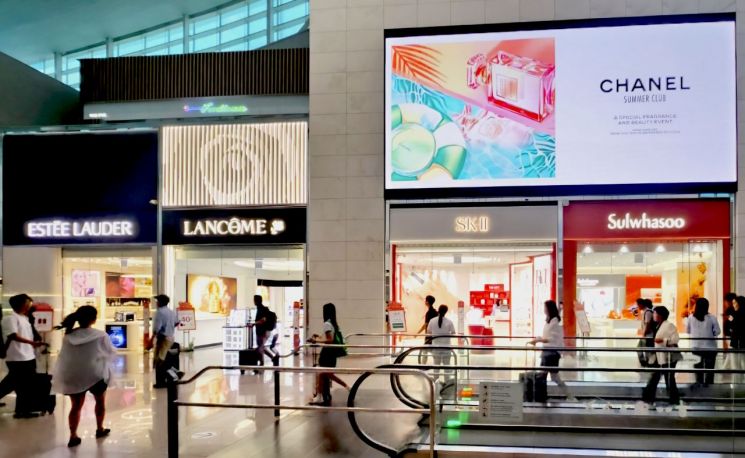
According to the investment banking (IB) industry on the 12th, HDC Shilla Duty Free issued 20 billion KRW worth of perpetual bonds with Korea Investment & Securities as the lead underwriter. Korea Investment & Securities raised acquisition funds by acquiring the perpetual bonds through a special purpose company (SPC) and then issuing securitized bonds backed by the repayment principal and interest of the bonds as underlying assets (serving as collateral).
The final maturity of the perpetual bonds issued by HDC Shilla Duty Free is 30 years, with the maturity extendable indefinitely. However, a call option (early redemption right before maturity) allows repayment of the principal and interest two years after issuance. Although the call option is the issuer’s right, if it is not exercised during that period, an additional interest rate (penalty) will be added to the original coupon rate of 6.50%. This creates a step-up structure where interest expenses significantly increase every year starting two years later. Since the interest burden can rise to double digits, it is generally common to exercise the call option for early redemption.
This is not the first time HDC Shilla Duty Free has issued perpetual bonds. Since 2021, when losses began to surge due to the downturn in the duty-free business caused by the COVID-19 pandemic, the company has continuously issued perpetual bonds. After recording losses of around 30 billion KRW in 2020 and 65 billion KRW in 2021, the company first issued perpetual bonds in 2021 to prevent deterioration of its financial structure and has continued to do so since.
Perpetual bonds are a type of bond but can be recognized as equity capital in accounting, making them effective in lowering debt ratios and increasing capital. Since they are mainly issued to bond investors, they can improve the financial structure by increasing capital without the burden of additional investment from major shareholders.
Even after the reopening, performance did not improve continuously, leading to multiple issuances of perpetual bonds each year to increase capital. However, with four consecutive years of net losses of around 30 billion KRW until last year, the company ultimately fell into a state of complete capital erosion as of the end of last year. The debt ratio soared to 6200%.
Recently, having reached the limit with perpetual bonds alone, the company also conducted a paid-in capital increase of 40 billion KRW. In this process, HDC (then Hyundai Development Company) and Hotel Shilla each bore half of the additional investment burden. HDC Shilla Duty Free is a joint venture downtown duty-free store established in 2015 with equal equity contributions from HDC and Hotel Shilla.
An IB industry insider said, "Although downtown duty-free store sales are recovering due to an increase in foreign tourists, it seems difficult to return to pre-COVID-19 levels due to excessive competition and other factors," adding, "Since performance has not significantly recovered, capital expansion through perpetual bond issuance is expected to continue for some time."
© The Asia Business Daily(www.asiae.co.kr). All rights reserved.
![Clutching a Stolen Dior Bag, Saying "I Hate Being Poor but Real"... The Grotesque Con of a "Human Knockoff" [Slate]](https://cwcontent.asiae.co.kr/asiaresize/183/2026021902243444107_1771435474.jpg)















