"May Extend Term to Remain in Power Beyond 2026"
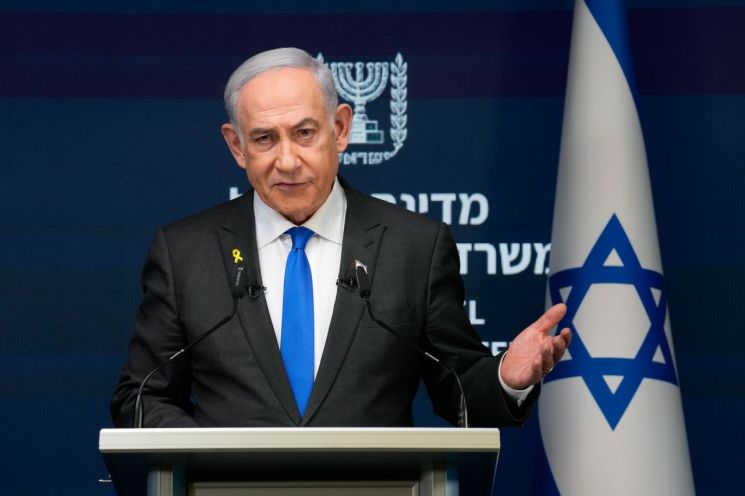
As the domestic and international situation in Israel rapidly changes, there is an analysis that Prime Minister Benjamin Netanyahu's position has solidified. Netanyahu, who was once cornered due to security responsibility issues following the outbreak of the Gaza war and criticism over the neglect of hostages as the war dragged on for over a year, is now expected to remain in power until the 2026 election, and possibly even longer.
According to foreign media on the 9th (local time), many critics expressed surprise at Netanyahu's political resilience and reported on the unwavering political environment surrounding him.
Tamar Hermann, a senior researcher at the Israel Democracy Institute, said, "He never blinks an eye," adding, "People shout and protest, but he does what he believes is best."
Galant, who was dismissed on the 5th, was considered the only moderate figure in Israel's right-wing government. However, even after his dismissal, there were no large-scale street protests. Organizers of the protests attributed the low turnout to Israel's "tense wartime atmosphere."
Israel Katz, the Foreign Minister and a loyalist to Netanyahu, was appointed as the new Minister of Defense. Israeli political commentator Ron Ben-Yishai predicted that Minister Katz would hardly exercise any real authority.
Netanyahu, who successfully returned to power at the end of 2022 and has led Israel for a total of 17 years, remains unpopular among the public. However, his hardline policies enjoy support from many Jewish Israeli voters. Recently, a poll showed that if elections were held immediately, Netanyahu's Likud party would be the biggest winner.
The right-wing coalition led by Netanyahu has faced a brief crisis over the conscription issue involving ultra-Orthodox Jews but still remains intact. In recent months, the assassinations of Hezbollah leader Hassan Nasrallah and Hamas leader Yahya Sinwar have also been cited as achievements of Prime Minister Netanyahu.
Donald Trump's victory in the U.S. presidential election also strengthens Netanyahu. Netanyahu has had ongoing conflicts with current U.S. President Joe Biden over the Gaza war.
During his first term in office, Trump closely aligned with Israel and showcased a "bromance" with Netanyahu. In 2018, he accepted Israel's claim that Jerusalem is its capital and moved the U.S. embassy from Tel Aviv to Jerusalem. After the U.S. election results were confirmed, Netanyahu spoke on the phone with President-elect Trump and welcomed his victory as "the greatest comeback in history."
© The Asia Business Daily(www.asiae.co.kr). All rights reserved.
![Clutching a Stolen Dior Bag, Saying "I Hate Being Poor but Real"... The Grotesque Con of a "Human Knockoff" [Slate]](https://cwcontent.asiae.co.kr/asiaresize/183/2026021902243444107_1771435474.jpg)
















