Electoral College Meeting Next Month → Final Confirmation by US Congress
75-Day Transition Period Leading to Inauguration on January 20 Next Year
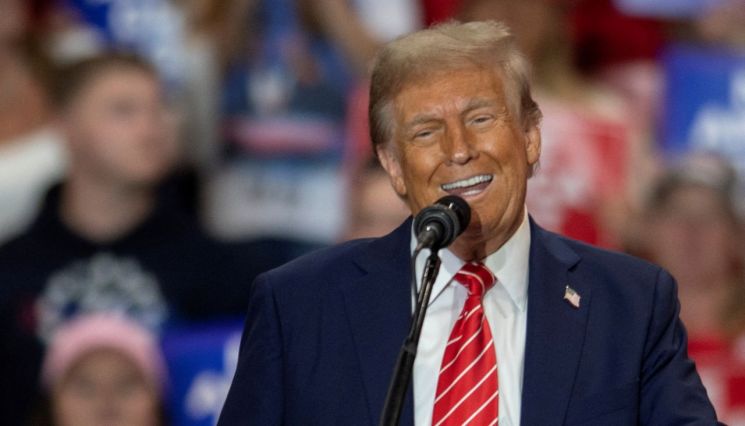
Former President Donald Trump won the U.S. presidential election held on the 5th (local time), but the election procedures for the presidential and congressional elections have not yet been fully completed, and vote counting is still ongoing in some areas. Having already secured the majority of 270 electoral votes, President-elect Trump plans to swiftly proceed with the 75-day transition process ahead of the inauguration scheduled for January next year.
According to AP News and others, the voting for the U.S. presidential and congressional elections concluded on the 5th, but vote counting is still ongoing in some states. Since mail-in voting is widely implemented in the U.S., the counting period varies greatly by state, with some states having relatively long durations. In particular, states like Arizona and California, where counting started late and the proportion of mail-in votes is high, are likely to continue the counting process into next week. AP reported that "as Vice President Kamala Harris's vote share increases during the counting process, the gap is likely to narrow."
In the U.S., election procedures are conducted on a state-by-state basis. Each state announces its final vote results as soon as the counting is completed. Considering the counting speed, it is expected that the final election results could take several weeks to be announced. Once the counting results are confirmed in each state, the list of electors allocated to each state will be finalized by November 11. The Electoral College voting takes place on the Tuesday following the second Wednesday of the same month. For this election, it will be December 17. At that time, electors from each state gather at their respective state legislatures to cast their votes. Only after all states complete their counting will it be possible to compile the overall presidential election turnout.
Once all these procedures are completed in each state, the Electoral College voting results are sent to the federal Congress by December 25. Subsequently, on January 6 of the following year, the U.S. Congress, led by the sitting Vice President, counts the Electoral College votes and officially confirms the winner. During the 2020 presidential election, on January 6, 2021, when this procedure was underway, supporters of President-elect Trump rioted at the U.S. Congress. This time, Vice President Harris, the Democratic candidate who ran against Trump, will personally oversee the completion of this procedure.
Although the vote counting process is still ongoing, President-elect Trump, whose victory has been confirmed, will undergo a 75-day transition period as the "presumptive president-elect" ahead of the inauguration on January 20 next year. The General Services Administration (GSA) immediately provides office space and various services to the presumptive president and vice president. As part of the transition process, the GSA provides the presumptive president with classified briefings related to national security.
During the transition period, President-elect Trump will appoint approximately 4,000 government positions. Among these, 1,200 require Senate confirmation, but since the Republican Party will control the Senate following this election, conflicts during the appointment process are expected to be minimal. After declaring victory, on the following day, the 7th, Trump nominated Susie Wiles, co-chair of his campaign who led him to victory, as the White House Chief of Staff for his second term. Wiles is the first woman in U.S. history to become White House Chief of Staff.
Similar to the presidential vote counting, the counting for the congressional elections is still ongoing. It is expected that final confirmation could take several weeks. Currently, the Republicans have already secured 53 seats in the Senate, successfully taking control from the Democrats. The House of Representatives, which was previously controlled by the Republicans, still has some ongoing counts, so the results cannot yet be finalized. Although the Republicans have not officially confirmed victory, they are reportedly confident of maintaining control. The new Congress is scheduled to convene for the first time on January 3 next year.
AP stated, "At present, no state has indicated a message to request a recount regarding the presidential election," but added, "Since the counting for the House and Senate is still ongoing and the winners have not been decided, it cannot be ruled out that some areas may request recounts."
© The Asia Business Daily(www.asiae.co.kr). All rights reserved.
![Clutching a Stolen Dior Bag, Saying "I Hate Being Poor but Real"... The Grotesque Con of a "Human Knockoff" [Slate]](https://cwcontent.asiae.co.kr/asiaresize/183/2026021902243444107_1771435474.jpg)















